

In this guide, I’ll show you how to build a skincare routine that fits your skin. No marathon rituals, and no shelf of products you never finish.
Here’s the deal: most routines fail because they’re too complicated to stick with, not because the products are bad. So we’ll start with the basics and add only what earns its spot.
Let’s dive right in.
Step #1: Figure Out Your Skin Type
Everything else depends on this step. Your skin type tells you which cleanser won’t strip you and which moisturizer won’t feel greasy by lunch.
Here’s the simplest test: wash with a gentle cleanser, pat dry and wait about 30 minutes without applying anything. Then notice how your skin looks and feels.
- Oily: shiny all over by midday.
- Dry: tight, rough or a little flaky.
- Combination: shiny forehead and nose, normal or dry cheeks.
- Normal: comfortable, with no shine or tightness.
- Sensitive: stings or turns red easily.
Not sure between oily and combination? Check your cheeks: if they stay matte while your T-zone shines, you’re combination.
From there, a routine for oily skin swaps in lighter textures. A sensitive skin routine trims the list to the gentlest options.
Step #2: Cleanse Gently, Morning and Night
Cleansing clears away oil, sweat, sunscreen and makeup so the next products can do their job. Twice a day is plenty, because washing more often tends to leave skin dry and irritated.
Use lukewarm water, since very hot or cold water can dry your skin. Massage the cleanser in with clean fingertips instead of scrubbing.
Foaming or gel cleansers suit oily skin. Cream or lotion cleansers feel better on dry and sensitive skin.
What about exfoliating? Once or twice a week is enough, and rough scrubs can leave skin red and broken out.
If clogged pores are your main worry, a gentle leave-on exfoliant usually beats a grainy one. One oversized, plugged pore is the exception, since a dilated pore of Winer needs a dermatologist rather than an exfoliant.
Step #3: Add One Treatment Serum
This is where you target one goal, like dullness, dark spots, red acne marks, breakouts or fine lines. A serum is a thin, concentrated formula that goes on right after cleansing.

My advice? Start with one active ingredient, not three, so you can tell what’s working and what’s causing trouble.
- Morning: vitamin C serum. An antioxidant that pairs well with sunscreen and helps with dullness.
- Morning or night: niacinamide serum. A gentle option for oil, redness and uneven tone.
- Night only: a retinoid such as retinol. A vitamin A ingredient that speeds up cell turnover.
Retinoids usually pay off the most over time, but they’re also the most likely to irritate at first. Use a pea-sized amount a few nights a week, and compare retinol and prescription options before you pick a strength.
Step #4: Moisturize to Protect Your Skin Barrier
Even oily skin needs moisturizer. A good one supports your skin barrier, the outer layer that keeps water in and irritants out.
Look for ceramides on the label, since these fats help hold that barrier together. If you break out easily, pick a non-comedogenic formula, which is made not to clog pores. Dehydrated skin also likes a layer of hyaluronic acid under the moisturizer, since it pulls water into the surface.
Pro Tip: Apply moisturizer while your skin is still slightly damp. It locks in more water than bone-dry skin can.
Does your face feel tight, sting with every product or look red and flaky? Pause your actives and follow a skin barrier repair plan before adding anything new.
Step #5: Finish With Sunscreen Every Morning
If I could keep only one step, it would be this one. Sun damage drives dark spots and early wrinkles, so aim for SPF 30 or higher every morning.
That includes cloudy days and indoor days. UV rays pass through clouds and window glass.
Apply sunscreen last, after moisturizer. Outdoors, reapply every two hours and right after swimming or sweating.
The best sunscreen for you is the one you’ll happily wear daily, so choose by texture and skin type.
Torn between filter types? Mineral vs chemical sunscreen comes down to how each one protects you and how it feels.
Your Morning and Night Skincare Routine Order
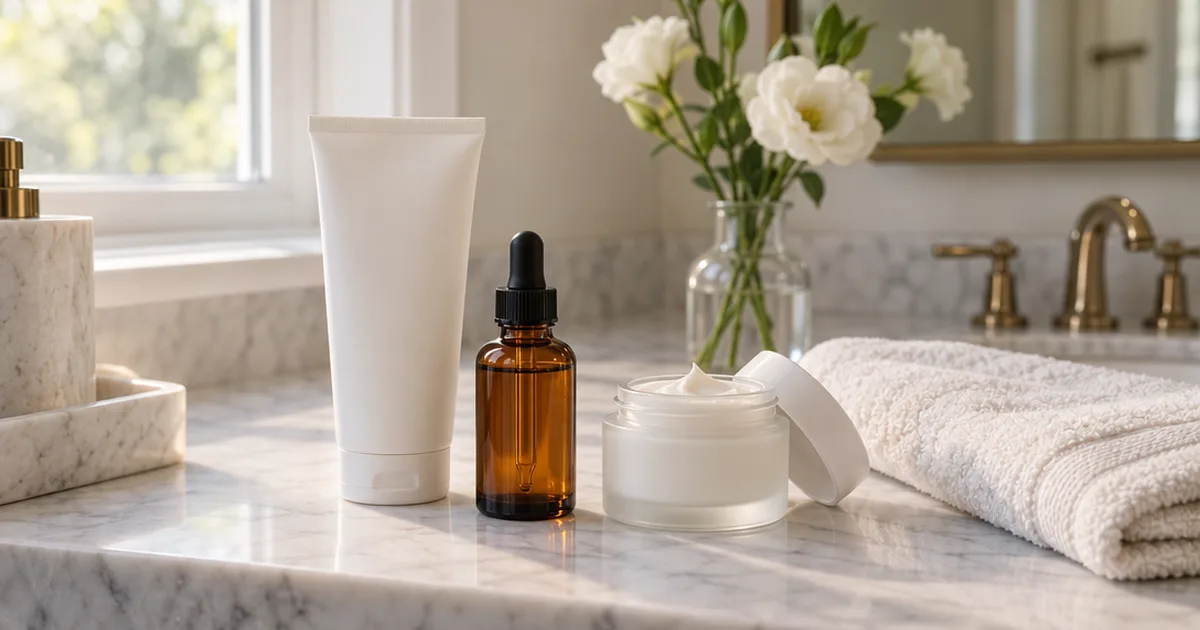
So how does it all fit together? Follow one rule: apply products from thinnest to thickest, with sunscreen last in the morning.
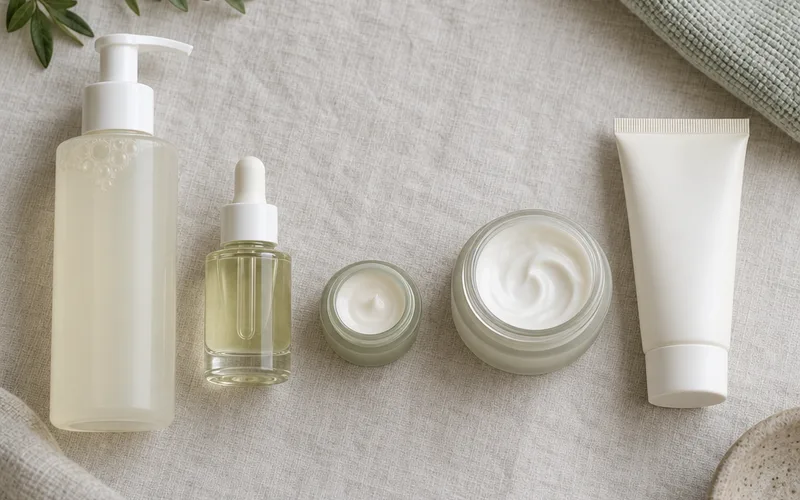
Here’s your morning routine:
- Cleanser
- Vitamin C or niacinamide serum
- Eye cream, if you use one
- Moisturizer
- Sunscreen, SPF 30 or higher
And here’s your night routine:
- Cleanser, or makeup remover plus cleanser
- Treatment, such as a retinoid or exfoliant on alternate nights
- Eye cream, if you use one
- Moisturizer
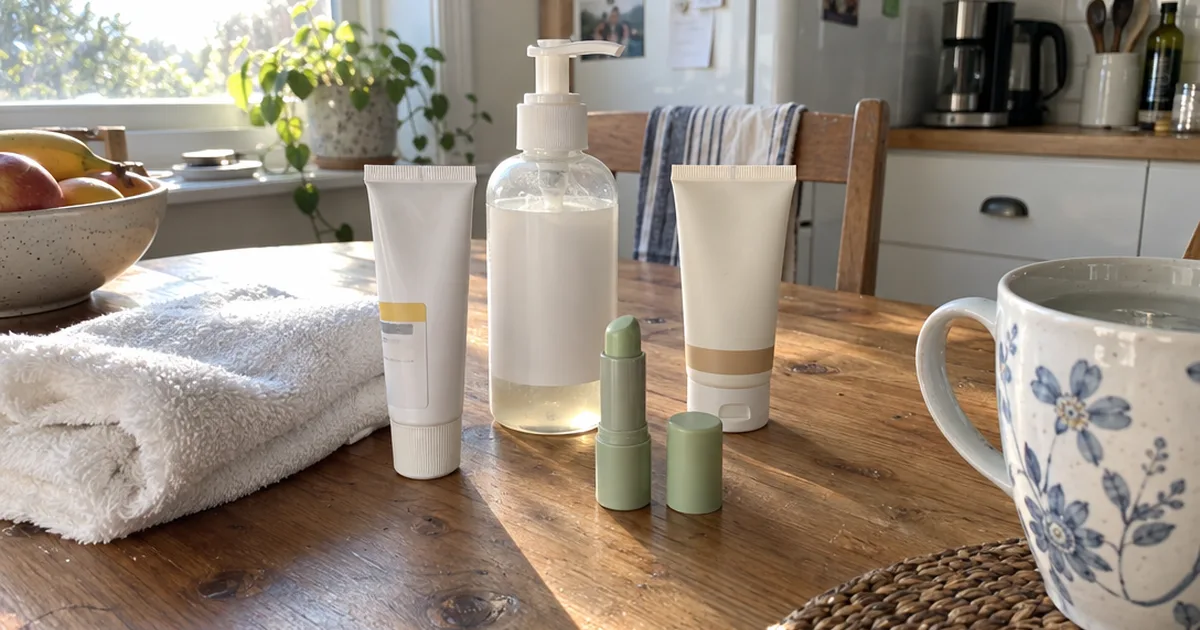
Short on time or money? The bare minimum is a gentle cleanser, a moisturizer and sunscreen.
Add a serum once that feels easy, then check whether retinol goes before or after moisturizer for your skin.
How to Add New Products Safely
New products are where most routines go wrong. Add one product at a time and wait a couple of weeks before the next, so you know what caused any reaction.
Patch test first. Dab a little behind your ear or along your jaw for a few days and watch for redness, itching or bumps.
Some actives also clash. Using a retinoid on the same night as strong exfoliating acids is a fast route to peeling.
The fix is simple: vitamin C in the morning, a retinoid at night, and acids on the nights you skip the retinoid. If you’re new, build up with a slow retinol schedule.
Tailor Your Routine to Your Skin Concerns
The five steps above are your foundation. Once they feel automatic, tweak the treatment step for what matters most to you.
- Fine lines: a retinoid plus daily sunscreen does most of the anti-aging work.
- Under-eye shadows: only some causes of dark circles respond to skincare.
- Redness and flushing: a calm rosacea routine keeps every product mild.
- Body care: stretch mark care rewards the same steady habits.
- Arms and legs: rough keratosis pilaris bumps, hair removal and a streak-free self-tan all go better on gently exfoliated, moisturized skin.
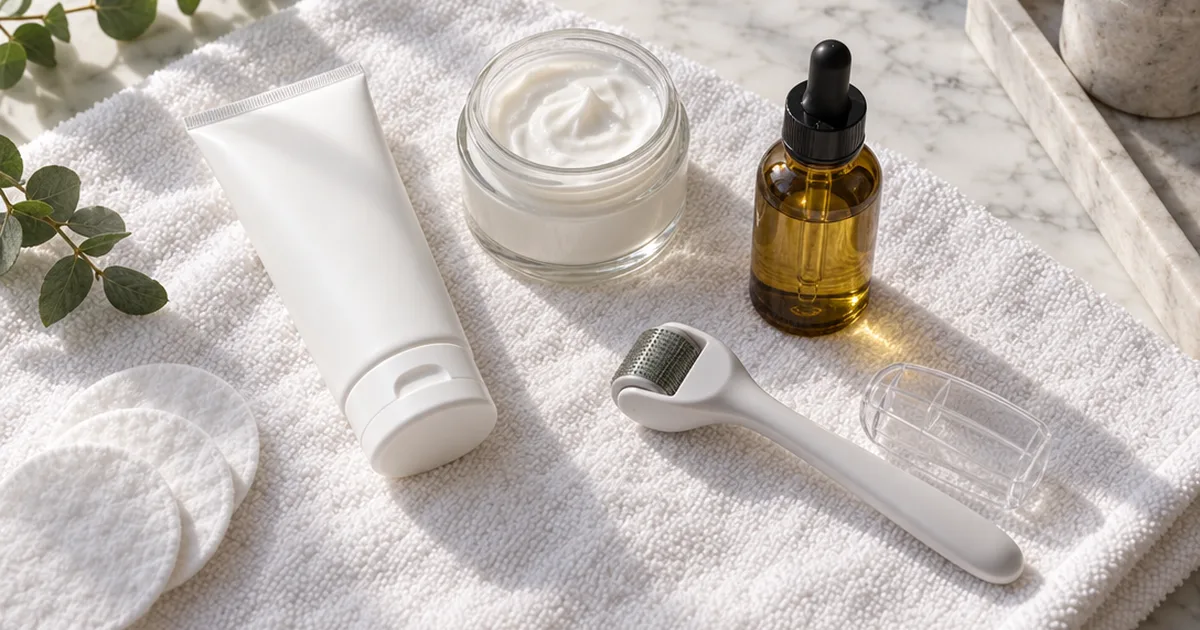
- Gadgets: at-home devices like LED masks and dermaplaning tools add to the basics, not replace them.
Note: For acne that won’t clear, sudden rashes or a spot that changes shape or color, see a board-certified dermatologist.
Keep It Simple and Consistent
A great skincare routine isn’t about how many products you own. It’s about doing four steps well, every day, in the right order.

Start with a cleanser, moisturizer and sunscreen, then add one serum when you’re ready. Which step are you going to tighten up first?
Frequently Asked Questions
What should every skincare routine have?
Every routine needs a gentle cleanser, a moisturizer and a sunscreen with SPF 30 or higher. A treatment serum is a good fourth step once those are habits.
Which two serums cannot be used together?
The most common clash is a retinoid with strong exfoliating acids, like glycolic or salicylic acid, in the same routine. Use them on different nights instead.
What is the Korean 7-skin method?
It’s a hydration technique where you pat a watery toner into your skin in thin layers, up to seven. Fewer layers often do the job for dry skin.
What is the 4 2 4 rule in skincare?
It’s a double-cleansing method: about four minutes with an oil cleanser, two minutes with a water-based cleanser, then four minutes rinsing. A shorter double cleanse works for most people.
What should be in a morning skin care routine?
Keep mornings short: cleanser, a vitamin C serum, moisturizer and sunscreen. If your skin is dry, a rinse with lukewarm water can replace the cleanser.
Is my skin oily or combination?
Check your skin about 30 minutes after washing. Shine all over means oily, while a shiny T-zone with normal or dry cheeks means combination.
How to get glowing skin?
Glow mostly comes from steady basics: gentle cleansing, moisturizer, daily sunscreen and exfoliating once or twice a week. Good sleep helps your skin look less dull too.