Two creams beat the rest in a 2026 review of 32 rosacea trials.
The review covered 11,399 adults in JAMA Dermatology. The winners were ivermectin and encapsulated benzoyl peroxide.
But those are bump creams, and rosacea isn’t only bumps.
The best treatment for rosacea on your face depends on the signs you have. So below, I match each sign to the treatments the evidence backs, with strengths, timing and the habits that help.
A big event this week is the moment for the redness gels, which last 3 to 12 hours.
Skin that stings at everything should start with the list of ingredients to avoid.
After months of creams with no change, the antibiotic pills are your next step.
How to Match Rosacea Treatment to Your Symptoms
Rosacea treatment works best when it targets the sign that bothers you most. Redness, bumps, visible blood vessels and thick skin each respond to a different therapy.
These signs and symptoms can show up alone or together, on the cheeks, nose, chin or forehead. So one plan may combine a few treatments.
Harvard Health puts it simply: the best treatment is tailored to your most bothersome signs and symptoms. That plan might mix topical medications, pills and light-based procedures.
Here’s how the main options line up by sign:
| What you see | Treatments to ask about | Typical use |
|---|---|---|
| Redness that won’t fade | Brimonidine gel, oxymetazoline cream | Once daily or as needed |
| Red bumps and pimples | Ivermectin, azelaic acid, metronidazole, encapsulated benzoyl peroxide | Once or twice daily |
| Bumps that won’t clear | Low-dose doxycycline or minocycline pills | Daily, often for months |
| Thin visible blood vessels | Vascular laser, intense pulsed light | In-office sessions |
| Thickened nose skin | Surgery, lasers, electrosurgery | In-office procedure |
So start by naming your main sign. Then bring that word to your appointment.
A dermatologist’s diagnosis also rules out look-alikes. For example, the red marks acne leaves behind are post inflammatory erythema, and they fade with different care.
Prescription Creams and Gels for Rosacea Redness
Brimonidine gel and oxymetazoline cream are the prescription treatments for lasting rosacea redness. Both work by tightening the small blood vessels in your face, so the redness starts to fade within hours.
Doctors call that lasting redness erythema. Harvard Health says these drugs also help when flushing and redness are your main signs.
The National Rosacea Society’s list of FDA-approved treatments says brimonidine (Mirvaso) is a 0.33% gel. You use it once a day or as needed, and its peak effect lasts 3 to 6 hours.
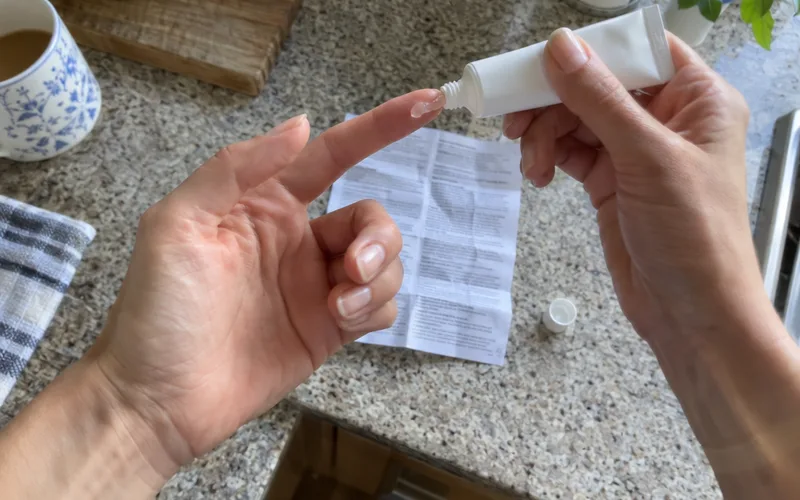
Oxymetazoline (Rhofade) is a 1% cream on the same schedule. The society says its effect lasts 12 hours.
So which one suits you?
Say you want calmer skin for a dinner or a work event. The shorter gel fits that.
If you want all-day coverage, the 12-hour cream fits better.
Here’s the catch: neither one is meant for bumps.
The color also comes back as the medicine wears off, so these are daily care, not a fix. Ask your dermatologist which one fits your day before you fill the prescription.
The Most Effective Topical Treatments for Rosacea Bumps
Ivermectin 1% cream and encapsulated benzoyl peroxide 5% cream are the most effective topical treatments for rosacea bumps. That’s the finding of a JAMA Dermatology review of 32 trials, published on August 1, 2026.
Azelaic acid and metronidazole are the other proven creams for the same bumps and pimples, which doctors call papules and pustules.
That review pooled clinical trials. Researchers compared 10 rosacea medications in 11,399 adults with moderate to severe rosacea, Harvard Health reports.
Most of those trials lasted 8 to 16 weeks.
Why does ivermectin work so well?
It kills Demodex mites, the tiny mites that live on everyone’s skin. It also calms inflammation, and those mites are among the microorganisms thought to drive rosacea bumps.
Encapsulated benzoyl peroxide comes with a trade-off.
Benzoyl peroxide fights bacteria and is anti-inflammatory. The capsule form is made to cause less irritation than regular acne products.
Even so, people in the review were more likely to quit it because of pain, itching and swelling.
So if your skin stings easily, one of the other bump creams may be easier to stick with. Metronidazole and azelaic acid help clear the bacteria thought to play a part, Dr. Barbieri says.
Here’s how the main prescriptions compare, using the society’s published strengths:
| Medication | Form and strength | How often | Main target |
|---|---|---|---|
| Ivermectin (Soolantra) | 1% cream | Once a day | Bumps |
| Encapsulated benzoyl peroxide (Epsolay) | 5% cream | Once a day | Bumps |
| Azelaic acid (Finacea) | 15% foam or gel | Twice a day | Bumps |
| Brimonidine (Mirvaso) | 0.33% gel | Once a day or as needed | Redness |
| Oxymetazoline (Rhofade) | 1% cream | Once a day or as needed | Redness |
| Doxycycline (Oracea) | 40 mg capsule | Once a day | Bumps |
Notice that every product in that table needs a prescription.
Azelaic acid is meant for mild to moderate bumps, while ivermectin covers moderate to severe ones. Raise that with your doctor, along with how long to try each one before you switch.
When Oral Antibiotics Make Sense for Rosacea
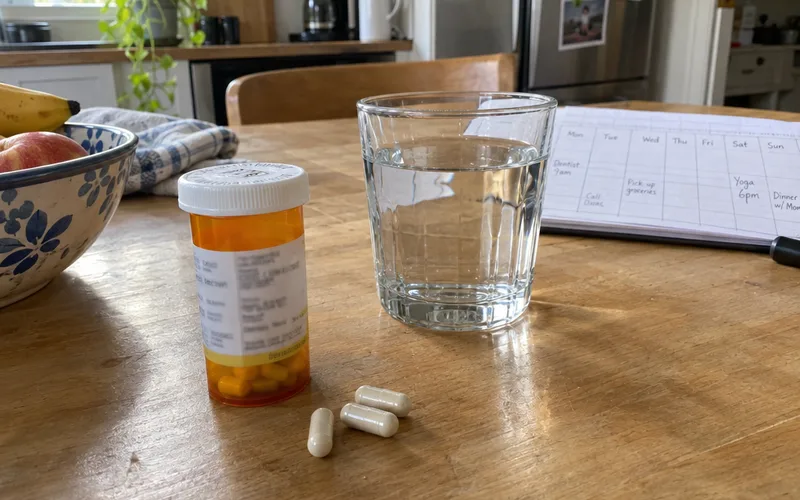
Oral antibiotics for rosacea, such as low-dose doxycycline or minocycline, make sense when creams don’t clear your bumps and pimples. Harvard Health says these pills are usually taken for several months, and sometimes longer.
Both belong to a group called tetracycline antibiotics. Here they’re given at a low dose, lower than you’d take to fight an infection.
The National Rosacea Society lists both as 40 mg slow-release capsules: doxycycline (Oracea) and minocycline (Emrosi). You take each one once a day.
There’s a bonus for some people.
The same pills may help ocular rosacea, the form that causes eye redness and dry eye. Harvard Health says it shows up in about 10% of people with rosacea.
Watch for watery or bloodshot eyes, swollen eyelids or styes. If you notice them, see an eye doctor.
In other words, pills are the next step after creams, not the first one.
Laser and Light Treatments for Visible Blood Vessels
Vascular laser therapy and intense pulsed light (IPL) are the main treatments for visible blood vessels from rosacea. Those thin red or purple lines on the nose, cheeks and chin are called telangiectasia.
These widened capillary blood vessels are the sign that laser and light therapy handles best.
Harvard Health notes that vascular laser therapy can help, especially for telangiectasia. These are in-office treatments done by a dermatologist.
Before you book, learn what rosacea laser treatment involves, from sessions to side effects. Then ask how many sessions you’ll need and what the total cost is.
Treatment for Thickened Skin and Rhinophyma
Rhinophyma, the thick and enlarged skin rosacea can cause on the nose, is treated with surgery, certain lasers or electrosurgery. Each one removes the extra tissue.
Harvard Health describes rhinophyma as a thickening of the skin on the nose. It’s a less common sign, and it needs a procedure rather than a daily cream.
That work is done by a dermatologist or surgeon, who can also reshape the area.
A red nose doesn’t always mean rhinophyma, though.
Plenty of people just have redness or visible vessels there. The options for a nose that’s always red are gentler, so get the cause checked before you plan surgery.
What Not to Put on a Rosacea Face
Don’t put products with alcohol, camphor, fragrance, glycolic acid, lactic acid, menthol, sodium lauryl sulfate or urea on a rosacea face. The American Academy of Dermatology says these often cause irritation.
Skip astringents and toners too.
The AAD’s rosacea skin care advice adds a detail most people miss: buy products labeled fragrance-free, not unscented.
Creams are usually gentler than lotions or gels. Products made for sensitive skin that are non-comedogenic (they won’t clog pores) are a safer bet, and the same rules cover your makeup.
The AAD also says to test each new product before it goes on your face. That’s the quickest way to find out if it stings.
Your cleanser matters most here, since you use it twice a day. So check face washes made for rosacea against this list first.
A Gentle Rosacea Skin Care Routine That Helps Treatment Work
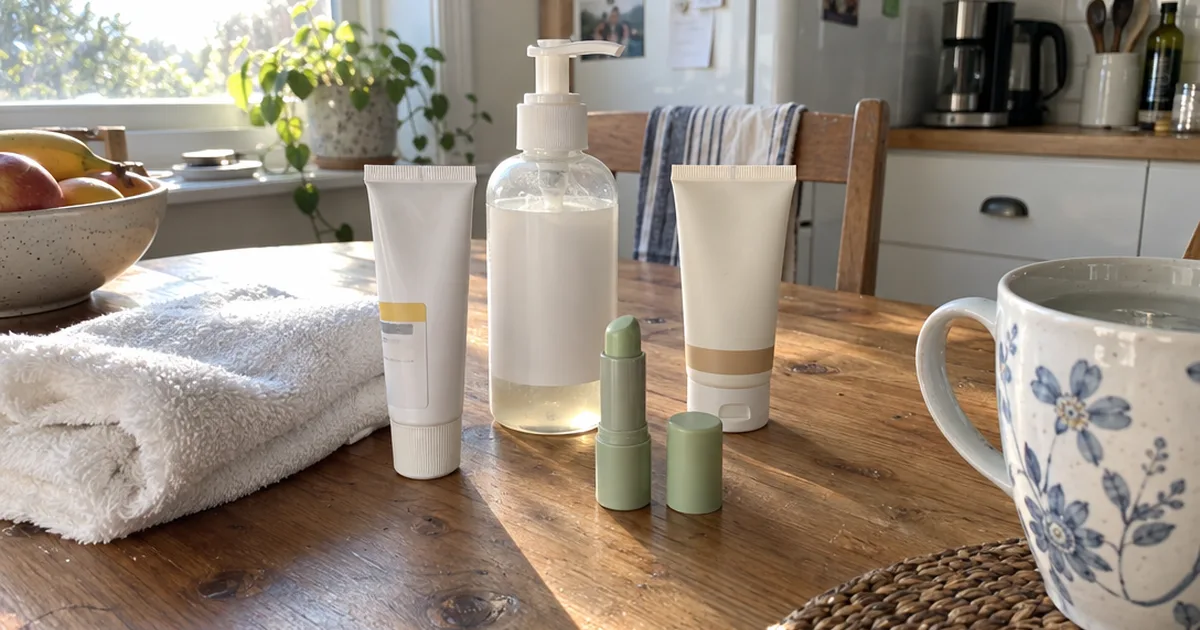
A gentle rosacea skin care routine means washing twice a day with your fingertips, then your medication, then a fragrance-free moisturizer. In the morning, finish with sunscreen.
That order matters. The American Academy of Dermatology says your medication goes on first.
And the moisturizer step isn’t optional.
In one small study cited by the AAD, patients used metronidazole gel twice a day and added a gentle moisturizer to one side of the face. After 15 days, that side had less dryness, peeling and roughness, and it felt better.
Here’s how the routine works:
- Wash with a mild cleanser (not soap), using your fingertips in small circles.
- Rinse with warm water and pat dry with a soft cotton towel.
- Apply your prescription cream or gel.
- Wait for your skin to dry, then add moisturizer so it’s less likely to sting.
Many rosacea-friendly moisturizers contain ingredients like niacinamide or ceramides. When you shop, compare moisturizers made for rosacea against the AAD’s avoid list.
A written morning and night routine makes these steps easier to keep.
Key Takeaway: Medication first, moisturizer second, and never scrub.
Sunscreen Is Part of Rosacea Treatment
Daily sunscreen is part of rosacea treatment, because sunlight is one of the most common causes of rosacea flare-ups. The American Academy of Dermatology says to use a broad-spectrum, water-resistant sunscreen with SPF 30 or higher, all year.
That includes cloudy days and winter.
If regular sunscreen stings, the AAD suggests a mineral formula with zinc oxide, titanium dioxide or both. Look for silicone, such as dimethicone, and no fragrance.
Some mineral formulas leave a white cast. On darker skin tones, the AAD suggests a micronized or tinted version.
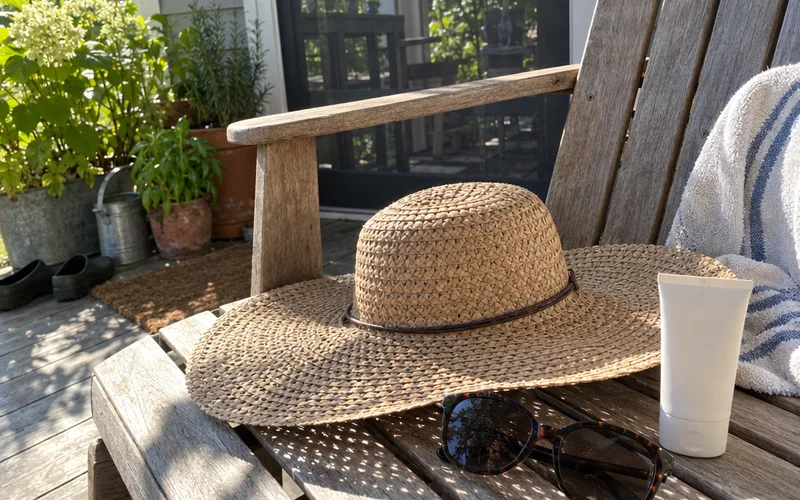
The AAD also suggests shade, a wide-brim hat and sunglasses with UV protection. Then compare sunscreens dermatologists recommend for sensitive skin against those label checks.
How to Calm Rosacea Redness Fast
The fastest way to calm rosacea redness is a prescription redness gel or cream. The American Academy of Dermatology says most patients see their best results 3 to 6 hours after applying it, and the fading can last up to 12 hours.
Without a prescription, you can still hide redness right away.
The AAD’s rosacea overview suggests a green-tinted concealer to cover redness. A yellow-tinted one masks other color changes on light to dark skin, and water-based or powder makeup is less likely to irritate.
Then figure out what set off the flare, so you can avoid it next time.
Keep a short plan for rosacea flares handy, so you know what to do the moment one starts.
Common Rosacea Triggers to Track and Avoid
Common rosacea triggers include sun, stress, hot or cold weather, hot drinks, alcohol and spicy foods, according to Harvard Health. Each one can raise blood flow and widen the small blood vessels in your face.
Triggers differ from person to person, so a diary helps.
Write down what you ate, drank, put on your skin and did each day, plus how your skin looked. Over time, the days your skin flares start to share a cause.
But don’t go overboard.
“If you have rosacea, it can help to be aware of your triggers and try to avoid them when possible, but don’t make yourself miserable by being too restrictive,” says Dr. Barbieri.
If your flares seem stronger than a few years ago, it helps to know how rosacea changes with age.
Over-the-Counter Options for Rosacea
Over-the-counter products can calm and protect rosacea skin, but every proven rosacea medicine in this guide needs a prescription. Good OTC care means a gentle cleanser, a fragrance-free moisturizer, mineral sunscreen and a tinted concealer.
That’s not a small role.
The American Academy of Dermatology says the right skin care cuts flare-ups and improves the results you get from treatment. For bumps and lasting redness, though, the proven medicines are prescriptions.
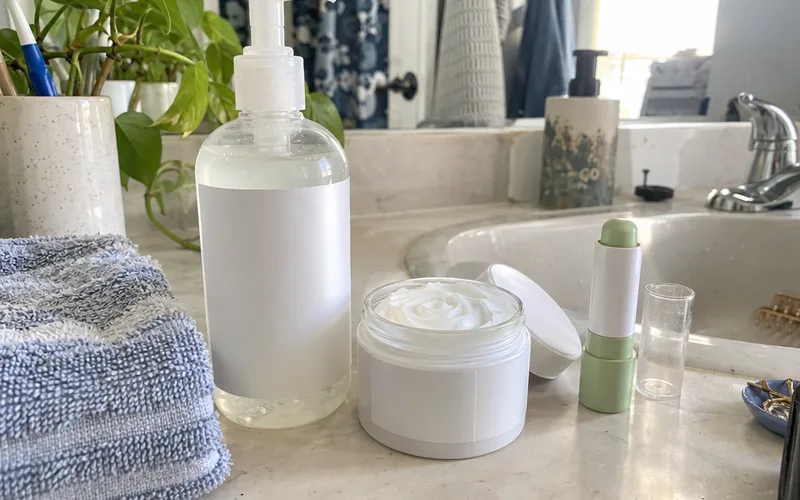
So if a store-bought “rosacea cream” promises to cure redness, check its label against the AAD’s avoid list first. Plant-based products follow the same rules, so read natural rosacea skincare labels the same way.
Those gentle habits are the core of any routine for sensitive skin, rosacea or not.
How Long Rosacea Treatment Takes to Work
Rosacea redness gels work within hours, bump creams are tested over 8 to 16 weeks, and oral antibiotics are usually taken for several months. Those timelines come from the AAD, the 2026 JAMA Dermatology review and Harvard Health.
That 8 to 16 week window is how long most trials in the review ran. So it’s a fair test length for a bump cream.
Judge a new cream over weeks, not days.
And ask your dermatologist when to check its progress, so you don’t quit a cream that’s still working.
Can Rosacea Go Away for Good?
Rosacea doesn’t go away for good, because it has no cure at this time, according to the American Academy of Dermatology. Treatment can still cut flare-ups and help your skin feel more comfortable.
Rosacea is a chronic condition, a long-lasting skin disease that flares and calms. The AAD says a treatment plan usually combines rosacea-friendly skin care, avoiding your triggers and treating signs such as burning or stinging.
That’s why the habits in this guide matter as much as any prescription. They fit inside a broader skincare routine you can keep for years.
The Bottom Line
The right rosacea treatment depends on your main sign: gels for redness, creams for bumps, lasers for vessels.
This week, write down your main sign and book a dermatologist visit to ask about the matching option.
Frequently Asked Questions
What is the root cause of rosacea?
The root cause of rosacea is unknown, according to Harvard Health. Experts point to a mix of genetics, a weak skin barrier, inflammation, Demodex mites and extra-sensitive blood vessels and nerves.
What is papulopustular rosacea?
Papulopustular rosacea is the type that causes red bumps (papules) and pus-filled pimples (pustules). It looks like acne but has no blackheads, and it’s treated with creams such as ivermectin or azelaic acid, or low-dose antibiotic pills.
What are the treatments for rosacea acne?
Rosacea acne, the bumps and pimples of rosacea, is treated with prescription ivermectin 1% cream, azelaic acid 15%, metronidazole or encapsulated benzoyl peroxide 5%. If those don’t clear it, a dermatologist may add low-dose doxycycline or minocycline pills.
Can you wear makeup over rosacea?
Yes, makeup is fine over rosacea, and the American Academy of Dermatology suggests a green-tinted concealer to hide redness or a yellow-tinted one for discoloration. Water-based or powder makeup is the least likely to irritate.
Is there a cure for rosacea?
No, rosacea has no cure at this time, says the American Academy of Dermatology. Treatment can still calm flare-ups and keep the signs under control for long stretches.