

Vitamin C is one of the few skincare ingredients that earns a spot in almost every routine. But the bottle you pick, and how you treat it, decides whether it works or just turns brown on your shelf.
In this guide to vitamin C for skin, I’ll show you what it does, which form to buy and how to use it without irritation.
Let’s dive right in.
What Vitamin C Does for Your Skin
Vitamin C, also called ascorbic acid, is a vitamin and a strong antioxidant. On your skin, its main job is to neutralize free radicals, the unstable molecules that UV radiation, pollution and stress create.
Why does that matter? Free radicals break down collagen and damage skin cells, which shows up over time as dull skin, fine lines and wrinkles.
Bottom line: vitamin C protects and repairs at the same time, so it fits easily into a simple daily skincare routine.
The 3 Biggest Benefits of Vitamin C for Skin
Here’s what steady use can do for your face.
1. Brighter, More Even Skin Tone
Vitamin C slows down tyrosinase, the enzyme your skin uses to make melanin, the pigment behind dark spots. Less melanin means sun spots, acne marks and other hyperpigmentation can fade instead of getting darker.
That’s what most people mean by vitamin C for skin whitening. It won’t change your natural skin tone, but it can even out patches and add glow to your complexion.
Note: stubborn patches may need more than a serum, and a dermatologist can explain in-office options for dark spots.
2. Firmer-Looking Skin Over Time
Collagen is the protein that keeps skin plump and smooth, and your body makes less of it as you age. Vitamin C helps your skin build new collagen, so fine lines can soften over time.

This benefit is slow, so check what realistic before and after results look like before you judge a bottle.
3. Extra Protection Under Sunscreen
Sunscreen blocks most UV rays and helps protect you from skin cancer, but it can’t stop all of them. Vitamin C helps limit sun damage from the rays that slip through.
The catch? Vitamin C is not a replacement for sunscreen, so learn how to choose sunscreen and wear it every morning.
Which Form of Vitamin C Is Best for Your Skin?
The best form depends on your skin: L-ascorbic acid is the most studied, while gentler derivatives suit sensitive skin. Check the ingredient list, because you’ll usually see one of these forms:
- L-ascorbic acid: the pure, most studied form, but it oxidizes fast once it meets air.
- Ascorbyl glucoside: more stable and milder, but it still helps brighten.
- Tetrahexyldecyl ascorbate: a very stable, oil-friendly form that’s less irritating.
- Sodium ascorbyl phosphate and ascorbyl palmitate: other derivatives you’ll spot in creams, masks and toners.
Here’s what I’d do: start with L-ascorbic acid if your skin handles active ingredients well, and a gentler derivative if it doesn’t.
How to Choose a Vitamin C Serum
A good serum pairs a stable form with protective packaging, helper antioxidants and a texture that suits your skin. Air, light and heat break vitamin C down, so pick a dark or opaque bottle with a tight cap or pump over a clear jar.
Next, look for vitamin E and ferulic acid, two helper antioxidants. For example, the retailer listing for SkinCeuticals C E Ferulic shows it pairs 15% L-ascorbic acid with 1% vitamin E and 0.5% ferulic acid.
The same listing says ferulic acid enhances the stability and effectiveness of vitamins C and E.
Oily or acne-prone skin usually likes a light, water-based serum, so start with these vitamin C serums for oily skin.
That listing also prices the 1 fl oz bottle at $185. If that’s more than you want to spend, see how TruSkin’s vitamin C serum and Timeless vitamin C compare.
How to Use Vitamin C in Your Routine
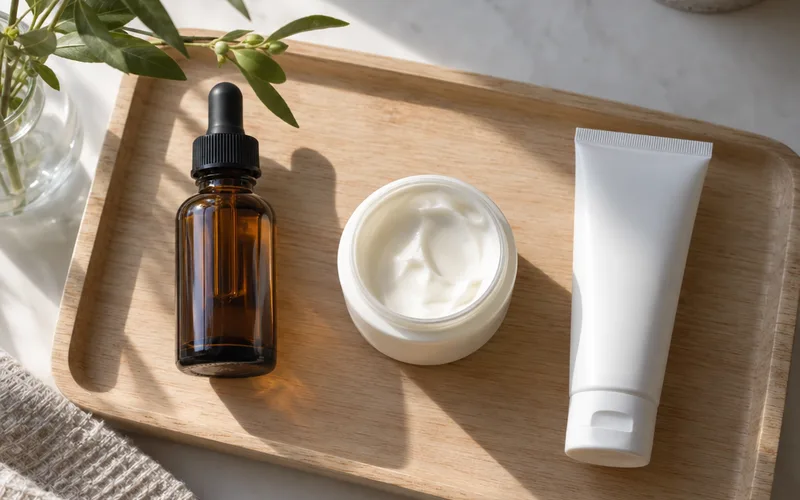
Morning is the classic time. The C E Ferulic listing’s directions say to apply 4-5 drops to a dry face, neck and chest after cleansing, then follow with moisturizer and broad-spectrum sunscreen.
Why morning? That’s when UV light and pollution hit your skin, so the antioxidant is already in place.
Some people use it at night too, which this breakdown of vitamin C day or night covers.
Most people can use vitamin C every day, right after their usual cleansers. If your skin is new to it, though, start every other morning and build up.
It also pairs well with hydrating ingredients, so check when to apply hyaluronic acid if you use both.
What Not to Mix With Vitamin C
Vitamin C gets along with most ingredients. The trouble starts when you stack too many strong actives at once:
- Retinol: use it at night and vitamin C in the morning to keep irritation down.
- Exfoliating acids: skip strong toners or peels on the same morning.
If you’re still picking a night treatment, start with the basics of retinoids for your face.
Pro Tip: add one new product at a time, so if irritation shows up, you know exactly which one caused it.
Side Effects and How to Avoid Them
The most common reaction is a mild tingle. In fact, the C E Ferulic listing notes that a slight warming sensation is normal.
Stronger stinging, redness, itching, hives or a rash is different, because those are signs of inflammation. It can mean the concentration is too high for you, or that you’re having an allergic reaction.
To lower the risk, patch test on your jaw first, start every other day and switch to a gentler form if it keeps stinging. If you have eczema or your skin reacts to almost everything, begin with a sensitive skin care routine.
Before you push through discomfort, read up on vitamin C serum side effects, including when to stop and see a dermatologist.
How to Keep Your Serum From Going Bad
Vitamin C is fussy. Like a sliced apple turning brown, an oxidized serum loses much of its antioxidant power.
Heat matters too, and one buyer’s review on the C E Ferulic retailer listing says a bottle left in a hot desert mailbox no longer felt moisturizing and dewy.

So close the cap tightly, store the bottle somewhere cool and dark, away from bathroom moisture, and watch the color. If a pale serum turns dark orange or brown, it has oxidized and it’s time to replace it.
Does Eating Vitamin C Help Your Skin?
Yes, but in a different way. Your body can’t make vitamin C, so it needs this nutrient from food to build collagen, heal wounds and support your immune system.
Good sources include citrus fruits like oranges, tangerines and lemons, plus kiwi and strawberries. Vegetables such as broccoli, bell peppers, spinach and potatoes count too.
Tablets and other supplements can fill a gap in your diet. Just know that high doses can upset your stomach or cause diarrhea, so ask your doctor first.
Food and tablets feed your whole body, while a serum delivers vitamin C straight to your face. Vitamin E, vitamin A and vitamin B3 help your skin too, and B3 is the vitamin behind the benefits of niacinamide.
Start Simple
Vitamin C is one of the easiest upgrades for dull skin and hyperpigmentation. Pick a stable form, keep it away from air and heat, and wear it under sunscreen every morning.
For the bigger picture on fine lines and wrinkles, see how it fits into a full anti-aging skin care routine.
So which will you try first: classic L-ascorbic acid or a gentler derivative?
Frequently Asked Questions
How does vitamin C help my face?
Vitamin C fades dark spots, evens out your skin tone and helps protect against UV and pollution damage. Over time, it also supports collagen for firmer-looking skin.
Is vitamin C the same as ascorbic acid?
Yes. Ascorbic acid is the chemical name for vitamin C, and L-ascorbic acid is the pure form most serums use.
Can I use vitamin C every day on my skin?
Most people can use it every morning. If your skin is new to it, start every other day and build up.
What should you not mix with vitamin C?
Avoid using it with retinol or strong exfoliating acids in the same routine. Save retinol for night instead.
Which vitamins are good for skin health?
Vitamin C, vitamin E, vitamin A and vitamin B3, also called niacinamide, all support healthy skin.
What are the symptoms of vitamin C deficiency?
A long-term shortage can slow collagen production, weaken tissues and slow wound healing. If you think you’re low, talk to your doctor.