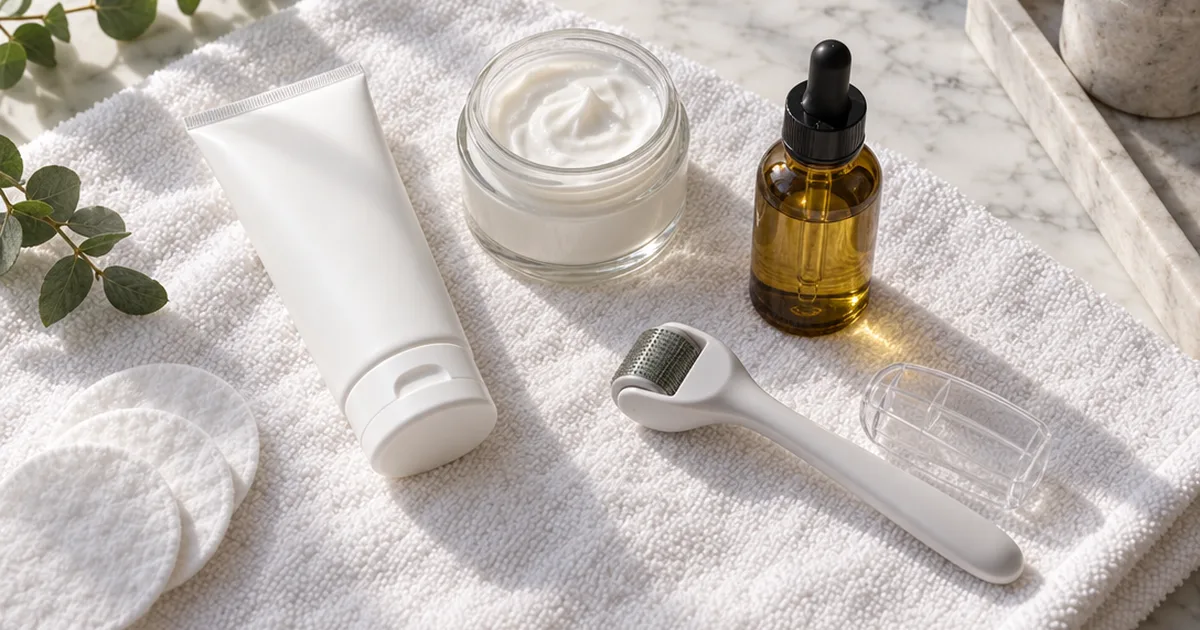

In this guide, I’ll show you exactly which anti aging skin care steps are worth your time and money.
Here’s the deal: most visible aging on your face comes from the sun and from dryness. Only a handful of ingredients reliably help with either one, so you don’t need a 10-step routine or a drawer full of jars.
You’ll learn what ages your skin, which ingredients work and how to build a simple routine that changes as you get older.
Let’s dive right in.
What Actually Causes Skin Aging
Skin aging happens on two tracks at the same time. One is the natural aging your genes control, and the other is the faster damage that comes from the world around you.
The biggest outside driver is ultraviolet (UV) light from the sun. Over the years, UV rays break down collagen and elastin, the two proteins that keep your skin firm and springy.
When that support thins out, you start to notice the signs of photoaging:
- Fine lines and wrinkles, especially around the eyes and mouth
- Sagging and a loss of elasticity along the jaw and neck
- Age spots and uneven skin tones
- A rough, dull complexion
Other stressors pile on too, like smoking, pollution, poor sleep and lots of sugar. Each one can speed up premature aging, meaning aging that shows up earlier than your genes alone would cause.
Then there’s dryness. With age, your skin makes fewer lipids and fatty acids, so the skin barrier holds less water and gets irritated more easily.
That shift often speeds up around menopause, when falling estrogen can leave skin noticeably drier and thinner.
Bottom line: most of what you can change is sun damage and dryness. And that’s exactly what a good anti-aging routine targets.
The Anti-Aging Ingredients That Actually Work
Walk into any drugstore and you’ll find hundreds of anti-aging promises on the shelves. But only a short list of active ingredients has solid scientific evidence behind it.
Here they are, starting with the most important one.
Sunscreen: Your Most Important Anti-Aging Product
If you buy only one anti-aging product, make it sunscreen.
Why? Because no cream can undo the UV damage you keep adding every single day.
Pick a broad-spectrum formula with SPF 30 or higher. “Broad-spectrum” means it blocks both UVA rays, which age your skin, and UVB rays, which burn it.
Wear it every morning, even when it’s cloudy or you’re mostly indoors near windows. Outdoors, reapply about every two hours, because one morning layer won’t last all day.
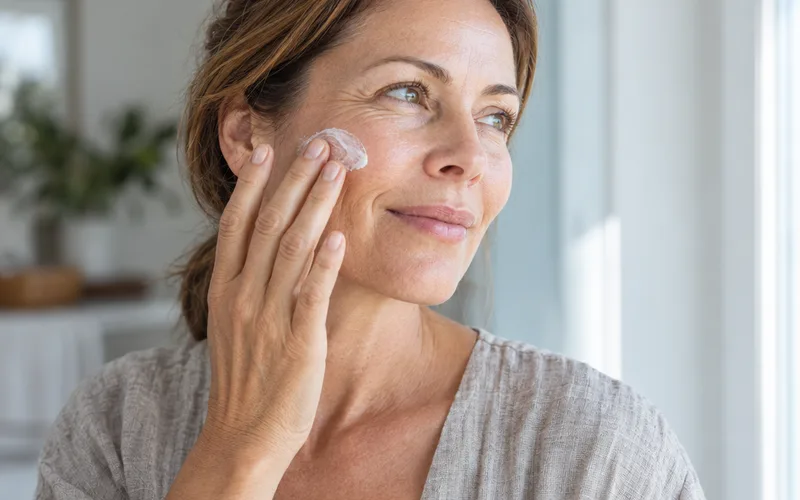
The best sunscreen for you is the one you’ll actually wear daily.
Mineral formulas use zinc oxide or titanium dioxide, while chemical ones absorb UV. Choosing between mineral vs chemical sunscreen mostly depends on texture and skin type.
Daily sunscreen also lowers your risk of skin cancer. So this one step protects your health as well as your face.
Retinoids: The Proven Wrinkle Fighter
Retinoids are vitamin A ingredients that speed up skin cell turnover and help your skin build new collagen over time. That’s why dermatologists treat them as the core of anti-aging skin care.
You’ll see a few versions on the label:
- Retinol: the gentle over-the-counter option in most serums and creams.
- Retinal: also called retinaldehyde, a step stronger than retinol and still sold without a prescription.
- Adapalene: a retinoid gel first made for acne, now available over the counter.
- Tretinoin: the prescription version a dermatologist can write for you.
The catch? Retinoids can cause dryness, peeling and irritation at first.
So start low and slow, with a pea-sized amount of a low concentration two or three nights a week, then add nights as your skin adjusts.
Results take patience, usually a few months of steady use. A slow retinol schedule walks you through the first weeks, and it helps to compare retinoid strengths and types before you buy.
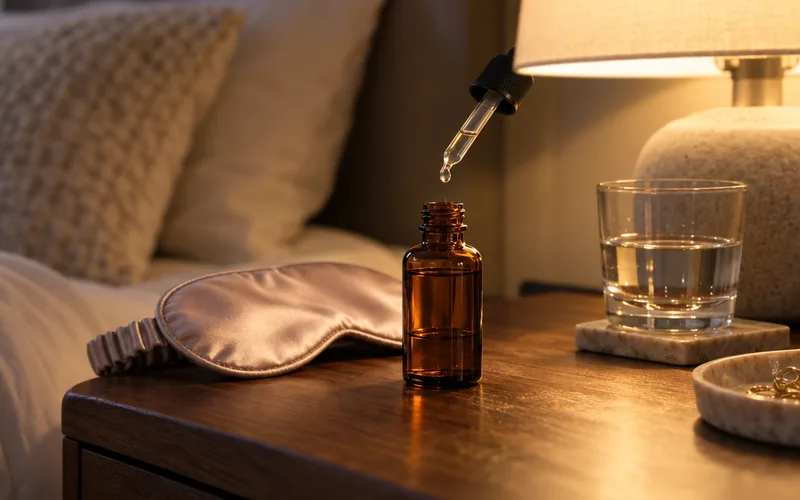
Bakuchiol, a plant extract, is a gentler alternative for very sensitive skin, though it has far less research behind it.
Note: Skip retinoids if you’re pregnant or trying to get pregnant, and check with your doctor first.
Vitamin C and Other Antioxidants
Antioxidants help neutralize the damage that UV light and pollution create in your skin. Vitamin C is the best known, and it also brightens a dull complexion and helps fade dark spots over time.
Use a vitamin C serum in the morning, under your sunscreen. The two work as a team: sunscreen blocks most UV rays, and the antioxidant helps handle the ones that slip through.
Look for L-ascorbic acid, the classic form, in an opaque, airtight package, since light and air break it down. Some formulas pair it with vitamin E and ferulic acid to keep it stable longer.
If pure vitamin C stings, try a lower concentration or a gentler form, and learn how vitamin C serums differ before you switch. Green tea extract is another antioxidant option for sensitive skin.
Hydrators and Barrier Helpers
Dry skin makes every line look deeper. That’s why moisture matters more with every decade.
Three groups of ingredients do the heavy lifting:
- Humectants like hyaluronic acid and glycerin hydrate the skin by pulling water in.
- Barrier lipids like ceramides, fatty acids and cholesterol refill the gaps in your skin barrier.
- Occlusives like petrolatum, squalane and shea butter seal that moisture in.
Niacinamide, also called vitamin B3 or nicotinamide, is a gentle, anti-inflammatory ingredient that calms redness. The benefits of niacinamide also include a more even tone, and it pairs well with a retinoid.
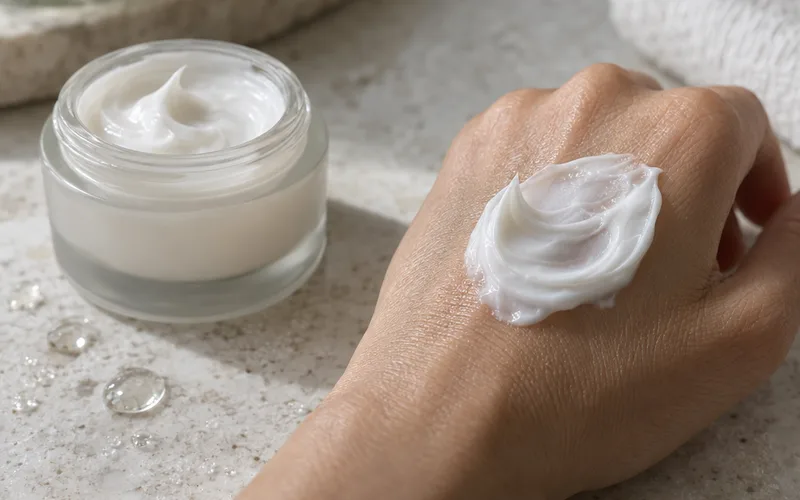
Pro Tip: Apply hyaluronic acid to slightly damp skin, then seal it with moisturizer right away. You can also check when to use hyaluronic acid if you’re unsure about timing.
Peptides and Exfoliating Acids
Peptides are short chains of amino acids that act as building blocks for proteins like collagen and elastin. Their evidence is weaker than the evidence for retinoids, but they’re gentle, which makes them useful when your skin can’t handle much else.
Exfoliating acids clear away dull, dead cells so skin looks smoother and brighter. Alpha hydroxy acids (AHAs) like glycolic and lactic acid work on the surface, while salicylic acid also clears out pores.
Keep exfoliating to once or twice a week, and never on the same night as your retinoid. Overdoing acids is a fast way to damage your skin barrier, and if that happens, a skin barrier repair plan comes before any new active.
How to Build Your Anti Aging Skin Care Routine
Now let’s put it all together. A strong anti-aging routine needs only four or five steps in the morning and four at night.
Here’s your morning routine:
- Gentle cleanser, or just water if your skin is dry
- Vitamin C serum
- Eye cream, if you use one
- Moisturizer
- Broad-spectrum sunscreen, SPF 30 or higher
And here’s your night routine:
- Cleanser, plus a makeup remover if you need one
- Retinoid, or a hydrating serum on your off nights
- Eye cream, if you use one
- Moisturizer or a richer night cream
Notice how short that is? That’s on purpose.
The routine you’ll do every day beats the perfect routine you’ll quit in two weeks.
Your cleanser doesn’t need fancy anti-aging ingredients, because it rinses off before they can do much. Pick a gentle, fragrance-free cleanser, or a salicylic acid wash if you get clogged pores, and save your money for the steps that stay on your skin.
Moisturizer is a different story. A cream with ceramides and humectants is worth paying for, and you can compare picks for face moisturizers for aging skin to find one.
Eye creams with peptides or caffeine can help with puffiness, but your regular moisturizer works around the eyes too if it doesn’t sting. Shadows are trickier, since only some causes of under-eye dark circles respond to creams.
Don’t stop at your face, either. Your neck, chest and hands show sun damage too, so extend sunscreen there and use a body moisturizer for aging skin after you shower.
New to all of this? Get a basic daily skincare routine going first, then add active ingredients one at a time.
What Order to Apply Anti-Aging Products
Here’s the simple rule: apply products from thinnest to thickest. Watery serums go first, then lotions, then creams, and sunscreen always goes last in the morning.
Why does order matter? Thin formulas sink in best on bare skin, while thick creams form a layer that can slow down whatever you apply on top.
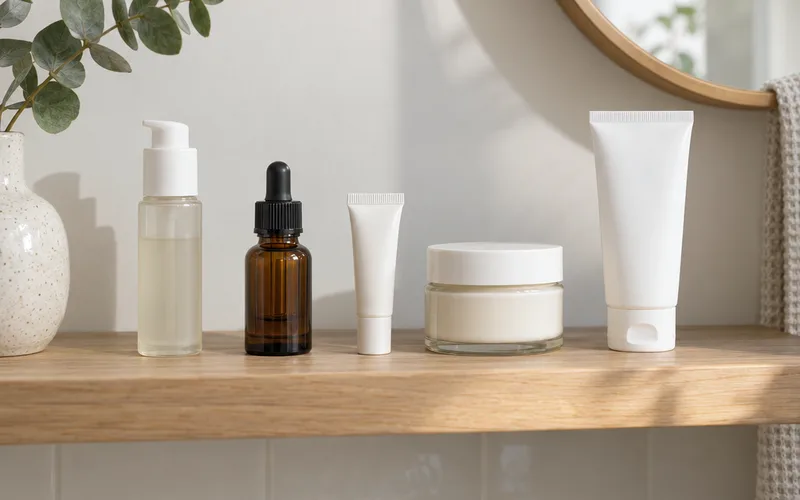
Give each layer about a minute to settle. If your retinoid stings, try moisturizer first as a buffer, since whether retinol goes before moisturizer depends on your skin.
How to Adjust Your Routine as You Age
Your skin changes every decade, so your routine should change with it. Here’s a simple way to think about each stage:
- In your 20s: focus on prevention. Daily sunscreen and a light moisturizer are enough for most people.
- In your 30s: add vitamin C in the morning and a gentle retinol at night. A routine for your 30s shows how to layer them without irritation.
- In your 40s: move to a stronger retinoid if your skin tolerates it, and add more moisture. A routine for women over 40 covers this stage step by step.
- In your 50s and beyond: put hydration and barrier support first, and switch from a light lotion to richer creams as your skin gets drier.
Menopause deserves its own mention. Lower estrogen can make skin drier, thinner and more sensitive, so many women need gentler actives and more hydrating layers.
That doesn’t mean giving up retinoids. It usually means using them less often and pairing them with a thicker moisturizer.
Korean skin care routines can help here too. They lean on light, hydrating layers like toners and essences, which suit dry, mature skin well.
Drugstore vs. Splurge: Where to Spend Your Money
Good news: some of the most effective anti-aging skin care is cheap. Drugstore sunscreens, retinol serums and moisturizers often contain the same key ingredients as luxury versions.
Here’s where I’d spend and where I’d save:
- Save on: cleansers, basic moisturizers and hyaluronic acid serums, since simple formulas do the job.
- Consider spending on: a sunscreen texture you love and a well-packaged vitamin C serum.
- Skip: pricey “miracle” anti-aging creams with no retinoid, vitamin C or sunscreen in them.
What about anti-aging skincare sets? They’re convenient, but you don’t need one, and a set makes sense only if it includes products you’d buy anyway.
Price doesn’t predict efficacy. The ingredient list and how consistently you use a product matter far more than the name on the jar.
Daily Habits That Help Your Skin Look Younger
Skin care products only go so far. Your daily habits shape how your skin ages just as much.
These make the biggest difference:
- Limit midday sun and wear a wide-brimmed hat, sunglasses and protective clothing.
- Don’t smoke, since smoking speeds up wrinkles and dulls your complexion.
- Skip tanning beds, which hit your skin with concentrated UV.
- Sleep well and manage stress, because both tend to show on your face.
- Eat plenty of fruits, vegetables and healthy fats, and drink enough water.
Diet won’t erase wrinkles, but colorful, antioxidant-rich foods support healthy skin. A list of foods for younger-looking skin makes it easy to start with your next grocery trip.
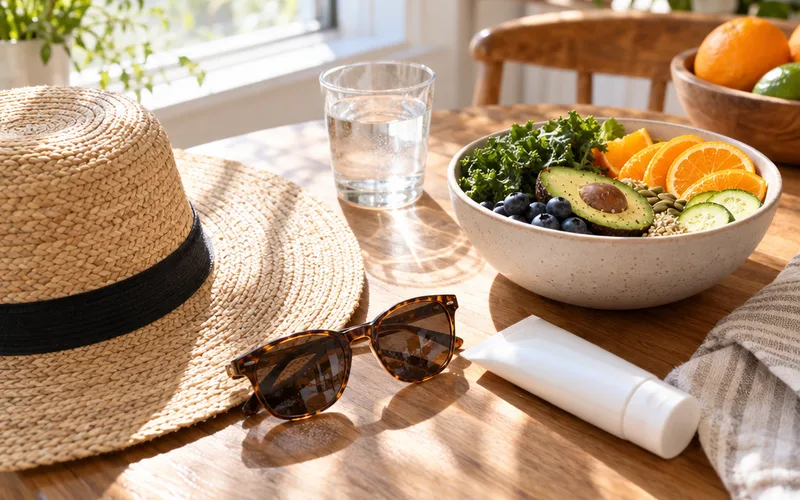
These habits cost little or nothing, and they protect every dollar you spend on products.
When to See a Dermatologist
Over-the-counter products can soften fine lines, but they won’t erase deep wrinkles or major sagging. That’s when a board-certified dermatologist can help.
Book a visit if:
- Your skin stays red or irritated, or you have rosacea or dermatitis that flares with actives
- You want a prescription retinoid like tretinoin
- You notice a new or changing spot, which could be skin cancer
- You’re curious about in-office treatments
Those treatments include chemical peels, laser resurfacing, microneedling and injectables like Botox and fillers. Each one works differently, so compare your options among in-office cosmetic procedures before you book a consultation.
The American Academy of Dermatology has an online tool to help you find a board-certified dermatologist near you. Start there if you don’t have one yet.
Start Simple and Stay Consistent
Anti-aging skin care doesn’t have to be complicated. Wear sunscreen every morning, use a retinoid at night and keep your skin moisturized.
Everything else is a bonus. Pick the one step you’re missing and start tonight.
Which step are you adding to your routine first?
Frequently Asked Questions
What is the best anti-aging skin care?
The best anti-aging skin care is daily broad-spectrum sunscreen paired with a nightly retinoid. A gentle cleanser, a vitamin C serum and a moisturizer round it out, and consistency matters more than the brand you choose.
What is the #1 anti-aging product?
Sunscreen is the number one anti-aging product, because it blocks the UV damage that causes most visible aging. A retinoid comes second, since it helps repair some of the damage that has already happened.
What are the best over-the-counter anti-aging products?
Look for a broad-spectrum SPF 30 sunscreen, a retinol or retinal serum, adapalene gel, a vitamin C serum and a moisturizer with ceramides. You can find all of these at the drugstore without a prescription.
What is the best anti-aging skincare set?
The best set is one that includes a sunscreen, a retinoid and a moisturizer you’d actually use. Many sets add extras you don’t need, so buying the three core products separately often costs less.
How can you look 10 years younger naturally?
No routine can take a set number of years off your face. Daily sunscreen, not smoking, good sleep, a nutritious diet and steady moisture can make your skin look noticeably fresher and healthier over time.