
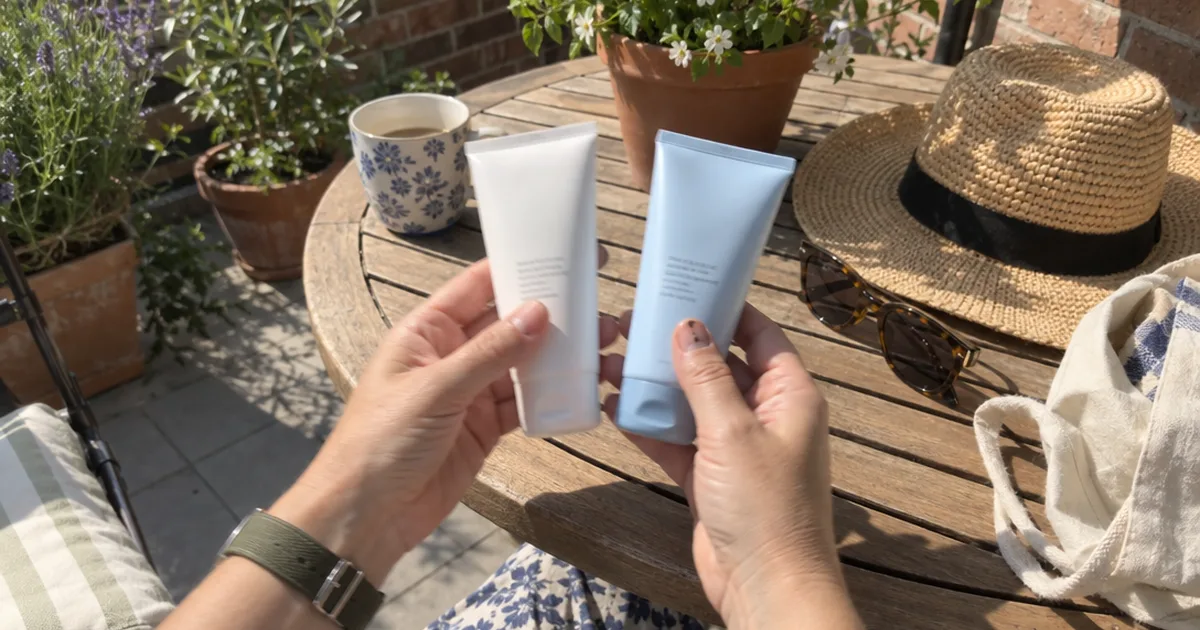
Jumping from SPF 30 to SPF 50 buys you about 1% more UVB protection.
That’s the whole gap, according to a Connecticut dermatology practice’s patient guide.
So knowing how to choose sunscreen isn’t about chasing the biggest number on the shelf.
Here are the 6 checks I’d run in the store, in order, plus the new filter that reached U.S. shelves in 2026.
Best for: anyone buying a new bottle. Skip it if you already own a broad-spectrum SPF 30 you like wearing.
Cost: Free. You’re only reading the label.
Payoff: SPF 30 blocks about 97% of the sun’s UVB rays.
Time: Same day.
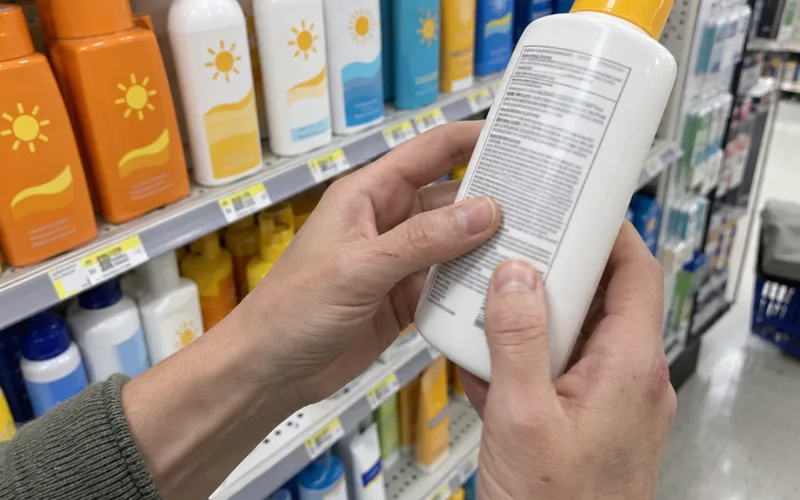
First step: Turn the bottle over and find the Drug Facts box.
How to Choose Sunscreen Step by Step
Choosing sunscreen takes 6 steps: check for broad spectrum, pick SPF 30 or higher, add water resistance if you’ll swim or sweat, read the active ingredients, match the formula to your skin type and pick a format you’ll reapply. The first 3 checks come straight from the label.
Step 1: Check for “Broad Spectrum” on the Label
Broad spectrum means the sunscreen protects your skin from both kinds of harmful UV rays: UVA rays and UVB rays. UVA rays age your skin and UVB rays burn it.
That’s why this word matters more than the SPF number. SPF only rates sunburn protection, so a sunscreen without “broad spectrum” on the front may leave you open to premature aging and skin cancer.
Step 2: Pick SPF 30 or Higher
The American Academy of Dermatology (AAD) recommends SPF 30 or higher, along with broad spectrum and water resistance. Those 3 label checks are the core of choosing well.
SPF 30 is enough for most days. If you’ll be outside for hours, SPF 50 is the better pick.
Step 3: Get Water Resistance if You’ll Swim or Sweat
Water-resistant sunscreen stays on wet or sweaty skin for 40 or 80 minutes before you need to reapply, and not every sunscreen has it. Look for the exact words “water resistant” and the minutes printed next to them.
Here’s the deal: no sunscreen is truly sweat proof. So if the label says 40 minutes, set a timer at the pool and reapply when it goes off.
Step 4: Read the Active Ingredients to Pick Mineral or Chemical
The Active Ingredients panel tells you which kind of sunscreen you’re holding. Zinc oxide or titanium dioxide means a mineral sunscreen; avobenzone, oxybenzone, octinoxate or homosalate means a chemical one.
Both kinds work, and your skin type usually decides between them.
Step 5: Match the Formula to Your Skin Type
Your skin type decides the texture. Oily skin does best with a lightweight gel or oil-free lotion, dry skin with a richer cream, and sensitive skin with a fragrance-free mineral formula.
Get this step wrong and you’ll stop wearing the bottle. That’s the real failure, since the AAD’s 3 checks only help if the sunscreen is on your skin.
Step 6: Choose a Format You’ll Actually Reapply
Lotions, creams and sprays protect about the same when you use them as directed, according to HealthPartners’ patient guide. Sprays just need a liberal, even coat so you don’t miss spots.
Mineral sprays and powders carry tiny particles you shouldn’t breathe in, so skip those formats if you go mineral. Sticks go on with less mess, which the same guide says makes them a good pick for kids.
Key Takeaway: Read the front for 3 words, the back for the filters, then buy the texture you’ll reapply.
What SPF Should You Use?
Most people should use SPF 30, the minimum the American Academy of Dermatology recommends, and step up to SPF 50 or higher for long hours outdoors, fair or sensitive skin, high altitude or time near water. Higher numbers add only a little extra UVB protection.
Dermatology Physicians of Connecticut puts the numbers side by side: SPF 30 blocks about 97% of UVB rays and SPF 50 blocks about 98%. “While SPF 50 may sound like it offers significantly more protection, the difference is only about 1%.”
What does SPF really measure? Not time.
The FDA calls that a popular misconception: SPF tracks the amount of UV exposure, and one hour at 9 a.m. can deliver the same amount as 15 minutes at 1 p.m.
In other words, SPF 15 doesn’t let you stay out 15 times longer. The midday sun simply uses up your protection faster.
Is SPF 50 or 70 Better for Your Face?
SPF 50 and SPF 70 protect your face almost equally, since each step up past SPF 30 blocks only a sliver more UVB. Pick the one with the texture you’ll wear daily, then reapply it.
How much you apply matters more than the number. Spread a thin layer and you get less protection than the bottle promises, which the FDA notes when it says more sunscreen means less UV absorbed.
Mineral vs Chemical Sunscreen: Which Should You Choose?
Mineral sunscreen suits sensitive skin, rosacea and kids, while chemical sunscreen suits you if you want a sheer finish with no white cast or you sweat a lot. Both types are FDA-approved and protect well when you use them properly, according to Dermatology Physicians of Connecticut.
Here’s how each one works:
- Mineral (physical): zinc oxide or titanium dioxide sits on top of your skin and reflects UV rays.
- Chemical: filters like avobenzone soak into your skin, absorb UV rays and turn them into heat.
That heat is one reason chemical formulas can bother people with rosacea, sensitive skin or hyperpigmentation, as one health system’s patient guide explains. Mineral formulas can leave a white cast, but a tinted mineral sunscreen helps hide it.
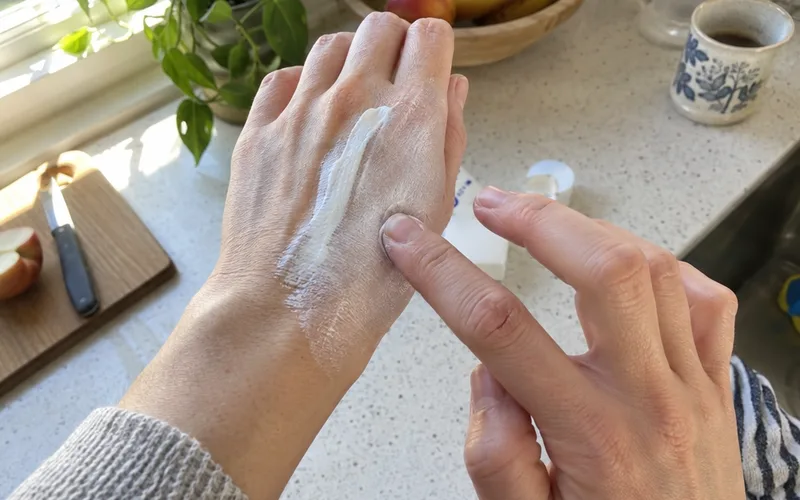
Zinc oxide and titanium dioxide aren’t twins, either. That same guide says zinc oxide gives the broadest UVA and UVB protection but tends to cost more, while titanium dioxide is somewhat weaker against long-wave UVA.
For your face, start with the best mineral sunscreens. For arms and legs, where you’ll use far more product, compare a mineral sunscreen for your body, and this mineral vs chemical sunscreen breakdown goes ingredient by ingredient.
Are Chemical Sunscreen Ingredients Safe?
Chemical sunscreen ingredients remain approved for use, even though FDA testing found that 6 of them reach the bloodstream after a single use. HealthPartners lists them as oxybenzone, avobenzone, homosalate, octinoxate, octocrylene and octisalate, and the FDA is still studying their long-term effects.
Here’s the key line from that guide: “According to the FDA, the fact that an ingredient is absorbed through the skin and into the body does not necessarily mean that the ingredient is unsafe.”
So if absorption worries you, choose zinc oxide or titanium dioxide. The FDA recognized those 2 as generally safe and effective in 2019, the same guide notes.
Just don’t skip sunscreen over the worry. That guide cites the CDC’s finding that skin cancer is the most common cancer in the United States, a far bigger health risk than any ingredient question.
What Is Bemotrizinol?
Bemotrizinol (BEMT) is a newer chemical filter that was added to the FDA’s over-the-counter sunscreen rules in June 2026, according to Dermatology Physicians of Connecticut. It absorbs both UVA and UVB radiation and resists breaking down in sunlight.
Products with it are now on U.S. shelves. You don’t need to replace a sunscreen you already wear comfortably, though, so judge a BEMT bottle by the same 3 label checks.
How to Choose Sunscreen for Your Skin Type
To choose sunscreen for your skin type, match the texture first: oil-free gels for oily skin, hydrating creams for dry skin, and fragrance-free mineral formulas for sensitive or acne-prone skin. Every option still needs broad spectrum and SPF 30.
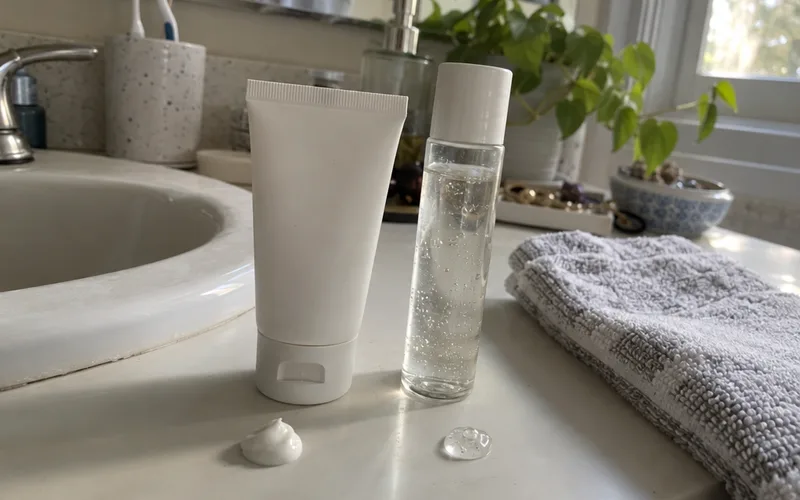
Not sure of your type? Check your face around noon on a day you skip moisturizer.
Sunscreen for Oily Skin
Oily skin does best with a lightweight, oil-free sunscreen that dries down matte. Titanium dioxide is a smart filter here, since it’s lightweight and minimizes excess oil, per HealthPartners.
Heavy creams can add shine by midday, so compare textures among these sunscreens for oily skin before you buy. Sunscreen then slots in as the last morning step of an oily skin routine.
Sunscreen for Dry Skin
Dry skin feels better in a richer lotion or cream with hydrating ingredients. A moisturizing sunscreen can even replace one step in your morning skincare routine.
Make it the last step of your skincare and give it time before makeup. Chemical formulas take about 20 minutes to start working, according to the same health system blog.
Sunscreen for Sensitive or Acne-Prone Skin
Sensitive or acne-prone skin usually does best with a mineral or oil-free, hypoallergenic sunscreen. Chemical sunscreens can clog pores and cause irritation for some people, which is why mineral formulas lead here.
Zinc oxide is often recommended for people with rosacea or eczema, per the Connecticut dermatologists. These picks for sensitive skin are a good place to start, and a short sensitive skin routine keeps the rest of your skincare gentle too.
How to Choose Sunscreen for Your Day
The best sunscreen for your day depends on how long you’ll be outside and how wet you’ll get: a broad-spectrum SPF 30 for daily wear, an 80-minute water-resistant SPF 50 for the pool or beach, and a sweat-friendly formula for sports. The label checks stay the same.
Here’s how to match the bottle to the plan:
- Errands and office days: a broad-spectrum SPF 30 you like on your face, as the last step of your morning skincare.
- Pool, beach or lake: SPF 50 that says very water resistant, since time near water is one reason to go higher.
- Hot workouts and sports: a chemical formula, which HealthPartners says you’re less likely to sweat off or have drip into your eyes.
Wear it on gray days too. UV rays can get through clouds and bounce off snow and windows, the Connecticut practice warns.
Sunscreen also works best as one layer of several. Add a hat, sunglasses and UPF-rated clothing on long days, so you’re not relying on one bottle alone.
Face Sunscreen vs Body Sunscreen
Face sunscreen should be a broad-spectrum SPF 30 or higher that goes on under your makeup, and while your body bottle works too, a separate face formula is often gentler on delicate areas like under your eyes, HealthPartners says.
What about the SPF in your foundation? To get the coverage on the label, you’d need about a nickel-sized dollop of foundation.
That’s more foundation than most people want to wear. So apply sunscreen first and treat SPF makeup as a bonus layer.
Daily face sunscreen is also the simplest step for skin health in any anti-aging routine, because UVA rays cause aging and deeper skin damage.
How Much Sunscreen Should You Apply?
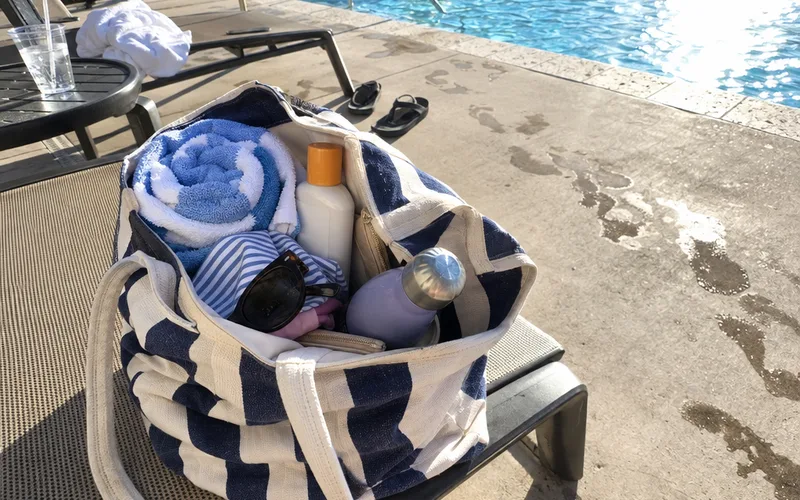
Adults need about a shot glass of sunscreen to cover the whole body, according to Dermatology Physicians of Connecticut. Apply it 15 to 30 minutes before you go outside and reapply every 2 hours.
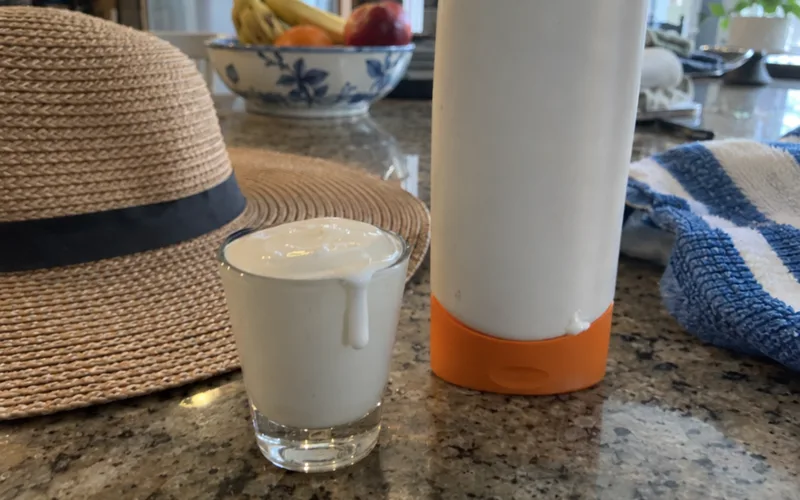
Reapply sooner after swimming, sweating or toweling off, because water, rubbing and heavy sweat all wear sunscreen off your skin.
Here’s a quick checklist for the spots most people miss:
- Your ears and neck
- The tops of your feet
- Your scalp along the part
- Your lips
Finally, check the expiration date before a beach trip. Sunscreen loses effectiveness over time, so an old bottle won’t give you the SPF on its label.
Frequently Asked Questions
How do I choose a better sunscreen?
A better sunscreen is one that says broad spectrum, SPF 30 or higher and water resistant, and that you like enough to wear every day. HealthPartners puts it simply: the best sunscreen is one you will actually use, so test a texture before you buy a big bottle.
Is broad spectrum sunscreen better?
Yes, broad spectrum sunscreen is better because it protects from both UVA rays, which age skin, and UVB rays, which burn it. A sunscreen without those words on the label may only stop sunburn.
Is water resistant sunscreen sweat proof?
No, water resistant sunscreen isn’t sweat proof. It stays on wet or sweaty skin for 40 or 80 minutes, according to the American Academy of Dermatology, so reapply when that time is up or right after you towel off.
Is makeup with SPF enough?
Makeup with SPF usually isn’t enough on its own, because you’d need about a nickel-sized dollop of foundation to get the coverage on the label. Apply a face sunscreen first and put your makeup on top.
What sunscreen is safe for babies?
Babies over 6 months do best with a mineral sunscreen, which dermatologists advise because it’s less irritating on young skin. Babies under 6 months should stay out of direct sun in shade and lightweight protective clothing.
Does sunscreen expire?
Yes, sunscreen expires and loses effectiveness over time, so check the date on the bottle before you rely on it. Toss any sunscreen past its date and buy a fresh bottle.
Final Thoughts
Choosing sunscreen comes down to 3 words on the front of the bottle: broad spectrum, SPF 30 and water resistant.
Everything after that is about comfort, because the sunscreen you enjoy wearing is the one that protects you.
So this week, flip over the bottle you already own and check its label for those 3 words.
If it passes, finish it. If it doesn’t, replace it before your next long day outside.