
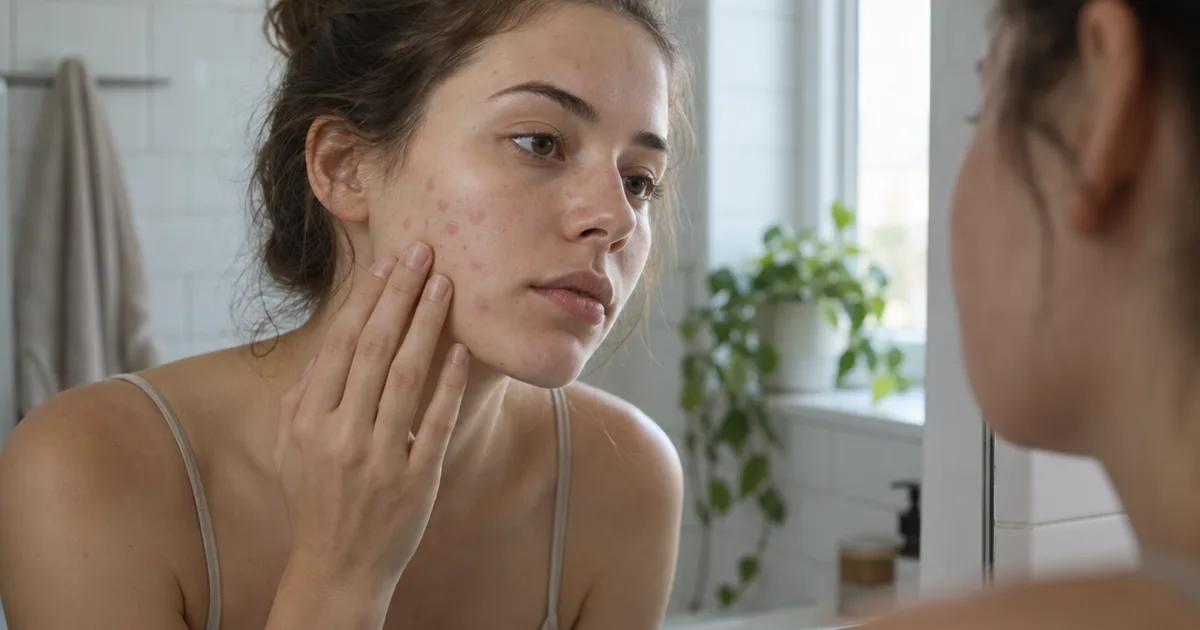
Your pimple is finally gone. But a flat red spot is still sitting exactly where it was, and it isn’t going anywhere fast.
That spot is called post-inflammatory erythema, or PIE for short. It’s one of the most common things people mistake for an acne scar.
In this guide, I’ll show you how to tell PIE apart from dark spots and real scars, why it lingers, and what actually helps it fade. You’ll also see which at-home habits make it worse and when an in-office treatment is worth it.
Let’s dive right in.
What Is Post-Inflammatory Erythema?
Post-inflammatory erythema is redness that stays behind after your skin has been inflamed. “Erythema” is simply the medical word for skin redness, and “post-inflammatory” means it shows up after the inflammation is over.
Most of the time, the trigger is an inflamed pimple. But any injury that inflames the skin, like scratches, burns, rashes or a flare of dermatitis, can leave the same kind of mark.
PIE is flat. You can’t feel it with your fingertip, and the skin’s texture is normal.
It’s a color change, not a dent or a bump, which is the single most useful thing to remember about it.
PIE shows up anywhere you break out. That includes your face, but also your neck, chest, shoulders and back.
Why the Marks Are Red, Pink or Purple
So where does the color come from?
When a pimple gets inflamed, your body sends extra blood to the area to fight it. The tiny blood vessels near the surface, called capillaries, widen to carry that blood.
Some of those capillaries also get damaged along the way, especially when the bump is deep or gets squeezed.
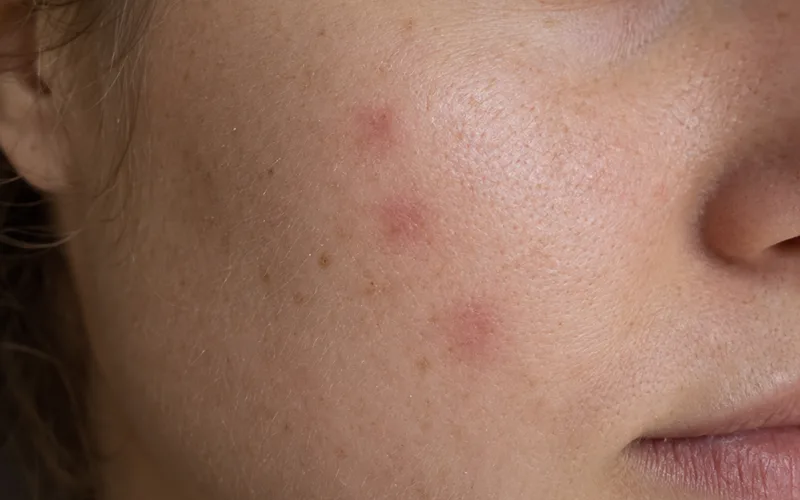
After the pimple heals, those capillaries don’t always return to normal right away. They stay dilated, and the blood inside them shows through the skin as a red, pink or purplish patch.
That’s also why PIE can change color as it fades. A deep red mark often turns pink, then a faint rosy tone, before it blends back into your complexion.
The takeaway? PIE is a blood vessel problem, not a pigment problem.
Keep that in mind, because it decides which treatments help and which ones are a waste of money.
How to Tell PIE From PIH, Acne Scars and Rosacea
Here’s the deal: many “acne marks” products treat the wrong thing.
A red mark, a brown mark and a pitted scar look similar in a bad mirror. But they come from different problems, and each one responds to different care.
So before you buy anything, figure out what you’re dealing with.
The 10-Second Press Test
This is the easiest way to check, and you can do it right now.
- Wash your hands and stand in good, natural light.
- Press firmly on the mark with a fingertip, or press a clear glass against it.
- Watch the color while you press, then let go.
If the mark fades or disappears while you press, then comes back when you let go, it’s most likely PIE. You’ve just pushed the blood out of those widened vessels for a moment.
If the mark stays the same color, it’s more likely a pigment mark. Your finger can’t push pigment away the way it pushes blood.
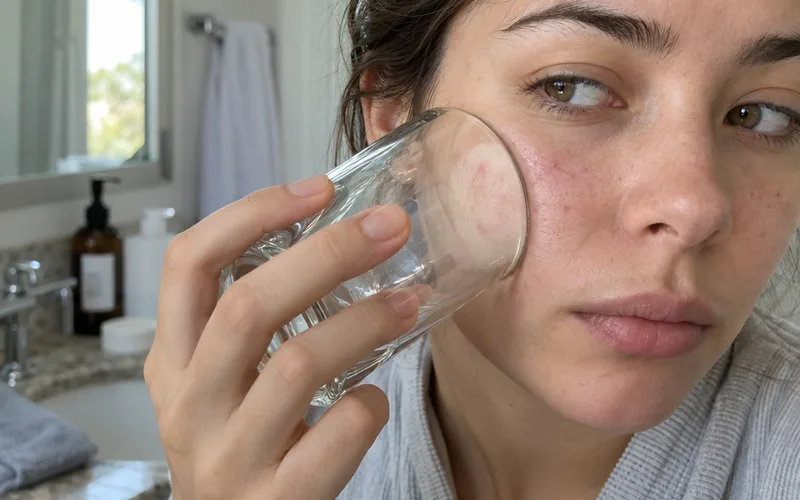
Note: Some marks are a mix of both. If the red part fades but a tan or brown shadow stays, you probably have PIE and PIH in the same spot.
PIE vs. PIH
PIH stands for post-inflammatory hyperpigmentation. It’s the brown, tan, gray or dark spot some people get after a pimple heals.
PIH comes from melanin, the pigment that gives your skin its color. Inflammation can push the skin into an overproduction of melanin, and that extra pigment collects where the pimple was.
Here’s how the two usually compare:
- Color: PIE is red, pink or purple. PIH is brown, tan, gray or dark.
- Cause: PIE comes from dilated or damaged blood vessels. PIH comes from extra pigment.
- Press test: PIE fades under pressure. PIH stays put.
- Who gets it most: PIE is more common on lighter skin. PIH is more common on darker skin, often described as types IV to VI on the Fitzpatrick scale.
That last point matters. On darker skin tones, red marks can be harder to see, and the brown mark tends to be the bigger concern.
On lighter skin, the red mark is usually the main event.
So if your marks are mostly brown, PIH treatments make more sense. Ingredients aimed at melanin, like those in a hydroquinone cream, target pigment, not blood vessels, so they won’t do much for pure redness.
PIE vs. Acne Scars
People call PIE “acne scars” all the time. Technically, it isn’t one.
A true acne scar changes the skin’s texture. It might be a small pit, a rolling dip or a raised bump.
You can see that kind of scar even with makeup on, and you can often feel it when you run a finger over the area.
PIE doesn’t change texture at all. The skin is just a different color.
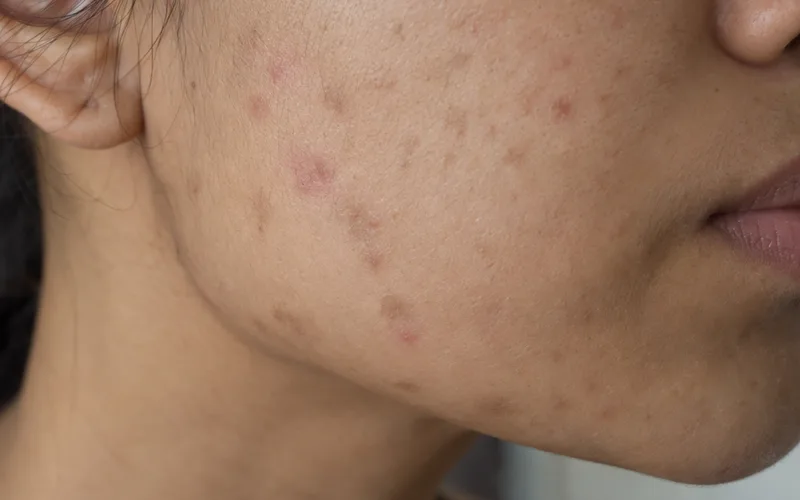
This is good news. Most PIE fades with time, while true scars usually need a professional treatment to improve.
When It Isn’t PIE at All
A few other things can look like PIE, so rule them out.
- Active acne: If the spot is raised, sore or still has a head, it’s a pimple that hasn’t finished healing.
- Rosacea: Redness that flushes, covers your cheeks or nose and comes and goes with triggers is a different skin condition. A guide to treating rosacea on your face is a better fit for that kind of redness.
- Irritation: Patchy redness right after a new product or a strong peel may be a reaction, not PIE.
If you’re not sure, a dermatologist can usually sort it out in one visit. That saves you from buying products for the wrong problem.
What Causes PIE (and Who Gets It Most)
PIE starts with inflammation, so anything that makes a breakout angrier raises your odds of a lingering red mark.
The biggest factor is the type of pimple. Mild, non-inflamed acne like blackheads and whiteheads rarely leaves PIE.
Inflamed bumps, called papules and pustules, are far more likely to leave a red mark behind.
Papules are red, tender bumps without a visible head, usually smaller than about 5 mm. Pustules look similar but have a white or yellow center.
The deeper and more inflamed the bump, the more the blood vessels around it get involved.

From there, a few things tend to make PIE more likely or more intense:
- Picking and squeezing. Popping a pimple adds physical injury on top of inflammation, which can mean more redness and a higher risk of scars.
- Excess oil and acne bacteria. Oily skin can clog pores, and acne bacteria feed on that oil. That process produces fatty acid waste that irritates the skin and fuels inflammation.
- Hormonal shifts. Big hormone changes, like those around periods, pregnancy or menopause, can trigger breakouts that leave marks.
- Harsh products. Rough scrubs and strong soaps can damage your skin barrier and add irritation to skin that’s already trying to heal.
- Sun exposure. UV rays can widen blood vessels and inflame the skin, which can make red marks look worse.
Skin tone plays a role too. PIE is more common and easier to see on lighter skin, while darker skin tends to respond to the same inflammation with PIH.
Medium skin tones often get a mix of both, depending on the type of breakout and whether it was picked.
Bottom line: the less inflamed and disturbed a breakout gets, the less likely it is to leave a red mark.
How Long Does Post Inflammatory Erythema Last?
PIE usually fades on its own over weeks to months. Faint pink marks may settle in a few weeks, while deep red or purple ones can take several months or longer.
There’s no exact timeline, because a few things change the pace. Deeper, more inflamed pimples tend to leave marks that last longer.
Picking, sun exposure and irritation can also slow the process, since each one keeps the area inflamed.
How Long Does an Inflamed Pimple Last?
The pimple itself is usually the short part of the story. A single inflamed pimple often calms down over several days to a couple of weeks, while deeper, painful bumps can hang around longer.
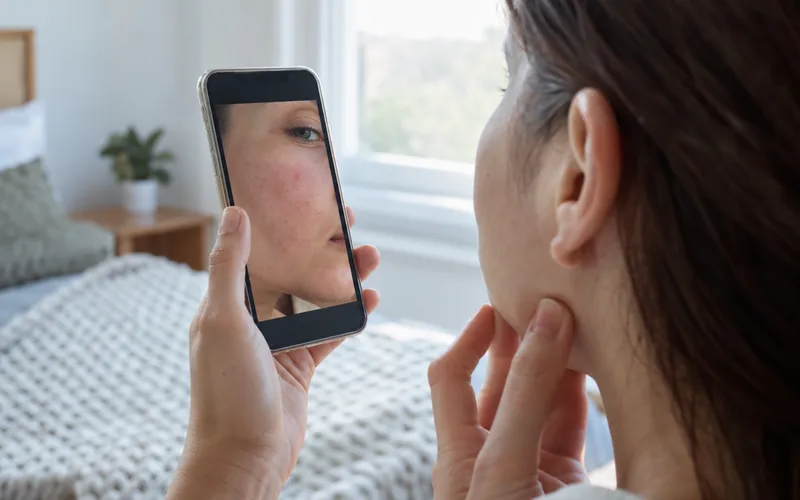
The red mark is what outlasts it. That’s why PIE can feel like it’s taking forever: the clock on the mark only starts once the pimple has fully healed, and picking resets it.
Is Post Inflammatory Erythema Permanent?
In most cases, no.
Because PIE is a color change rather than damage to the skin’s structure, the small blood vessels usually settle down over time. As they do, the redness fades.
That said, some marks stick around much longer than you’d like. And a mark that never fades may not be PIE at all.
It could be a true scar with redness, broken blood vessels, or another skin condition that needs a dermatologist’s eye.
Why Your PIE Isn’t Fading
If your marks seem stuck, one of these is usually the reason:
- New breakouts keep replacing old marks. It can look like nothing is fading when the real problem is ongoing acne.
- You’re picking. Even gentle squeezing restarts the inflammation in that spot.
- You skip sunscreen. UV rays can keep the area inflamed and the vessels dilated.
- Your routine is too harsh. Daily scrubs, strong acids or too many new products can keep your skin irritated.
- The mark isn’t PIE. If it doesn’t fade under pressure, or it has a texture change, it may need a different approach.
Here’s what I’d do: take a photo of the area in the same light once a week. Fading is slow enough that you won’t notice it in the mirror, but you’ll see it when you compare photos a month apart.
How to Fade PIE at Home, Step by Step
You can’t “erase” PIE overnight. (Anyone promising that is selling something.)
What you can do is give your skin the best conditions to heal, and stop new marks from forming. Here’s the process I recommend, in order.
Step #1: Stop New Marks Before They Start
This step does more than any serum.
Every inflamed pimple you get is a potential new red mark. So getting your breakouts under control is the fastest way to clearer-looking skin, even before the old marks fade.
Start with gentle acne treatments that don’t add irritation. Common options include benzoyl peroxide, salicylic acid and azelaic acid.
If over-the-counter care isn’t enough, a dermatologist can prescribe stronger acne treatment.
Next, keep your hands off. If a pimple comes to a head, cover it with a pimple patch instead of squeezing it.
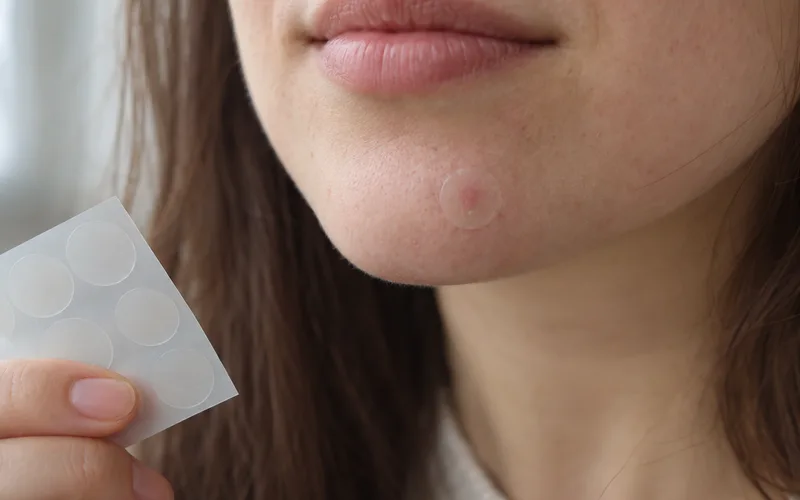
Pimple patches are small stickers made of hydrocolloid, a gel used in wound dressings. They absorb fluid from an open spot and protect it from more injury, which can lower the risk of a red mark.
These patches work best on open, draining pimples, and some also contain active ingredients like niacinamide or hyaluronic acid.
Step #2: Wear Sunscreen Every Single Day
Sunscreen is the most boring step. It’s also one of the most important.
UV rays can widen blood vessels and trigger more inflammation. That can make red marks look darker and fade more slowly.
On mixed marks, sun exposure can also deepen the brown PIH part.
Use a broad-spectrum sunscreen with at least SPF 30 every morning, even on cloudy days. If you’re outside, reapply about every two hours.
If sunscreen makes you break out, look for one labeled non-comedogenic, which means it’s made not to clog pores. A good place to start is learning how to choose sunscreen for your skin type, because the right formula is the one you’ll actually wear.
Step #3: Calm Your Skin and Protect Your Barrier
Your skin barrier is the outer layer that keeps water in and irritants out. When it’s damaged, your skin gets red, tight and reactive, which is the opposite of what PIE needs.
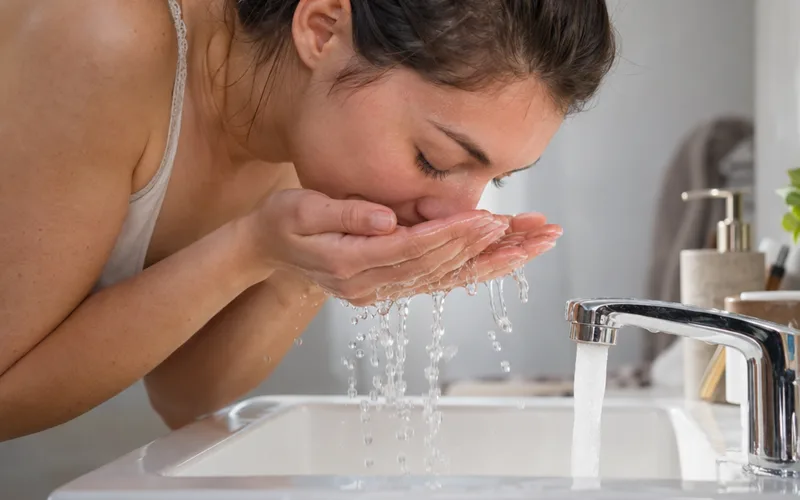
Here’s how to keep it calm:
- Cleanse gently. Use a mild, fragrance-free cleanser once or twice a day.
- Use lukewarm water. Hot water widens blood vessels and can make redness look worse.
- Moisturize every day. Look for humectants like glycerin and hyaluronic acid, plus ceramides and fatty acids.
- Cut the irritants. Skip products heavy in alcohol, fragrance and essential oils while you heal.
If your skin already feels tight or stings when you apply products, focus on skin barrier repair for a couple of weeks before adding anything strong.
Step #4: Add One Targeted, Anti-Inflammatory Ingredient
Once your skin is calm, you can add one active ingredient. Just one, so you can tell whether it helps or irritates.
Here are the ingredients most often suggested for red marks:
- Niacinamide: A form of vitamin B3 with calming, anti-inflammatory properties. It’s usually gentle, which makes it a good first choice for many skin types. You can learn more about what niacinamide does before you buy a serum.
- Vitamin C: An antioxidant that helps protect skin from UV damage. It’s often suggested for both red and dark marks. Here’s more on using vitamin C serum without irritation.
- Azelaic acid: An acne-fighting acid with anti-inflammatory effects. It can help calm breakouts while you wait for marks to fade.
- Soothing plant extracts: Centella asiatica and green tea show up in many calming products for red, irritated skin, sometimes alongside antioxidants like astaxanthin.
What about tranexamic acid? It’s mostly sold for dark spots, because it targets pigment production.
That makes tranexamic acid a reasonable pick if your marks are a mix of red and brown, but don’t expect it to fix pure redness.
Does Vitamin C Help Post Inflammatory Erythema?
Vitamin C comes up constantly when people look for help with red marks, so it deserves a straight answer. It’s a reasonable addition, but it isn’t a vessel-targeting treatment.
Its main jobs are protecting skin from free radicals and UV damage and helping fade brown pigment. For PIE, that protection supports healing, and it does double duty on mixed red and brown marks.
Just know that some vitamin C serums sting, especially strong ones on irritated skin. If yours does, a gentler option like niacinamide is the better fit until your skin settles.
Pro Tip: Start any new active on a small patch of skin first. If it stings, burns or turns the area redder, stop and go back to your gentle basics.
Step #5: Be Patient (Seriously)
This is the hardest step, but it’s the one that makes everything else work.
PIE fades slowly, and switching products every week keeps your skin irritated. Give a simple routine a few months before you judge it.
Key Takeaway: fewer new pimples, daily sunscreen and calm skin do most of the work. Serums help, but they’re the finishing touch, not the foundation.
Home Remedies for PIE: What’s Worth Trying and What to Skip
When people search for home remedies, they usually mean kitchen ingredients and DIY tricks. Some are harmless, and others can make PIE worse.
The rule is simple: anything that irritates your skin can deepen redness, even if it’s natural.
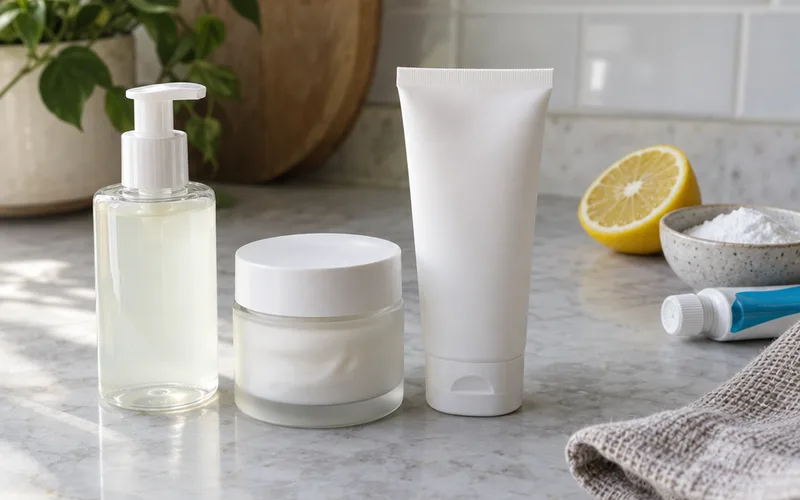
Here’s what’s worth doing at home:
- Cool compresses: A clean, cool cloth can make a freshly healed area look calmer for a while.
- Green tea skincare: Green tea extract is a common soothing ingredient in calming products.
- A plain, gentle routine: Cleanser, moisturizer and sunscreen do more than any trick.
Here’s what I’d skip:
- Lemon juice and vinegar: These are acidic and can sting, burn and irritate broken or healing skin.
- Baking soda scrubs: Rough and harsh on your skin barrier.
- Toothpaste on spots: It can dry out and irritate the skin around a pimple.
- Essential oils: Many can cause sensitivity, especially on reactive skin.
- Home dermarollers: Rolling tiny needles over your face at home can lead to irritation, more redness and even scarring.
When you shop for PIE treatment products, read the label before the marketing. Look for fragrance-free, non-comedogenic formulas with one clear active ingredient, and skip anything that promises to erase marks overnight.
If you’re not sure whether something is too harsh, it probably is. A sensitive skin care routine is a safer template to follow while your marks fade.
In-Office Treatments for Stubborn PIE
If your marks have barely changed after a few months of good care, it might be time to see a dermatologist. Here are the main options they may suggest.
Vascular Lasers and Intense Pulsed Light
These are the most targeted treatments for PIE.
Why? Because they go after the blood vessels causing the redness.
A pulsed dye laser sends a beam of light that’s absorbed by the red color in blood. That energy heats and breaks down the widened vessels in the dermis, the layer under the skin’s surface, so the redness fades.
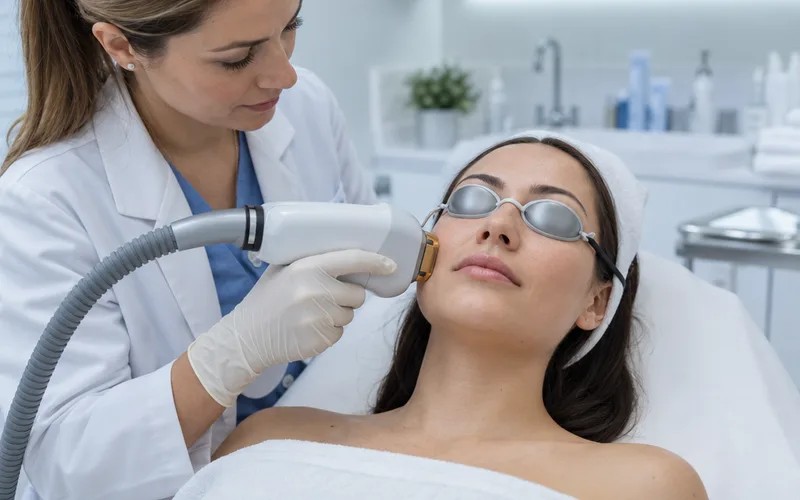
Intense pulsed light, or IPL, works in a similar way, but it uses a broad range of light instead of a single laser beam. Both can reach below the skin’s surface to treat damaged blood vessels.
Expect to need more than one session. If your marks are partly brown, ask about a laser treatment for hyperpigmentation too, since lasers that target pigment are a different tool.
Microneedling
Microneedling uses tiny needles to create very small, controlled injuries in the skin. That prompts the skin to make new collagen-rich tissue, and collagen is the protein that gives skin its structure.
It’s often used for textured acne scars, and some clinics offer it for red marks too. It should be done by a trained professional, such as a dermatologist or a licensed aesthetician, not with a home roller.
Like any procedure, it comes with downtime and some risk, so read up on microneedling side effects before you book. Several sessions may be needed.
Chemical Peels
A chemical peel uses an acid to loosen the bonds between dead skin cells, so the top layers shed and newer skin shows through.
Peels range from light to deep. Here’s the catch: deeper peels can sometimes make PIE worse, because they add more inflammation.
Lighter, superficial peels are the safer place to start.
If you’re curious, look at the realistic benefits of a chemical peel first. A peel is more useful for texture and pigment than for pure redness.
Prescription Options
A dermatologist may also suggest prescription treatments that calm inflammation or control acne.
One example is dapsone gel. Dapsone is an antibiotic with anti-inflammatory effects, and the topical gel can reduce the number and severity of inflamed pimples.
Fewer inflamed pimples means fewer new red marks.
Your dermatologist can also adjust your acne treatment overall, which is often the biggest win for people who keep getting new PIE.
7 Mistakes That Keep PIE Red Longer
Even with a good routine, small habits can slow down healing. Here are the most common ones.
- Over-exfoliating. Gentle exfoliation can smooth texture, but too much damages your skin barrier and adds irritation.
- Picking at breakouts. It adds trauma and keeps the area inflamed, which can stretch healing by weeks.
- Skipping sunscreen. UV rays can make redness look worse and slow fading.
- Using harsh physical scrubs. Rough particles like crushed shells, sugar or salt can create small tears in the skin.
- Washing with hot water. Heat widens blood vessels and can make red marks look brighter.
- Rushing into strong actives. Starting a strong peel or several new actives at once can overwhelm healing skin. Give calming basics a couple of weeks first.
- Switching products constantly. Your skin needs time to adjust, and constant changes make it hard to tell what’s working.
Notice a theme? Almost every mistake comes down to irritation.
The calmer your skin stays, the faster PIE tends to fade.
A Simple Routine for PIE-Prone Skin
Want a starting point? Here’s a basic routine that follows everything above.
It’s meant for a typical adult with breakouts and red marks, so adjust it for your skin type.
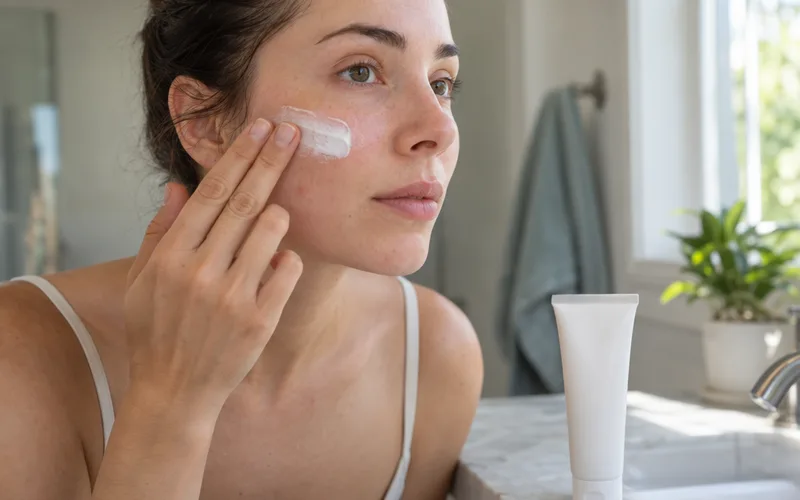
Morning:
- Gentle, fragrance-free cleanser with lukewarm water.
- A niacinamide or vitamin C serum, if your skin tolerates it.
- A light moisturizer.
- Broad-spectrum sunscreen, SPF 30 or higher.
Night:
- The same gentle cleanser.
- Your acne treatment, such as azelaic acid or a product your dermatologist recommends.
- A moisturizer with ceramides or hyaluronic acid.
That’s it. Add a pimple patch on any spot that comes to a head, and keep your hands off the rest.
If you want to build this into a fuller routine, the basics of a simple skincare routine show how each step fits together without overdoing it.
When to See a Dermatologist
Most PIE is harmless and fades with time. But a dermatologist is worth a visit if any of these sound familiar:
- Your marks haven’t improved at all after several months of steady care.
- You keep getting new inflamed pimples or deep, painful bumps.
- You can’t tell whether a mark is PIE, PIH, a scar or another skin condition.
- You’re pregnant or breastfeeding and want to know which treatments are safe.
- You want to try a laser, IPL, peel or microneedling.
A dermatologist can confirm what you’re dealing with and match the treatment to it. That alone can save you months of guessing and a drawer full of products that don’t fit the problem.
The Bottom Line
Post-inflammatory erythema is frustrating, but it’s usually temporary. Calm your breakouts, protect your skin from the sun and stop picking, and most red marks fade on their own time.
If they don’t, a dermatologist has tools like vascular lasers that target the problem directly.
So which step are you going to start with today?
Frequently Asked Questions
Does PIE fade on its own?
Yes, in most cases PIE fades on its own as the small blood vessels under the mark settle down, though it can take weeks to months. Daily sunscreen, gentle skincare and keeping your hands off new pimples help it fade without new marks taking its place.
What are some home remedies for post-inflammatory erythema?
The home care worth doing is simple: broad-spectrum sunscreen every day, a gentle cleanser with lukewarm water, a fragrance-free moisturizer and a calming serum such as niacinamide. Skip lemon juice, harsh scrubs, essential oils and home dermarollers, because irritation tends to make redness worse.
How long can inflammatory acne last?
A single inflamed pimple usually calms down over several days to a couple of weeks, while deeper bumps can hang around longer. The red mark it leaves can last much longer than the pimple itself, which is why PIE often outlives the breakout.
What is postinflammatory hyperpigmentation in acne?
Postinflammatory hyperpigmentation (PIH) is a brown, tan or dark spot left after a pimple, caused by extra melanin rather than blood vessels. It’s more common on darker skin tones, it doesn’t fade when you press on it, and it responds to brightening ingredients more than PIE does.
How does an inflamed pimple look?
An inflamed pimple is a raised, red and often tender bump, either a solid papule or a pustule with a white or yellow center. These are the breakouts most likely to leave PIE behind, unlike blackheads and whiteheads.
Is post-inflammatory erythema permanent?
PIE is usually not permanent, because it’s a color change rather than a change in the skin’s texture. If redness hasn’t improved after several months, see a dermatologist, who can confirm what it is and offer treatments such as a pulsed dye laser.