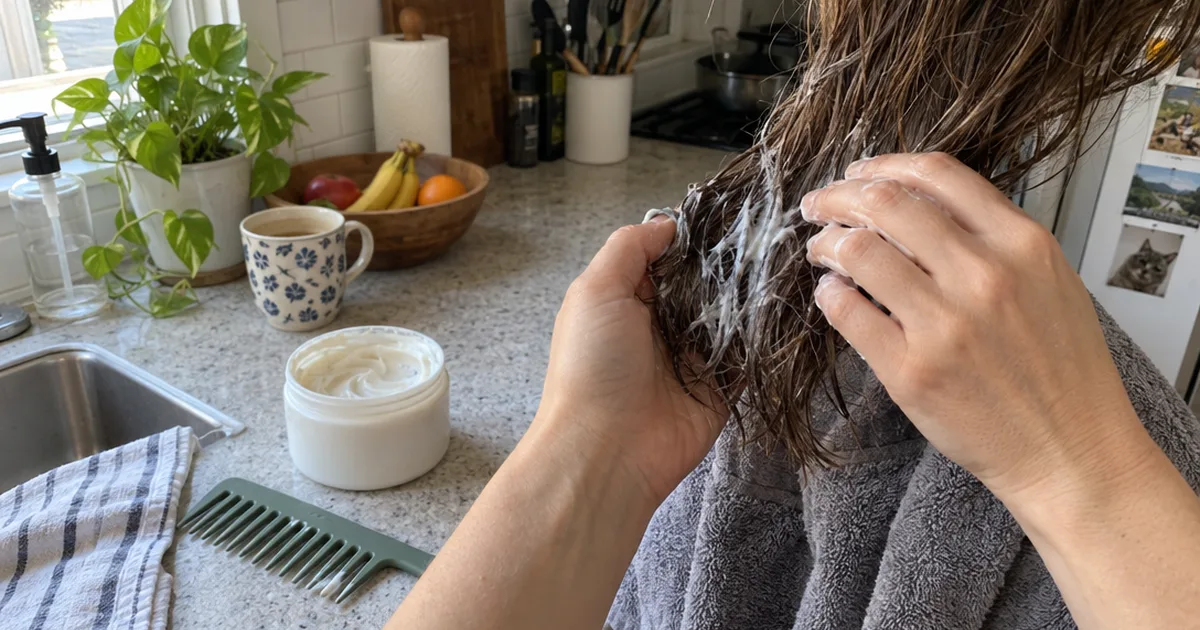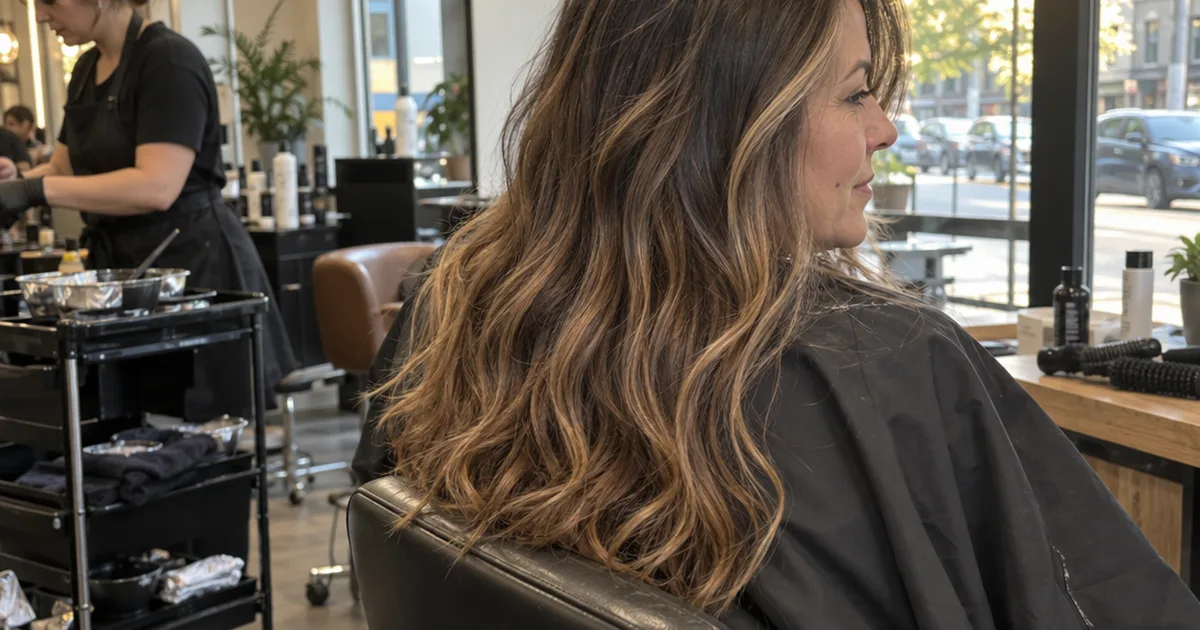

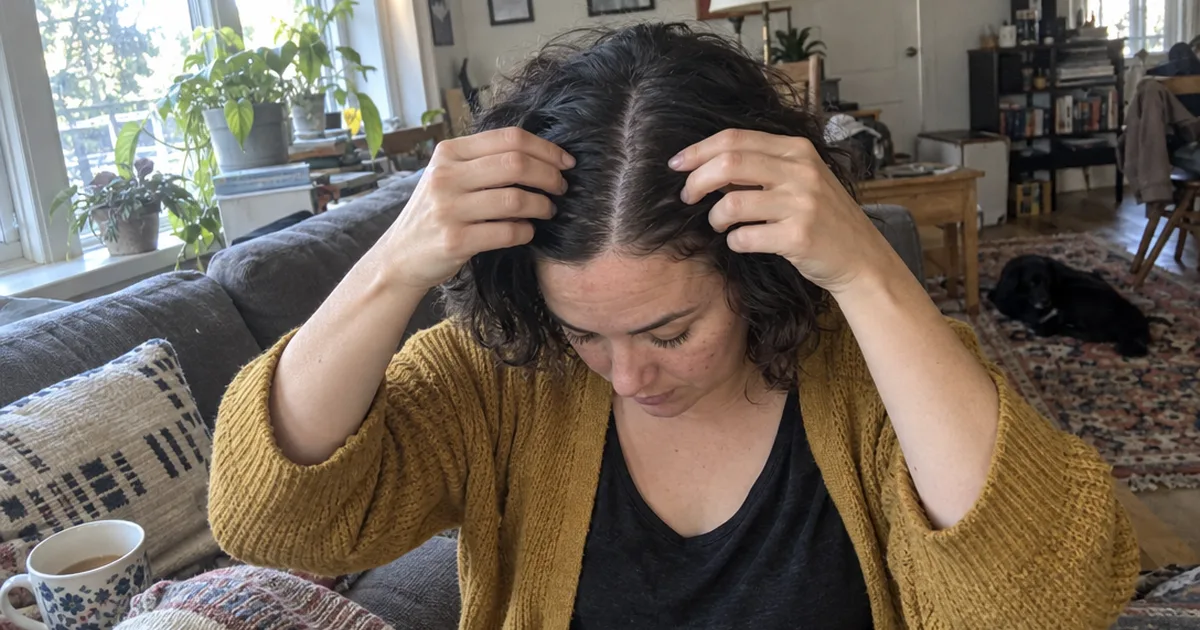
Your scalp holds about 100,000 hair follicles.
That count comes from the American Academy of Dermatology Association, as Healthline’s medically reviewed guide reports. Every one of those follicles sits in skin that needs care, just like your face.
Most people never think about it until it itches.
So I’ll walk you through the signs of a healthy scalp, a 5-step scalp care routine and the fixes for buildup, dryness, oil and flakes. You’ll also see when flakes are a job for a dermatologist, not a new shampoo.
What Is Scalp Care?
Scalp care is the routine of cleaning, soothing and protecting the skin on your head, so it stays free of buildup, flakes and irritation and gives your hair a healthy place to grow. Think of it as skin care under your hair.
Your scalp is skin, just thicker and busier. It packs in more hair follicles and oil glands than most of your body, which is why it gets greasy, flaky or itchy so fast.
What Your Scalp Actually Does
Your scalp grows hair, and it also guards your skull and keeps out infection. Tiny sebaceous glands attached to each follicle make sebum, the natural oil that moisturizes your scalp and coats your hair.
How much sebum you make varies from person to person. Too little leaves your scalp tight and flaky, and too much makes roots greasy by morning.
So good scalp care isn’t about scrubbing everything away, it’s about keeping that oil in balance.
What Does a Healthy Scalp Look Like?
A healthy scalp looks like calm skin: no redness, scabs or bumps, no thick flakes or greasy buildup, and no tenderness, burning or odor. It rarely itches, and your hair isn’t shedding more than usual.
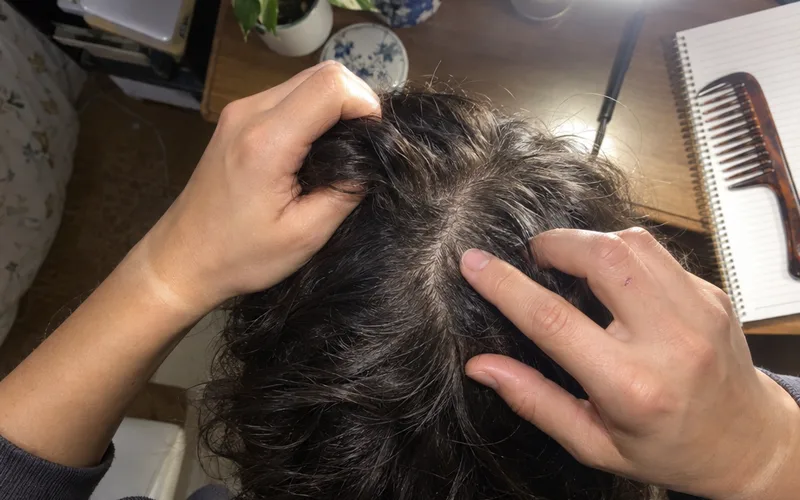
Board-certified dermatologist Dr. Sharleen St. Surin-Lord put it plainly in Healthline’s medically reviewed article: “Bumps, scabs, and redness signal inflammation.” She adds, “If left untreated, this can cause hair loss that can become permanent.”
That’s the real reason to pay attention.
Signs of an Unhealthy Scalp
The common signs of an unhealthy scalp are itching, burning, bumps on the scalp, extreme oiliness, extreme dandruff and hair loss, according to the same Healthline guide. One of them on a bad day is normal, but one that sticks around for weeks deserves a closer look.
Here’s a quick self-check for tonight:
- Part your hair in 3 or 4 places under good light.
- Look for redness, scaly patches or small bumps.
- Notice whether flakes are small and dry or larger and oily.
- Feel for tender spots with your fingertips.
If you find nothing but a little oil, your scalp is probably fine. If you find redness or bumps, the fix depends on the cause.
A Simple Scalp Care Routine
A good scalp care routine has 5 steps: wash 3 to 4 times a week at most, massage with your fingertips, rinse with warm water, exfoliate about once a week, and patch test chemical services. It adds almost no time to your shower.
This routine fits inside the hair care routine you already have.
Step #1: Wash 3 to 4 Times a Week, Tops
Dermatologist Dr. Sanusi Umar recommends washing your hair three to four times a week, tops, in Healthline’s medically reviewed guide. Washing more often strips natural oils, and your scalp may answer by making even more oil.
That’s the trap. Greasy roots lead to daily shampoo, and daily shampoo leads to a dry, itchy scalp.
So if your scalp feels tight or itchy, add a day between washes. A very oily scalp or heavy sweat may still call for more washes.
Step #2: Massage With Your Fingertips, Not Your Nails
Work your shampoo in with the pads of your fingers in small circles. A gentle massage lifts oil and dead skin without scratching the skin open.
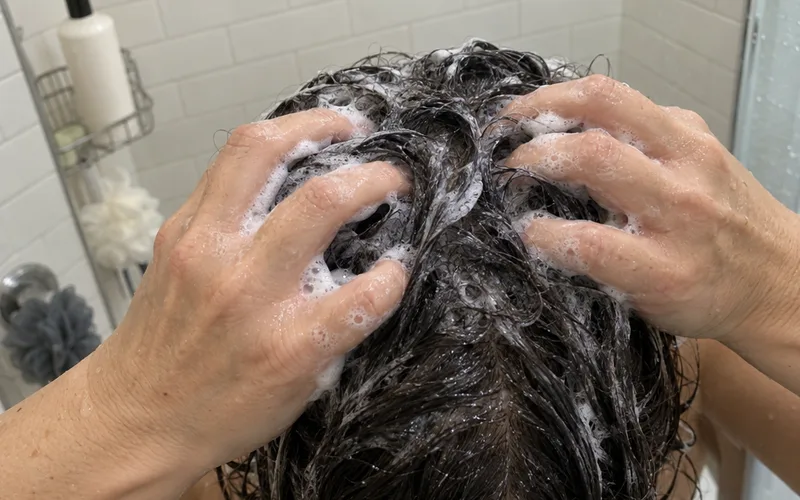
Nails can leave tiny cuts that sting and can even get infected. Spend about a minute on your scalp, then let the suds rinse your lengths.
Step #3: Turn the Water Down to Warm
Hot water strips your scalp’s oils the same way it dries out your hands. Warm water cleans just as well and leaves your scalp less tight.
Love a hot shower? Drop the temperature for the 2 minutes your head is under the water.
Step #4: Exfoliate Once a Week or Less
Exfoliating clears the dead skin, oil and product residue that shampoo leaves behind. Most scalp scrubs are meant for weekly use, not daily.
For example, Dermstore’s listing for Briogeo’s Scalp Revival scrub shampoo directs using it once a week or every other week. Skip exfoliating on days your scalp is sunburned, scratched or inflamed.
Step #5: Patch Test Before Color or Chemical Services
Hair dye, bleach, relaxers and perms touch your scalp as much as your hair. A reaction can cause redness, burning and irritation, and a bad chemical burn can scar.
So ask your colorist for a patch test before any new service, especially a big change like balayage or highlights. At home, follow the box’s patch test directions every time.
Key Takeaway: Fewer washes, softer hands, cooler water and a weekly exfoliation cover most of what a healthy scalp needs.
How to Get Rid of Buildup on Your Scalp
To get rid of buildup on your scalp, use a scalp scrub or clarifying shampoo once a week, massage it in with your fingertips, and rinse longer than you think you need to. Buildup is a mix of dead skin, sebum, sweat and leftover styling products.
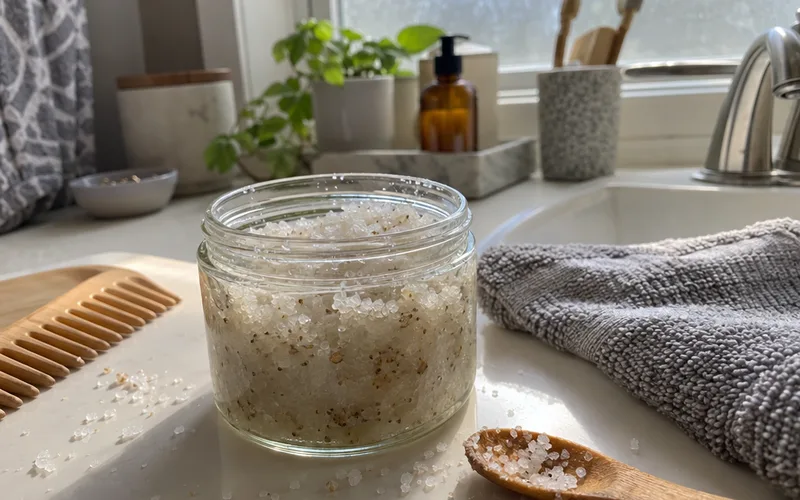
Scrubs contain physical or chemical exfoliants that help remove excess skin cells, oil and dandruff, as Healthline explains. Physical scrubs use grains like sea salt, while chemical ones use acids such as salicylic acid.
Here’s how to do it:
- Brush your hair before you shower to loosen flakes and product.
- Part your wet hair so the product reaches your scalp.
- Massage the scrub in for about a minute.
- Rinse well, then condition your lengths.
Clarifying shampoos are strong, so save them for once a week or less. That keeps buildup down without stripping your scalp.
How to Care for a Dry Scalp vs an Oily Scalp
A dry scalp needs fewer washes, a moisturizing shampoo and soothing aloe vera, while an oily scalp needs more frequent washes with a gentle shampoo and a weekly exfoliating wash. The 5-step routine works for both.
Not sure which you have? Check your roots on day 2 after washing: tight, flaky skin means dry, and greasy roots mean oily.
Dry Scalp Care
A dry scalp flakes because it doesn’t have enough oil and moisture. It often comes with dry skin elsewhere, and dry air, frequent washing and age make it worse.
Stretch the days between washes and switch to a sulfate-free, moisturizing shampoo and conditioner. A light aloe vera toner can calm the tight feeling, and a humidifier helps in winter.
These dry scalp treatment options go step by step.
Oily Scalp Care
On an oily scalp, the sebaceous glands make more sebum than you need, so washing more often is usually the fix. Use a gentle, sulfate-free shampoo most days and one with tea tree oil or salicylic acid once a week.
Hair type changes how oily you look, too. Oil slides fast down fine, straight hair but slowly down coils, which is one reason curly and wavy hair often feels drier.
Should You Put Oil on Your Scalp?
Putting oil on your scalp helps a dry, tight scalp when you use a little before washing and rinse it out, but heavy oils left on for days can feed Malassezia, the yeast linked to dandruff. So oil suits dry scalps, not every scalp.
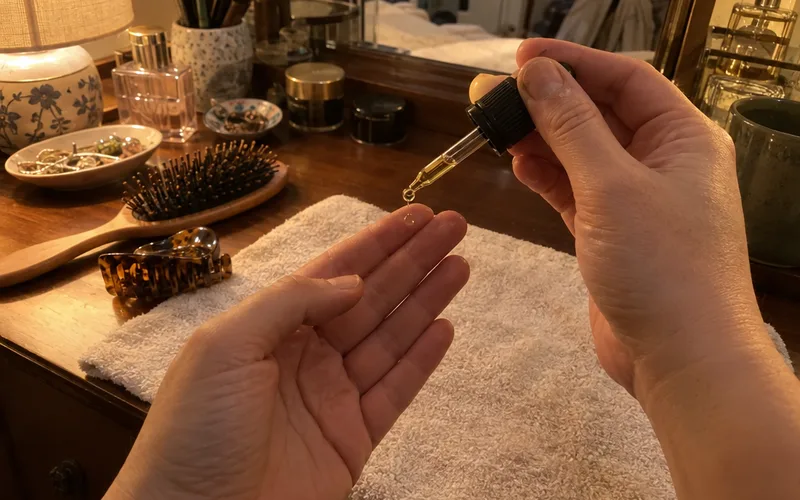
Here’s a simple way to decide:
- Dry, tight scalp with small, dry flakes: try a pre-wash oil once a week.
- Oily scalp or greasy flakes: skip scalp oils and focus on cleansing.
- Itchy scalp with red patches: hold off on oils until you know the cause.
Coconut oil is the one people ask about most, so here’s how coconut oil for a dry scalp works. And if your real goal is thicker hair, check the claims behind any hair growth oil first.
What Could Be Causing Your Itchy, Flaky Scalp?
An itchy, flaky scalp is most often caused by dry scalp or dandruff, but scalp psoriasis, eczema (atopic dermatitis) and a reaction to a hair product can look the same. Flake size, oiliness and redness help tell them apart.
The right fix starts with the right guess. A moisturizing routine won’t clear dandruff, and a dandruff shampoo can make a dry scalp itch more.
Dry Scalp vs Dandruff
Dry scalp gives you small, dry flakes and a tight feeling, while dandruff gives you larger, oilier flakes and an itch. Dandruff is linked to excess oil and the Malassezia yeast.
Mild dandruff usually clears with a shampoo that has zinc pyrithione, ketoconazole, selenium sulfide or salicylic acid. Leave it on for a few minutes before rinsing so the active ingredient has time to work.
Here’s how to tell dry scalp vs dandruff at a glance. If you’re ready to buy, start with the dandruff shampoos dermatologists recommend.
Scalp Psoriasis and Eczema
Scalp psoriasis causes red, itchy, scaly patches because new skin cells form in days instead of weeks and pile up. Scalp eczema, or atopic dermatitis, makes skin dry, inflamed and itchy, and seborrheic dermatitis causes dandruff with scaly patches.
All three can pass for stubborn dandruff, and each needs a different treatment. So let a dermatologist name the condition before you treat it.
Some people also try home remedies for an itchy scalp, but patch test anything new on a small spot first.
Does Scalp Care Help Hair Growth?
Scalp care helps hair growth indirectly: a calm, clean scalp gives each follicle a better place to grow, and treating inflammation early helps prevent hair loss that could become permanent. It can’t change your genes or cure a medical cause of thinning.
Shedding more than usual? The cause is often inside your body, so ask your doctor about thyroid problems, an autoimmune disease or vitamin deficiencies that cause hair loss.
This hair care routine for hair growth builds on the steps above. And before you try minoxidil, laser devices or other hair loss treatments for women, get a diagnosis.
How Tight Hairstyles Hurt Your Scalp
Tight ponytails, buns, braids and extensions worn again and again pull on your follicles and can cause traction alopecia, hair loss from constant tension. Repeated damage can also lead to central centrifugal cicatricial alopecia (CCCA), a scarring condition that causes permanent hair loss.

A style that feels sore or hurts to sleep on is too tight. Ask your stylist to loosen it, and give your scalp a break between long-wear styles.
When to See a Dermatologist About Your Scalp
See a dermatologist about your scalp when itching, burning, bumps, red patches or heavy flakes last more than a few weeks of good home care, or when your hair sheds in large amounts. A dermatologist can tell dandruff apart from psoriasis, eczema or a reaction to a product or medication.
Before your visit, list the products you use and when the problem started. Snap a photo on a bad day too, since flare-ups often calm down right before an appointment.
Note: This guide is educational and can’t diagnose a scalp condition.
Your First Step This Week
The easiest win in scalp care is washing a little less and massaging a little more.
So on your next wash day, turn the water down to warm and use your fingertips, not your nails.
Frequently Asked Questions
What is the best thing to put on my scalp?
The best thing to put on your scalp is a gentle shampoo that matches your scalp type, plus a conditioner on your lengths. Add a dandruff shampoo with zinc pyrithione only when you have flakes, and a soothing aloe vera toner when your scalp feels dry.
How often should you use a scalp scrub?
A scalp scrub works best once a week or every other week, which is what Dermstore’s listing for Briogeo’s Scalp Revival scrub shampoo directs. Scrub less often if your scalp is dry or tender, and skip it on broken or inflamed skin.
Is it bad to wash your hair every day?
Washing your hair every day can strip your scalp’s natural oils, so dermatologist Dr. Sanusi Umar suggests three to four washes a week at most, in Healthline’s medically reviewed guide. Very oily scalps and heavy sweat days may still need more.
What is a good scalp care routine for hair growth?
A good scalp care routine for hair growth keeps the scalp calm: gentle washing, fingertip massage, loose hairstyles and quick treatment of flakes or redness. Scalp care supports the hair you can grow, but it can’t reverse genetic hair loss on its own.
Can I treat dandruff at home?
Mild dandruff can usually be treated at home with an over-the-counter shampoo that contains zinc pyrithione, ketoconazole, selenium sulfide or salicylic acid. See a dermatologist if the flakes don’t improve or come with red, scaly patches.