

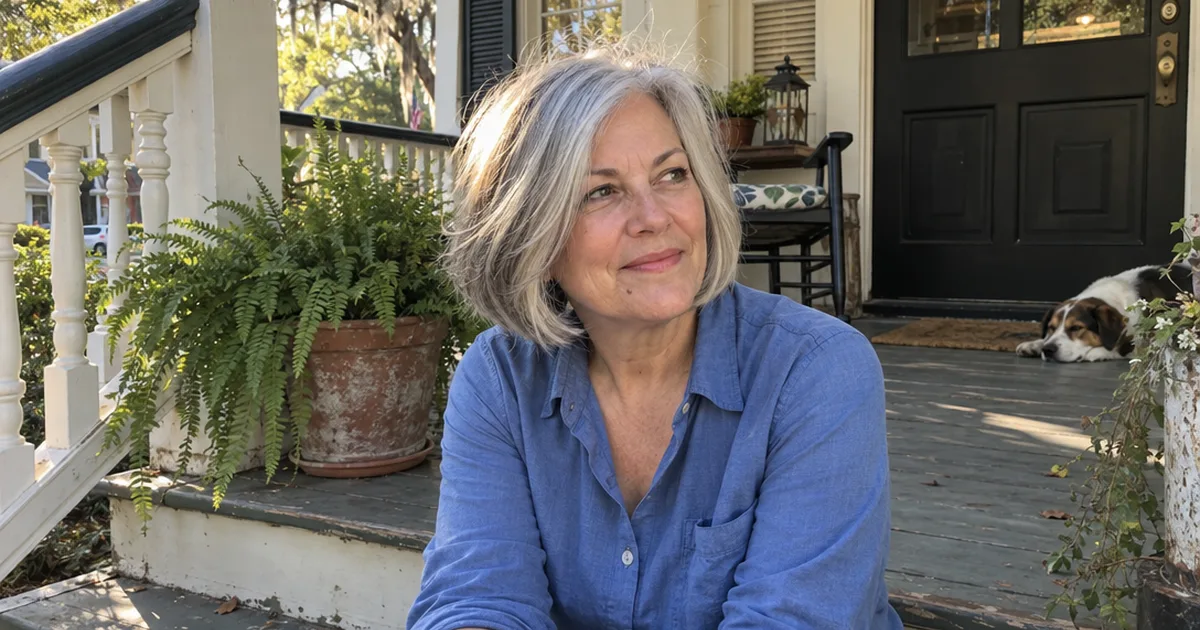
The average 45- to 65-year-old with gray hair is only about 27% gray.
That number comes from a L’Oréal study of people in that age range.
So natural gray hair usually arrives in stages, and that’s why going gray takes a plan.
You’ll see 3 ways to grow out your dye, which one fits your hair, and the 2 habits that stop silver from turning yellow.
What Is Natural Gray Hair?
Natural gray hair is hair that grows in without melanin, the natural pigment that colors it, so each new strand is actually clear. Wikipedia’s entry on greying of hair says there’s no gray or white pigment at all.
Light reflecting off those clear hairs is what makes them look gray or white.
Here’s how it works:
Pigment cells at the base of each hair follicle color the hair as it grows.
When those cells stop making melanin, the next hair grows in clear. That’s why gray starts at the roots, and why one silver strand can sit right beside a dark one for years.
In other words, gray hair isn’t a new color your body adds, it’s the old color going missing.
Is There a Difference Between Gray and White Hair?
Gray and white hair are the same kind of strand: both have lost their melanin. The difference is the mix, since clear strands scattered through darker ones read as gray, and a head of mostly clear strands reads as white.
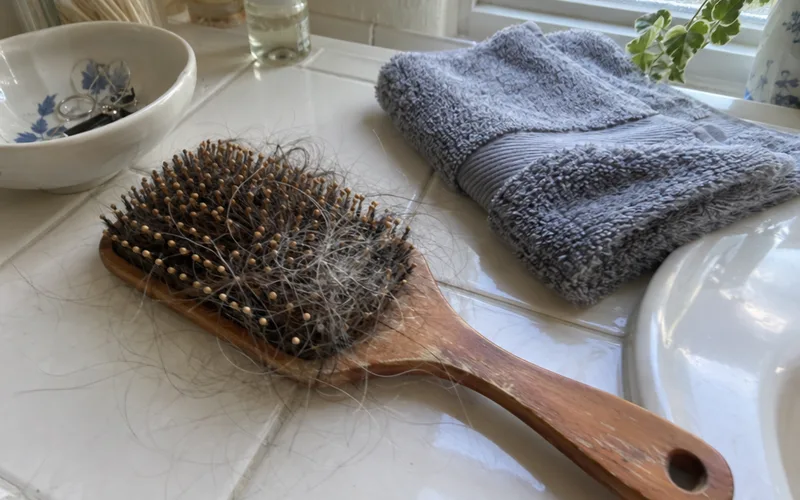
That’s why many people move from salt-and-pepper to silver to white over the years.
When Does Hair Start Turning Gray?
Hair usually starts turning gray in the late twenties for women and the early to mid-twenties for men, according to Wikipedia’s greying entry. By age 40, more than 60 percent of Americans have some gray hair.
Your genes set most of that timing.
In fact, the same entry says the starting age seems almost entirely genetic. Some people are even born with gray hair because they inherit the trait.
Found silver strands well before 30? Check the common causes of early graying before you blame family history.
Is the 50/50/50 Rule True?
The 50/50/50 rule, the old saying that half of people are half gray by 50, overstates how fast most people go gray. A L’Oréal study summarized by Wikipedia found 74% of people aged 45 to 65 had some gray.
But that gray covered only 27% of the head on average, and about 1 in 10 people had no gray hairs at all after 60.
So a few silver strands at 45 don’t mean you’ll be fully gray at 50.
Can You Make Hair Go Gray Faster or Reverse It?
No diet, supplement or vitamin has been proven to speed up, slow down or reverse graying, according to Wikipedia’s entry on the process. The only real way to reach full natural gray faster is to remove the dyed hair sooner.
That includes biotin and every other vitamin sold for hair color, so if graying worries you, ask a healthcare professional instead.
So what if you want to get there faster without bleach?
Use a shorter cut or lowlights. A cut removes the old color in one visit, and lowlights add darker shades instead of lifting color.
How to Transition From Dyed Hair to Natural Gray
Transitioning from dyed hair to natural gray means you stop coloring and let gray roots replace the dyed lengths. You can grow it out, cut it short or blend the line, depending on your length and how much contrast you can stand.
Here’s a quick way to pick:
- Long hair and no appetite for a big chop: blending softens the line while the gray grows.
- Most of the dye gone at once matters more to you than length: the short cut is your route.
- Patient, on a budget and fine with a visible line for a while? Cold turkey costs nothing extra.
Grow It Out Cold Turkey
Growing out gray cold turkey means you stop coloring and let your roots grow until you can trim off the last of the dye. It’s free and keeps your length, but it’s the slowest route.
The catch is the line of demarcation, where gray roots meet the old color. A new part, a headband, a root spray or clip-in hair extensions before photos make that line less obvious.
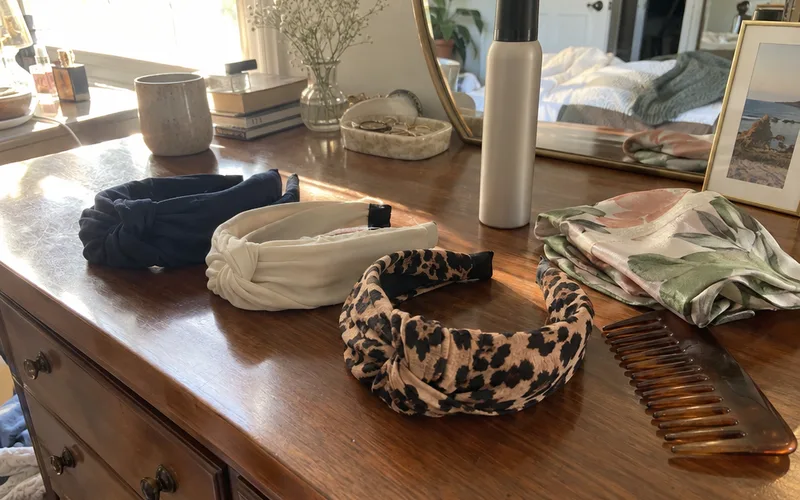
Here’s what to tell your stylist: “I’m growing out my color to my natural gray. Can we take a little dyed length off each visit and keep the shape?”
Cut It Short
A short haircut, such as a pixie cut, removes most of the old color in one appointment, so what’s left is mostly your natural gray. It’s the fastest route, but it means a big change in the mirror on day one.
If you’ve always worn long hair, try a chin-length haircut first and go shorter at the next one.
Cut, part and eyebrows all decide whether gray looks fresh instead of aging, so bring those questions to the same appointment.
Blend It With Highlights and Lowlights
Gray blending means a stylist weaves highlights and lowlights through your hair so dyed lengths and gray roots read as one soft, mixed hue. It doesn’t remove the dye, but it hides the harsh line while everything grows out.
Blondes have it easiest, since cool, ashy highlights sit close to silver. Brunettes and redheads usually need both lighter and deeper pieces.
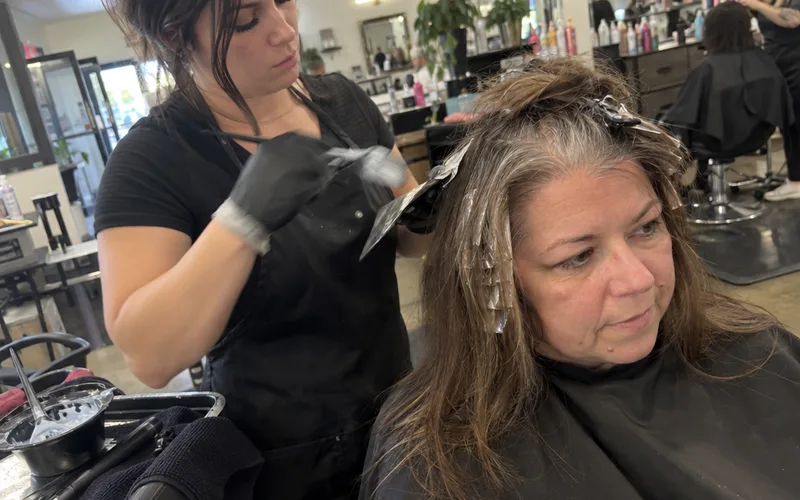
Placement makes or breaks the result, so learn how going gray with highlights works before you book.
One warning about removing hair color to go gray: stripping or bleaching dark dye in one go is the hardest option on your hair. If earlier lightening left your ends rough, start with repairing damaged hair first.
Going Gray With Dark Hair
Going gray with dark hair takes the most patience, because black and deep brown contrast most with silver roots. Lowlights plus a few soft highlights are usually the gentlest bridge.
That contrast is also why some dark-haired women cover their gray a while longer. If that’s you, start with the best shades for dark hair and revisit going gray later.
How Long Does It Take to Grow Out Gray Hair?
Growing out gray hair takes as long as your roots need to reach the length you want to keep. Your timeline depends on how long your dyed hair is now and how much you’re willing to cut.
You can get your own number in a few minutes:
- Measure from your scalp to the shortest length you’d happily wear.
- Track your hair growth: how far your gray roots move in one month.
- Divide the first number by the second to get your timeline in months.
Then browse these real grow-out photos to see what those in-between months look like.
Why Does Gray Hair Turn Yellow?
Gray hair often turns yellow because it has no melanin left to shield it from the sun. Dr. Gaby Longsworth, a scientist and certified hair practitioner, told Vogue that gray hair lacks this natural protective mechanism, so sun oxidizes its proteins.
In other words, much of that yellow tint is damage you can prevent.
Wear a hat on long, sunny days and use a UV spray outdoors, the same way you protect your skin. If you use hot tools, add a heat protectant for hair every time.
How to Care for Natural Gray Hair
Natural gray hair care comes down to 3 habits. Tone out yellow with purple shampoo about once a week, add moisture with conditioner, and protect your color from sun and heat.
Why does moisture matter so much?
Gray hair can feel coarser or drier than your old color. A hair conditioner after every wash adds the softness and slip it often lacks.
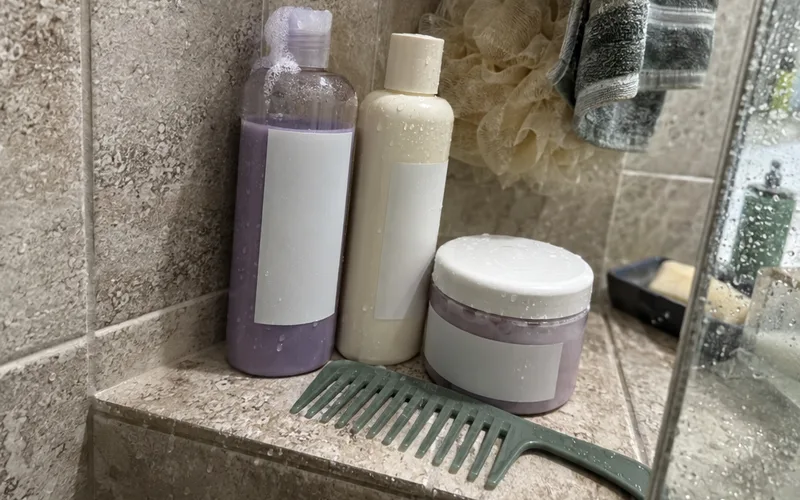
Use a deep conditioning mask whenever your ends feel rough, and detangle with a wide-tooth comb to cut breakage and frizz. The rest of your simple hair care routine stays the same: a gentle shampoo, regular trims and less heat.
How Often Should You Use Purple Shampoo on Gray Hair?
Purple shampoo works best on gray hair about once a week, not every wash. Sean James, Jamie Lee Curtis’s stylist, told Vogue that “overuse can tint the hair purple, leading to the ‘purple-haired granny’ stereotype.”
His rule of thumb: “Once a week is the sweet spot.”
Pro Tip: On other wash days, use a moisturizing shampoo so the purple formula isn’t doing all the work.
Should You Keep Your Natural Gray or Cover It?
Keeping your natural gray and covering it are both normal choices, and you can change your mind later. Wikipedia’s greying entry notes that many people simply let their hair go gray, while others disguise it with dye.
Leaning toward covering? Compare at-home gray hair dyes, or the professional gray coverage options your stylist might use.
If you’re keeping it, you trade root touch-ups for an easy toning and conditioning routine.
Your First Step Toward Natural Gray Hair
The easiest first step toward natural gray hair is skipping your next color appointment and booking a trim and consultation instead. That one visit tells you which of the 3 routes fits your hair.
Bring a photo of the gray already showing at your roots.
Then pick your route and give it a few months before you judge it.
Frequently Asked Questions
Is it possible to have natural gray hair?
Yes, natural gray hair is simply hair that grows without melanin, and most people see some by middle age. A L’Oréal study summarized by Wikipedia found 74% of people aged 45 to 65 had some gray.
How do you have gray hair naturally?
To have gray hair naturally, stop coloring your hair and let your gray roots grow in, then trim or cut off the dyed lengths. Gray blending with highlights and lowlights can soften the line while you wait.
Is it possible to be born with natural gray hair?
Yes, some people are born with gray hair because they inherit the trait, according to Wikipedia’s entry on greying. For most women, though, graying starts in adulthood, usually from the late twenties.
Are there any benefits to having grey hair?
The biggest benefit of gray hair is practical: you stop paying for and sitting through root touch-ups. That frees time and money for conditioning and shine instead.
How can I blend grey hair with highlights and lowlights at home?
Blending grey hair with highlights and lowlights at home is hard to place evenly, so book a stylist for the first round. Between visits, a semi-permanent toner or gloss can soften brassy dyed ends.