
Every split end on your head will stay split until you cut it.
A salon brand that sells repair products admits as much in its own guide, and that tells you where to start.
The good news? The rest of your damaged hair can get a lot stronger and softer.
Here’s how to repair damaged hair in 7 steps, in order, with what each one does and how often to do it.
Best for: dry, dull or breaking hair from heat, color or rough handling. Skip it if your hair is thinning, which is a job for a dermatologist.
Cost: The habit changes are free. You only pay for treatments and masks.
Payoff: Softer, shinier hair that snaps less.
Time: Same day for softness. Stronger hair takes weeks.
First step: Book a trim, then turn your flat iron down to its lowest working setting today.
How to Repair Damaged Hair Step by Step
Repairing damaged hair takes 7 steps: stop the damage, trim split ends, wash gently, condition every time, add a bond-repair treatment, mask weekly and protect your hair. Do them in this order, because each step protects the one before it.
Step 1: Stop the Damage You’re Still Doing
Damage keeps coming back if the cause keeps going, so pick the habit you do most and cut it back first.
If that’s daily hot tools, use them less and on a lower setting, and choose heat styling tools that are easier on fragile hair.
Step 2: Trim the Split Ends
Split ends can’t be glued back together, so cutting them off is the only real fix.
Your hair is made of keratin, and Wella Professionals’ own repair guide says split ends cannot be fully repaired and trimming is the only way to remove them.
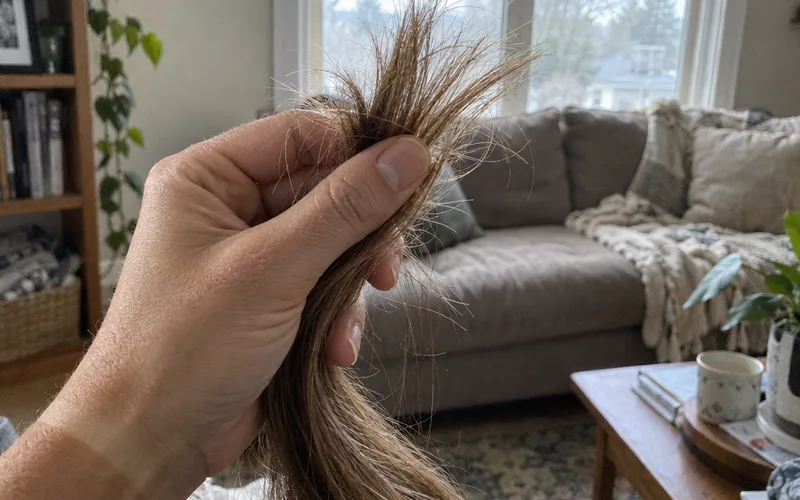
Why does that matter? A split end left alone keeps splitting higher up the strand.
If you’re protecting length, ask your stylist to take only the tips. Here’s what to say:
“My ends are damaged, but I’m growing my hair out. Can you trim just the split ends and leave the length?”
Step 3: Wash Gently With Lukewarm Water
Gentle washing stops you from roughing up fragile hair every time you shower.
Massage shampoo into your scalp, not your lengths, and let the suds rinse down through the ends.
The same Wella guide recommends lukewarm water, blotting with a microfiber towel and detangling with a wide-tooth comb.
That way, you skip the rubbing and tugging that snap weak strands while they’re wet.
Step 4: Condition After Every Wash
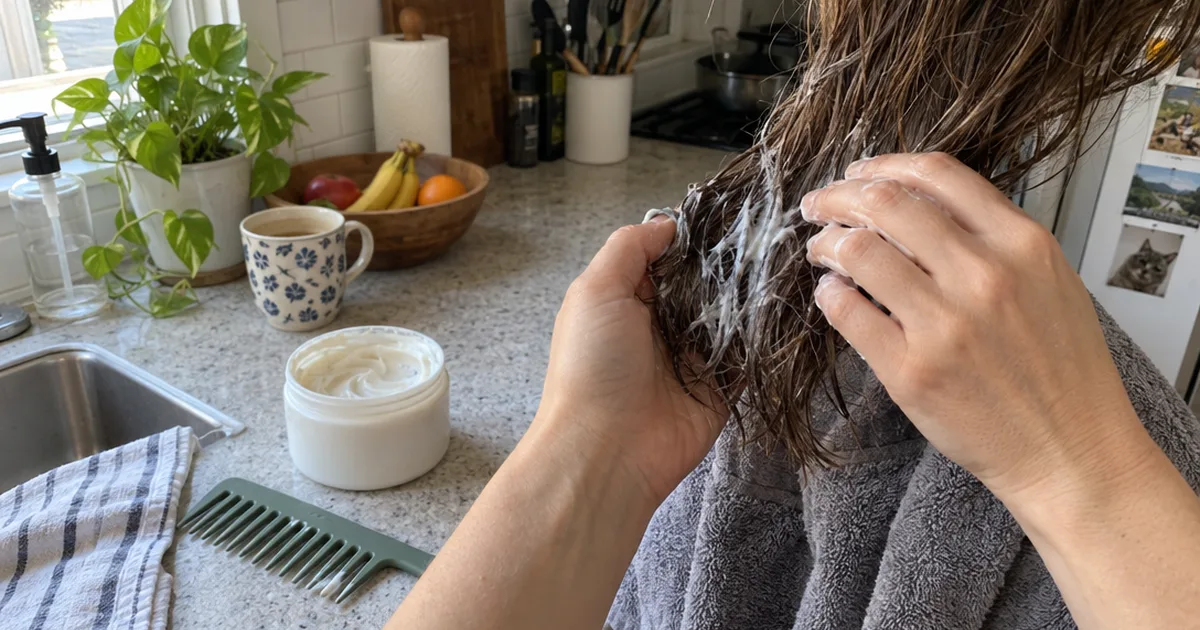
Hair conditioner is the cheapest repair step you have, so use it every time you shampoo.
It coats the outside of each strand, so hair tangles less and breaks less when you comb it.
Focus it on your ends, where damage is worst, and keep it off your roots if your hair goes flat.
Step 5: Add a Bond-Repair Treatment
Bond-repair treatments, such as K18 and Olaplex, work inside the strand rather than just coating it.
Allure reports that K18’s Leave-In Molecular Hair Mask penetrates the cortex, the inner layer of the hair, to repair bonds broken by heat styling and color.
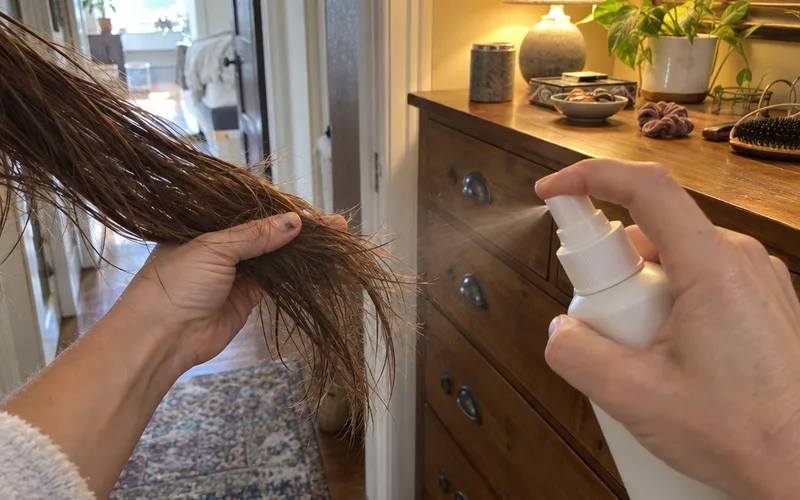
They help most after color, bleach or years of hot tools. Compare the at-home treatments for damaged hair or read the full K18 mask breakdown before you buy.
Pro Tip: Results build over several washes, so give any bond treatment a few weeks.
Step 6: Use a Hair Mask Once or Twice a Week
A hair mask is a thicker, longer-acting conditioner, and very damaged hair does best with one once or twice a week.
That’s the frequency Wella’s guide suggests, adjusted for how fragile your hair feels.
Put it on towel-dried hair so water doesn’t dilute it, and drop back to once a week if your hair starts to feel limp.
Step 7: Protect Your Hair From Heat and Friction
Protection keeps the hair you just repaired from getting damaged again.
Use a heat protectant every time you blow-dry or style, even if you only use hot tools once a week.
At night, sleep on a silk or satin pillowcase and tie hair loosely with a silk scrunchie.
Key Takeaway: Steps 1 and 7 are free, and they decide whether everything in between lasts.
What You Need to Repair Damaged Hair
Repairing damaged hair needs a gentle shampoo, conditioner, a weekly mask, a bond-repair treatment, a heat protectant and a few soft tools.
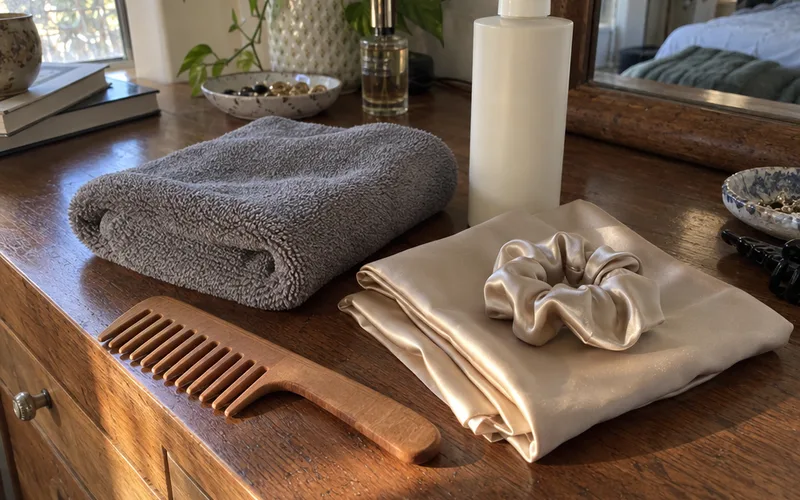
You don’t need everything at once. Start with conditioner and a mask, then add a bond-repair product if your hair still snaps, and build it into your everyday hair care routine.
Can Damaged Hair Really Be Repaired?
Damaged hair can’t be fully repaired, but conditioners, masks and bond-repair treatments can make it look and feel much healthier.
Treatments smooth the outside of each strand and strengthen the inside. Split ends and badly broken lengths only leave as you trim them away.
The healthy hair you want is mostly the hair you haven’t grown yet, so protecting new growth matters as much as treating old lengths.
Signs Your Hair Is Damaged
Damaged hair feels dry and rough, loses its shine and splits at the ends.
Jennifer Nast, a New York hairstylist, described those exact signs to Allure: dry to the touch, dull and splitting at the ends.
Here’s a quick check you can do today:
- Ends that split into two or more pieces
- Hair that snaps when you comb it
- Lengths that tangle easily and feel like straw
- Hair that soaks up water fast but dries out quickly
That last sign points to high porosity, which is why damaged hair needs more conditioning.
What Causes Hair Damage?
Hair damage comes from heat, chemical services such as bleach, color and perms, over-washing and rough handling.
New York hairstylist Angelo David told Allure that heat styling, bleaching and over-washing all add up. Damage often stacks up, such as color plus a daily flat iron.
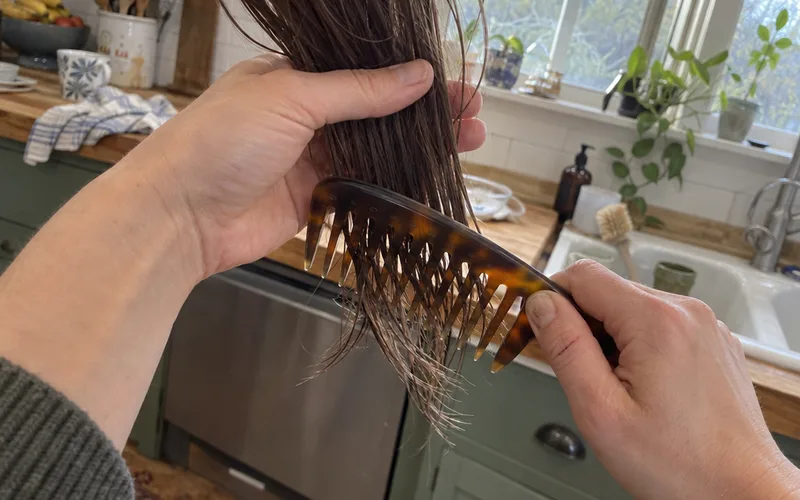
Rough handling is the sneaky one: rubbing hair with a towel, brushing it wet and tight ponytails all pull on weak strands.
How Long Does It Take to Repair Damaged Hair?
Damaged hair feels softer the same day you condition or mask it, but stronger hair takes weeks of steady care.
Badly broken lengths only go away as you trim them and new growth replaces them. So plan on regular trims while your hair grows out.
How to Repair Bleach-Damaged Hair
Bleach-damaged hair needs a break from lightening, a trim, a bond-repair treatment and a mask once or twice a week.
Bleach and color weaken the bonds inside each strand, the same bonds that bond-repair treatments target.
If you keep lightening, ask your colorist to add a bond-building product to the bleach. Softer color such as balayage can also mean fewer bleach sessions on the same hair.
Natural Remedies for Damaged Hair
Natural remedies for damaged hair, such as coconut oil or argan oil, can soften the surface and add shine, but they don’t rebuild broken bonds.
Smooth a drop through your ends after styling, and keep oils off an oily scalp as part of a calm scalp care routine.
Salon Treatments for Damaged Hair
Salon treatments for damaged hair include professional bond-building services, deep conditioning and a trim that takes only the split ends.
Some salons also offer hair botox, a deep-conditioning service for rough, frizzy strands, despite its name.
Compare their trade-offs in this rundown of salon treatments before you book. If frizz is your main problem, start with these fixes for frizzy hair.
When to See a Dermatologist
See a dermatologist when your hair is thinning, shedding in clumps or breaking even after weeks of gentle care.
Those signs can point to a medical cause, such as hair loss in women, which hair products can’t fix.
Frequently Asked Questions
Can you fix already damaged hair?
Already damaged hair can’t be fully fixed, but it can look and feel much healthier. Trim the split ends, then condition, mask and use a bond-repair treatment while new hair grows in.
How can I repair badly damaged hair?
Badly damaged hair needs a bigger trim first, because broken ends keep splitting higher. Then pause bleach and hot tools until the lengths feel stronger.
Can you repair damaged hair without cutting it?
Damaged hair can be softened and strengthened without cutting, but split ends can’t. Ask for a light trim that takes only the tips.
How do you fix damaged frizzy hair?
Damaged frizzy hair calms down with conditioner every wash, a leave-in on damp hair and less heat. A heat protectant and a silk pillowcase keep new frizz from forming.
Can you repair damaged hair overnight?
Damaged hair can’t be repaired overnight, though an overnight serum or silk pillowcase can leave it softer by morning. Real repair takes weeks of steady care and regular trims.
Final Thoughts
The biggest repair is the damage you stop doing, because no treatment outruns daily heat and bleach.
This week, book a trim, turn your hot tools down and condition after every wash.