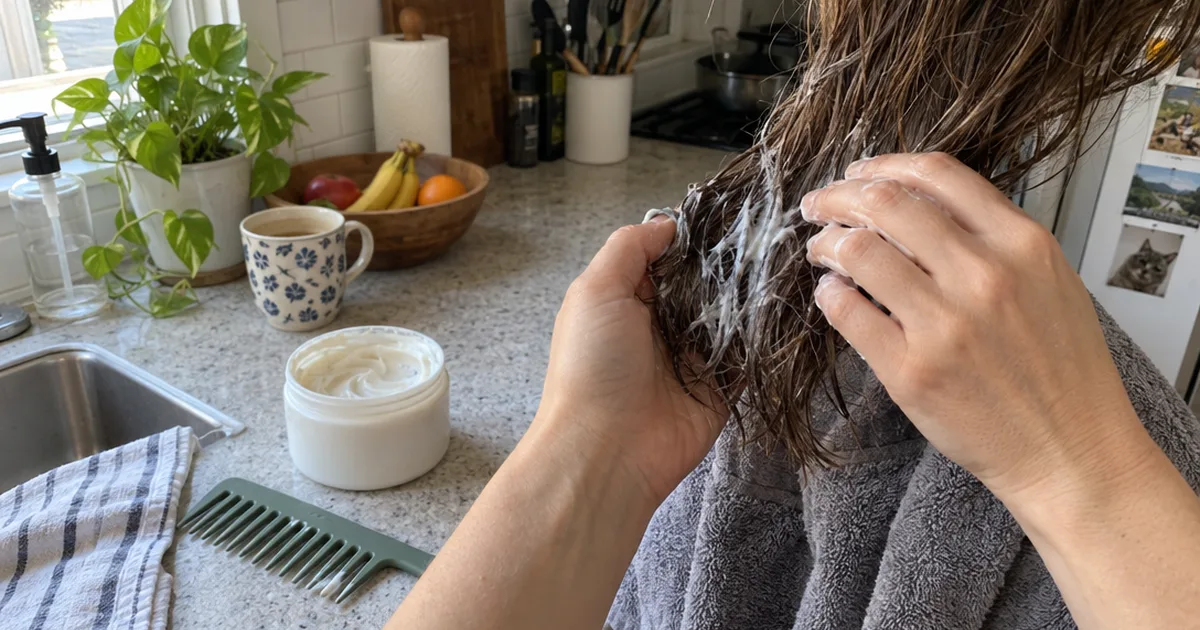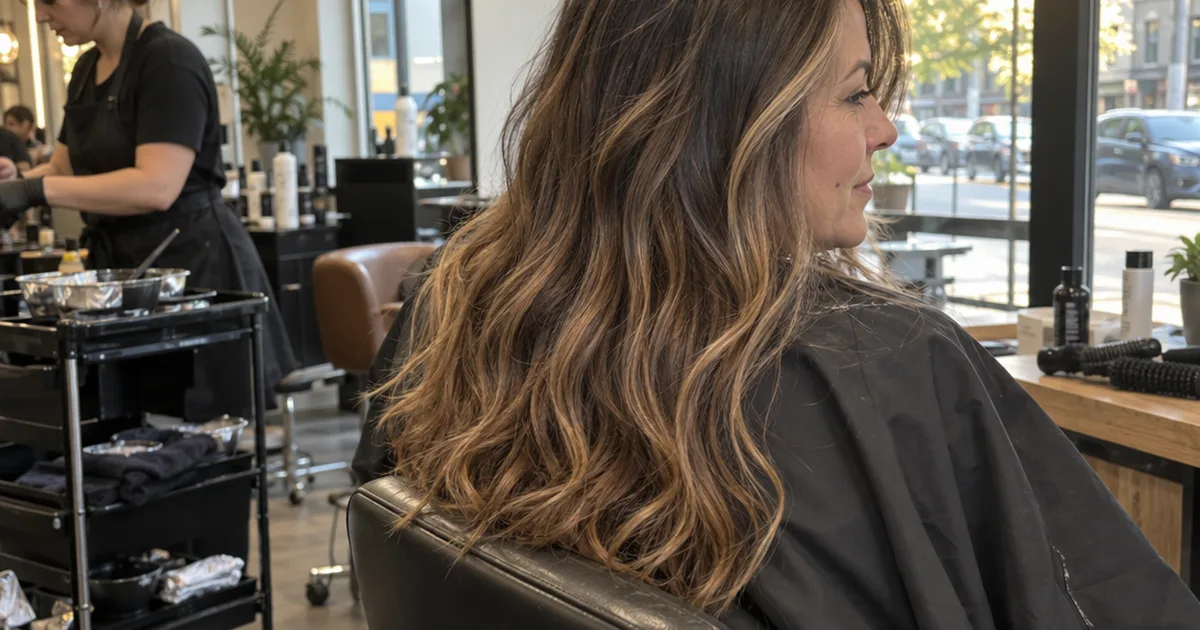


Frizz has 3 main causes, and you can do something about 2 of them.
Genetics is the one you’re stuck with. Damage and humidity are the ones you can actually push back on, starting with your next shower.
That’s why frizzy hair responds better to a routine than to any single product. The 6 steps below target both causes you control, with tweaks for your hair type.
What Is Frizzy Hair?
Frizzy hair is hair that doesn’t line up with the strands around it, so it stands up or curls on its own and gives your hair a fuzzy, uneven texture. That’s how Wikipedia’s entry on frizz defines it, and it’s a better definition than “dry” or “messy.”
Why does the definition matter?
Because it tells you frizz isn’t a hair type. Straight hair can be frizzy, and tightly curled or afro-textured hair can be completely frizz-free, the same entry points out.
So if you’ve been told your hair is “just frizzy” because it’s curly, that’s not the whole story. Curls that clump into neat ringlets aren’t frizz at all.
Frizz is about alignment. When strands travel together, the hair looks smooth.
When they split off in every direction, you see a halo. And that halo hasn’t always been a problem: silent film star Mary Pickford’s publicity photos were often backlit to show off her frizz, and the frizzy perm was a staple of 1980s fashion.
Today, some people embrace their natural frizz while others want it gone. Both are fine, and this guide is for the days you want it smoother.
The 2 Kinds of Frizz
Frizz comes in 2 main kinds: short strands that stick up along the part and through the lengths, and wavy or curly strands that won’t group into a defined wave or curl. Researchers who asked women around the world about healthy hair heard both descriptions, according to the same encyclopedia entry.
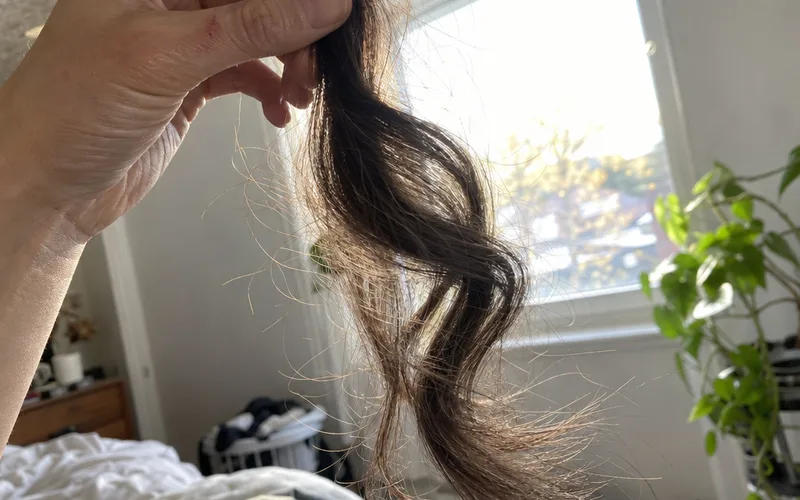
The first kind shows up most on straight hair that you’re trying to wear sleek. Think of the little hairs that float above your part in a photo.
The second kind shows up on waves and curls. The pattern is there, but the strands don’t hold together, so the curl looks blurry instead of defined.
Here’s why this split is useful:
- Short, stand-up frizz is often broken hair, so the fix is gentler handling and less heat.
- Undefined curl frizz is often a clumping problem, so the fix is moisture, less brushing and a gentle dry.
In other words, name your frizz first. The rest of this guide makes more sense once you know which kind you’re fighting.
What Causes Frizzy Hair?
Frizzy hair has 3 main causes: genetics, damage and humidity, according to cosmetic chemist Randy Schueller as summarized in Wikipedia’s frizz entry. Most frizzy heads deal with a mix of all 3, which is why one product rarely fixes everything.
Let’s take them one at a time.
Genetics decides whether your waves and curls clump on their own. Curly hair without natural definition looks frizzy and is sometimes mistaken for damaged hair, even when it’s healthy.
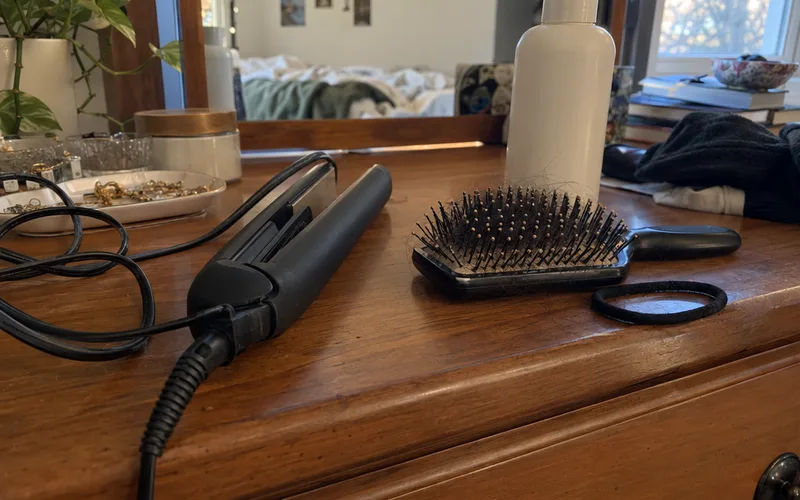
Damage is the cause you create, often without noticing. Rough brushing, high heat, relaxers and shampoos that strip your natural oils all wear down the cuticle, the protective outer layer of each strand.
Even your haircut can play a part. Cutting curly hair with a razor weakens the cuticle and promotes frizz, so ask your hairstylist how they plan to cut before they start.
Humidity is moist air sneaking into the hair shaft and making the inside swell unevenly. It’s the cause most people blame first, and it has its own fix.
What does that mean for you?
Genetics sets your starting point, but damage and humidity decide how bad a frizz day gets. That’s good news, because both of those respond to habits you can change this week.
Is Frizzy Hair Unhealthy Hair?
Frizzy hair is not automatically unhealthy hair: curls that don’t clump can look frizzy while the strands are in good shape. Frizz only signals damage when it comes from broken, short pieces or a worn cuticle.
That distinction matters because it’s easy to treat healthy curls like a repair project. Heavy masks won’t fix a curl that simply needs gentler drying and less brushing.
So how do you tell the difference?
Look closely at the frizzy strands. If they’re short pieces of different lengths that stand straight up, that’s often breakage.
If they’re full-length strands that simply wander off from their curl, that’s usually a clumping issue, not damage.
If you do see breakage, split ends and rough, straw-like ends, it’s worth stepping back from heat and chemical services. The damaged hair repair hub walks through those fixes in order.
Key Takeaway: Frizz is a symptom with 2 possible meanings. Check the strand before you buy the treatment.
How to Keep Hair From Frizzing in Humidity
To keep hair from frizzing in humidity, use a conditioner or styling product that contains dimethicone, which Schueller recommends because it repels moist air. That thin coating slows water from getting into the strand, so the inside doesn’t swell unevenly.
On a muggy day, the process looks like this:
Moisture from the air works its way into the hair shaft and gets absorbed by the cortex, the thick inner layer of each strand. The proteins in the cortex swell, but not evenly, so the strand twists and bends into an irregular shape, Wikipedia’s frizz entry explains.
Repeat that across your whole head and you get a puff.
That’s also why “more moisture” sounds like the answer but isn’t quite. Most moisturizing hair products are designed to smooth the surface of the hair, not to pump more water into it.
The goal on a humid day is a sealed, smooth surface.
So here’s what to do before you step outside:
- Apply a leave-in or styling product with dimethicone to damp hair, focusing on the mid-lengths and ends.
- Let your hair dry fully before you head out.
- Keep your hands off it once it’s set, so you don’t break up the smooth finish.
Don’t forget the humidity you make yourself. A long, hot shower fills the bathroom with steam, so style your hair in another room or open a window first.
If you live somewhere sticky for most of the year, that coating step isn’t optional. It’s the one change that targets humidity head-on.
Does Brushing Make Hair Frizzier?
Brushing makes hair frizzier when the hair is dry and wavy or curly: combing or brushing dry curls breaks up the curl clumps, so the hair expands into a frizzy mass. Rough brushing on any hair type can also snap strands and leave short, stand-up pieces.
That’s not always a mistake, by the way. Some people brush out dry curls on purpose to add volume.
But if you want defined curls, a brush on dry hair undoes your styling in a few strokes. The same brush on wet, conditioned hair glides through without splitting the clumps.
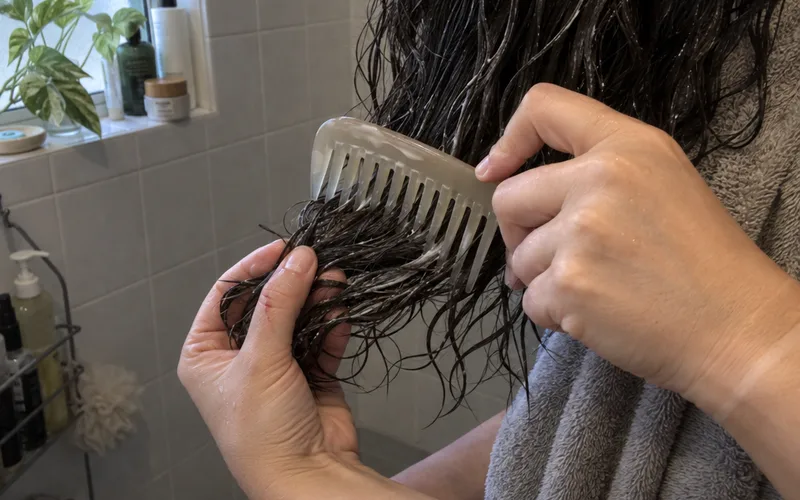
The breakage side is sneakier. When you yank a brush through a knot, the strand stretches out of shape before it snaps, and the short piece that’s left springs outward away from the rest of your hair.
Do that every morning for a few months and you’ve built your own frizz halo.
Here’s a better way to detangle:
- Detangle wavy and curly hair only while it’s wet and coated in conditioner.
- Use a wide-tooth comb or your fingers, starting at the ends and working up.
- On straight hair, brush dry hair gently and stop at any knot instead of pulling through it.
- Skip backcombing, which adds damage along with volume.
Pro Tip: If your hair needs smoothing once it’s dry, lay your palms flat and press the frizzy layer down instead of reaching for a brush.
Why Is My Hair Suddenly Frizzy?
Hair suddenly turns frizzy when one of the 3 causes changes: the weather gets more humid, new damage shows up from color, heat or a new shampoo, or a new cut changes how your hair falls. A sudden change usually has a recent trigger, so start by looking at what’s different.
Run through this quick checklist:
- Did the season change? A move from dry winter air to a sticky summer is enough on its own.
- Did you color, lighten or chemically straighten your hair in the last few months?
- Did you switch to a new shampoo, especially a deep-cleaning one?
- Are you using a flat iron or curling iron more often, or at a higher setting?
- Did a new stylist cut your hair with a razor?
For a lot of readers, frizz at the front of the head is the giveaway. That’s the short, stand-up kind of frizz, with strands rising along your part and hairline.
Those front pieces tend to get the most heat, pulling and touching. So they’re often the first to break.
If nothing on that checklist changed, give the 6-step frizz routine a few weeks before you buy anything new.
Note: If new frizz arrives with shedding, a sore scalp or patches of breakage, see a dermatologist. Frizz on its own is cosmetic, but those signs can point to something that needs a proper diagnosis.
Why Is My Hair Frizzy After Washing?
Hair is frizzy after washing when the wash removes too much of your natural oil and the drying step roughs up the cuticle. A harsh shampoo strips the hair’s natural oils, and blow-drying from the ends toward the roots can lift the cuticle, Wikipedia’s frizz entry notes.
The fix starts in the shower.
Wash your roots, not your lengths. That’s where oil and buildup sit, so lather there and let the suds rinse through the ends.
Then condition every single time. Regular use of instant conditioners is one of the least controversial frizz fixes out there, and it’s free if you already own a bottle.
After that, how you dry matters just as much:
- Squeeze water out with your hands instead of rubbing your hair with a towel.
- Blot with a soft towel or an old cotton T-shirt, pressing rather than scrubbing.
- Apply your leave-in conditioner or styling cream while your hair is still damp.
- If you blow-dry, point the nozzle down the strand, from roots to ends.
That last step is easy to get wrong. It’s tempting to blast your hair from below to dry it faster, but that’s the direction that lifts the cuticle.
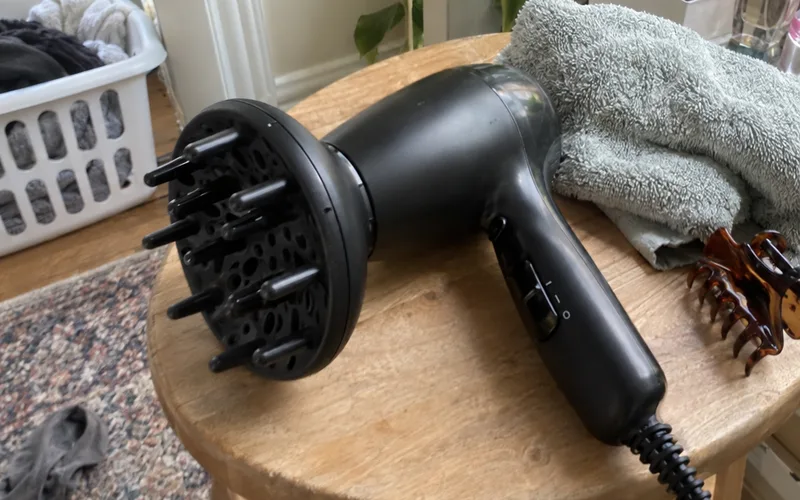
Point the dryer down, and your hair dries flatter with the same tool.
How to Stop Hair From Frizzing
You stop hair from frizzing by protecting the cuticle at every step: wash gently, condition every time, add a leave-in, dry downward on low heat, seal with a humidity-blocking product and protect your hair overnight. Together, the 6 steps cover both damage and humidity, which no single product can do.
Here’s the routine at a glance:
Best for: anyone whose hair puffs up after washing or on humid days. Skip it if your frizz came on suddenly with shedding or scalp pain; see a dermatologist first.
Cost: Free to start, since most steps change how you use what you own. A frizz-control shampoo like Moroccanoil’s lists at $30.00 for 8.5 oz on Sephora.
Payoff: Smoother hair that holds up longer in humid weather. That same listing claims up to 72 hours of frizz control.
Time: Same day. The drying and heat changes apply on your very next wash.
First step: Tonight, turn your blow dryer to its low heat setting and leave it there.
Step #1: Wash With a Gentle Shampoo
Start with a gentle shampoo, because harsh cleansers strip the natural oils that keep your hair smooth. Lather at the scalp and let the rinse clean your lengths.
If you wash daily and fight frizz, try washing less often. Fewer washes means fewer chances to strip your hair.
Step #2: Condition Every Single Time
Use a conditioner after every shampoo, and add a deep conditioner once in a while if your ends feel rough. Regular instant, deep and leave-in conditioners all show up on the short list of frizz fixes experts tend to agree on.
Step #3: Add a Leave-In While Your Hair Is Damp
Smooth a leave-in conditioner through damp hair before it starts to dry. This is the step that keeps strands traveling together as they dry.
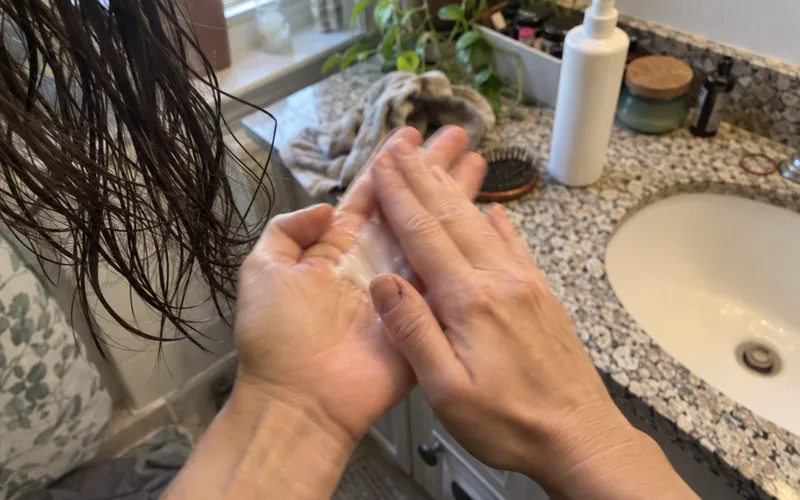
Fine hair needs a pea-sized amount. Thick or curly hair can take more, applied in sections.
Step #4: Dry Low and Slow
Use low heat and point the airflow from roots to ends. Using a diffuser on curly hair and keeping tools on a low setting are both standard ways to limit heat damage, according to Wikipedia’s frizz entry.
And never use a flat iron or curling iron on wet hair. Direct heat can boil the water inside a wet strand and form bubbles in the hair fiber, weakening it.
Before any hot tool, add a heat protectant. Some people skip heat altogether and air-dry, which is the gentlest option of all.
Step #5: Seal With a Humidity-Blocking Product
Finish with a styling product or serum that contains dimethicone or another silicone. That’s the coating that keeps humid air from swelling the strand.
A few drops go a long way. Rub it between your palms and press it over the outer layer of your hair.
Step #6: Protect Your Hair Overnight
Sleep on a silk or satin pillowcase and tie long hair loosely so it doesn’t rub all night. A few small bedtime habits do the rest.
Key Takeaway: Pick the 2 steps you skip most often and add them first. If you’re not sure, I’d start with drying.
That’s your full hair care loop. If you want to fit it into a bigger weekly plan, the hair care routine guide shows where washing, masks and trims slot in.
Do Anti-Frizz Products Actually Work?
Anti-frizz products do work, mostly by coating the hair: ingredients like dimethicone form a thin film that repels humidity and smooths the surface, which is why Schueller recommends them. They can’t change your curl pattern or repair broken strands, so they work best on top of gentle habits.
Readers on Reddit’s r/HaircareScience ask exactly this, wondering if anti-frizz hair products are a scam.
It isn’t. But the marketing oversells it.
Keep 3 things in mind:
Silicones are the frizz workhorse, but they’re debated. Some experts recommend silicone products for frizz, while others warn that silicones can cause buildup.
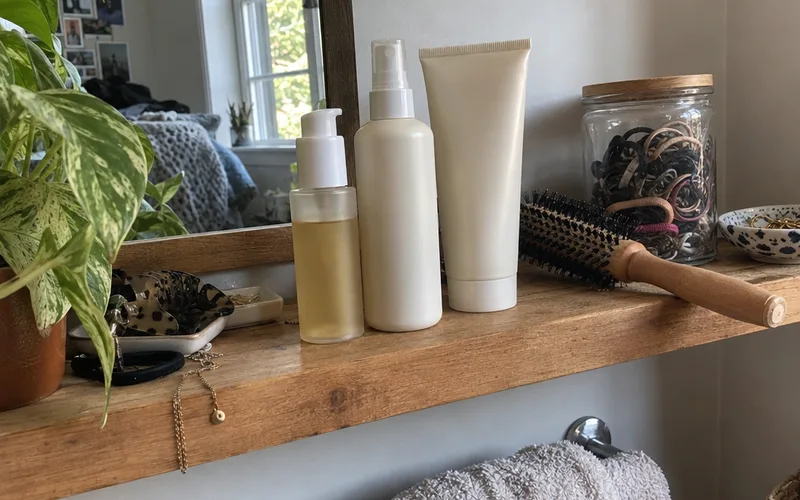
So if your hair starts to feel coated or limp, switch to a lighter product or use less of it.
“Moisturizing” really means smoothing. Most moisturizing products smooth the outer surface rather than add water inside the strand, which is still useful but cosmetic.
Lab claims are the brand’s claims. Sephora’s listing for Moroccanoil Frizz Control Shampoo shows results “based on an independent lab study,” including frizz control for up to 72 hours and protection in up to 90% humidity.
That tells you what the brand measured, not how it’ll do on your hair.
So how do you pick?
Match the product to your frizz. Short, stand-up frizz needs a light serum or cream, while undefined curls need a leave-in or curl cream that helps strands clump.
Where Hair Oils Fit In
Hair oils are a finishing step and an occasional treatment, not a daily replacement for conditioner. Occasional hot oil treatments sit on the same short list of agreed-on frizz fixes as regular conditioning and trims.
For a hot oil treatment, warm a light oil such as jojoba oil, work it through your lengths and leave it on before you shampoo. As a finisher, a couple of drops of oil pressed over dry ends smooths the top layer.
The catch is weight. Fine hair turns greasy fast, so start with less oil than you think you need and keep it off your scalp.
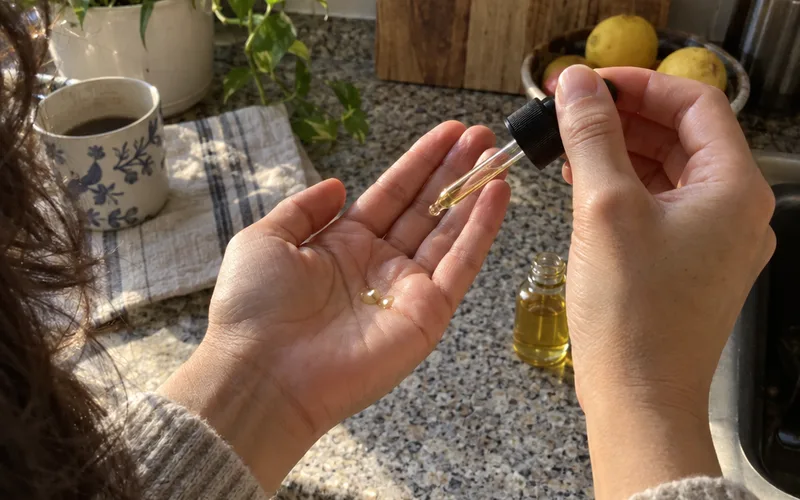
And skip texturizing salt sprays on frizz-prone days. They’re made to add grit and volume, which is the opposite of the smooth finish you’re after.
For specific picks by hair type, see the best products for dry, frizzy hair. Then test 1 product at a time for at least a week, so you know which one did the work.
What to Look For in a Shampoo for Frizzy Hair
A good shampoo for frizzy hair cleans your scalp without stripping your hair’s natural oils, so look for a gentle formula and pair it with a matching conditioner. Labels that say sulfate-free, like the “without sulfates SLS & SLES” note on Moroccanoil’s frizz shampoo, point to a milder clean.
Price isn’t the deciding factor here. That Moroccanoil bottle lists at $30.00 for 8.5 oz on Sephora, but the bigger win is how you use whatever shampoo you buy.
Here’s a quick label checklist:
- A gentle cleanser, often marked sulfate-free.
- Oils listed in the formula, such as argan oil, which the Sephora listing says nourishes and reduces frizz.
- Words like “smoothing” or “frizz control” that match your goal.
- A matching conditioner, since the shampoo is only half of wash day.
If your scalp gets oily fast, don’t swap to a heavy, creamy shampoo just because your ends are frizzy. Wash the scalp with a light shampoo and save the rich products for your lengths.
The best shampoo for frizzy hair roundup compares specific formulas. Start there if you’re standing in the shampoo aisle right now.
How to Fix Frizz by Hair Type
Fixing frizz by hair type means matching the product weight and drying method to your texture: light serums for straight or fine hair, leave-ins and diffusers for wavy and curly hair, and rich conditioning for coily hair. Products that work well for one person often fail on another because of curl pattern, density and porosity.
Hair porosity is how easily your hair takes in and lets go of water. Density is simply how many strands you have.
Adjust the routine for your texture.
Straight or Fine Hair
Straight and fine hair usually shows the short, stand-up kind of frizz: little pieces floating over the part. Heavy hair products weigh fine hair down, so go light.
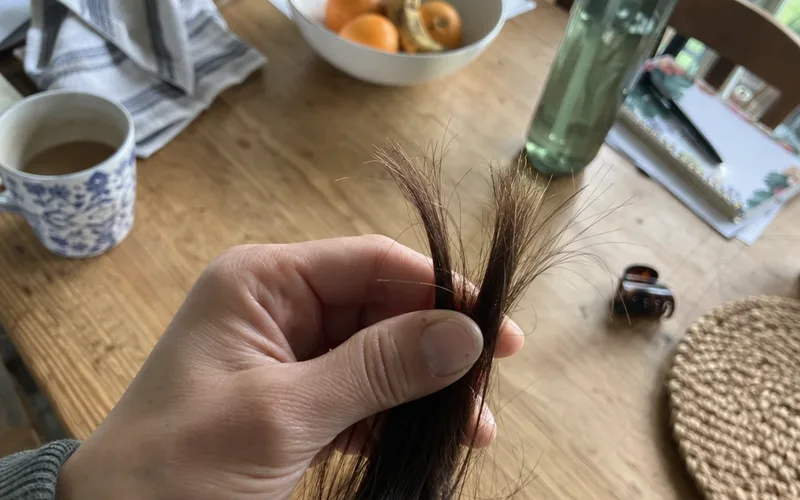
Use a lightweight conditioner, a pea-sized leave-in and a couple of drops of serum on dry ends only. Keep your flat iron on a low setting, and use a heat protectant made for fine hair first.
Wavy and Curly Hair
Wavy and curly hair usually shows the undefined-curl kind of frizz: strands that won’t group into a defined wave or curl. Your main goals are moisture, clumping and less disturbance while it dries.
Apply a leave-in or curl cream to soaking-wet hair, scrunch it in and dry with a diffuser on low or let it air-dry. Don’t touch it until it’s fully dry.
Waves have their own balance, since heavy creams can pull them flat. The wavy hair routine shows how to keep them light.
For tighter curls, the frizzy curly hair fixes go deeper, and the curly and wavy hair hub collects every curly guide on the site.
Coily and Afro-Textured Hair
Coily and afro-textured hair can be completely frizz-free when the coils are well conditioned and left to clump. Frizz here usually comes from dryness, combing while dry and heat.
Lean on deep conditioners and occasional hot oil treatments. Detangle only while the hair is wet and full of conditioner, and protect your ends at night.
How to Get Rid of Frizzy Hair in 5 Minutes
You can get rid of frizzy hair in 5 minutes by lightly dampening the frizzy section, pressing it flat with your palms and drying it on low heat with the airflow pointed from roots to ends. That quick reset smooths the outer layer without adding any product.
Here’s the no-product version:
- Wet your hands and smooth them over the frizzy layer until it’s just damp.
- Press the hair flat with your palms, following the direction it falls.
- Dry that section on low heat, pointing the nozzle down the strand.
- Let it cool for a minute before you touch it again.
If you do have product on hand, rub a drop of serum or hair oil between your palms and press it over the top layer. That’s the fastest seal there is.
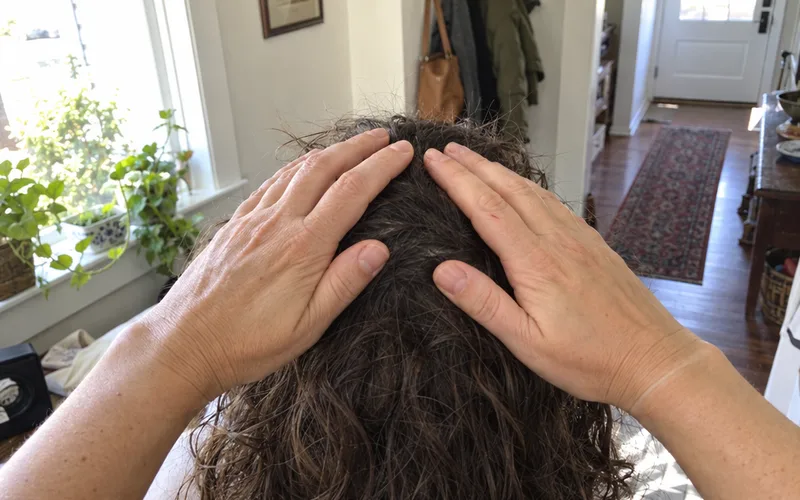
Curly hair needs a slightly different trick. Mist the frizzy curls with water, scrunch them back into clumps and let them dry without touching.
The 5-minute frizz fixes cover more emergency options when you’re short on time.
How to Stop Frizzy Hair Overnight
You stop frizzy hair overnight by cutting friction: sleep on a silk or satin pillowcase, tie long hair loosely or braid it, and apply a little leave-in conditioner before bed. Your hair rubs against your pillow for hours, so small changes add up.
Silk and satin are smoother than cotton, so your hair slides instead of catching. That matters most for the short, stand-up kind of frizz.
A simple bedtime routine looks like this:
- Smooth a small amount of leave-in conditioner over your ends.
- Braid long hair loosely, or twist it into a soft bun on top of your head.
- Use a scrunchie, not a tight elastic band.
- Sleep on silk or satin, or wrap your hair in a silk scarf.
Curly hair does better in a loose, high bun or under a silk bonnet, so the curls stay clumped. In the morning, mist the frizziest curls with water and scrunch them back into shape.
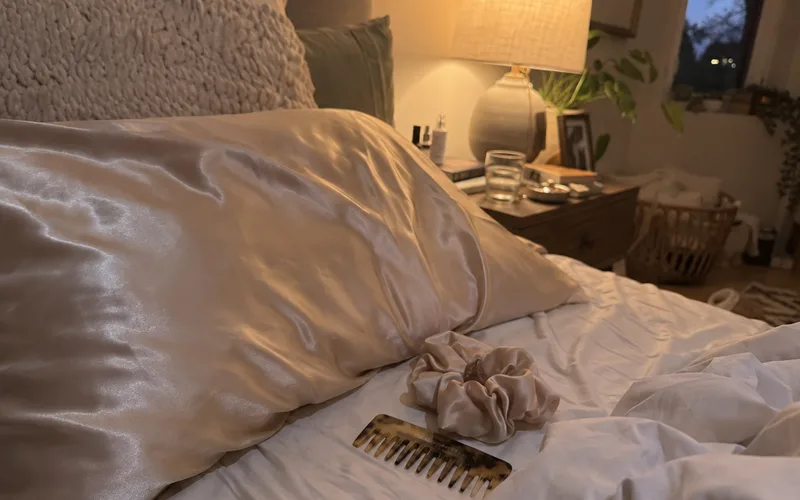
Wash day is the right time for a hot oil treatment, not bedtime. Keep nights simple, so you wake up to hair that’s smooth instead of greasy.
How to Reduce Frizz on a Budget
You can reduce frizz cheaply by changing habits before buying anything: condition every wash, lower your heat, stop brushing dry curls, dry your hair downward and get regular trims. Most of the 6-step frizz routine costs nothing if you already own shampoo, conditioner and a hair dryer.
Your money goes furthest on these:
- A plain conditioner. It doesn’t need to be expensive to count as regular conditioning.
- Regular trims. Trimming off split ends and damaged tips is one of the least controversial frizz fixes, and it removes the roughest ends.
- A cotton T-shirt. It works as a gentle towel and costs nothing if you already own one.
- A pillowcase swap. Satin and silk both cut friction compared with cotton.
Your biggest free fix is heat. Turning your dryer or flat iron down costs nothing, and low settings are a standard way to limit heat damage.
Skip new gadgets and hair products until the free steps are in place. A smoothing spray on top of a rough towel and a hot dryer is money down the drain.
If you’d rather use what’s in your kitchen, the home remedies for dry, frizzy hair walk through kitchen options in more detail. Patch test anything new on your scalp first.
Can You Get Rid of Frizzy Hair Permanently?
You can’t get rid of frizzy hair permanently, because genetics and humidity never go away, but you can keep it under control with steady habits and longer-lasting smoothing treatments. Smoothing methods also carry a risk: some cause damage that makes hair even more frizz-prone than before.
That’s the trap with chasing “forever smooth.”
Relaxers and other harsh chemicals are well-known causes of hair damage. And a flat iron can burn the hair, which brings you right back to frizz.
Salon smoothing treatments, such as a keratin treatment, sit in the middle. They’re sold as a longer-lasting way to smooth hair, but they’re still a smoothing method, so that damage risk applies.
Before you book one, read about the keratin treatment side effects so you know what you’re signing up for. You can also compare keratin before and after looks to judge whether the change is worth it.
If you’re tempted to save money, a keratin treatment at home is possible, but you’re doing a salon job on your own head, so follow the kit’s directions exactly.
Trims are the other long-game fix. Ask your hairstylist to take off split ends and damaged tips regularly, since splits that stay in keep the ends rough.
For most people, the closest thing to a permanent fix is a routine you actually stick to. Habits keep working long after a treatment fades.
Your Best First Move
Frizz is a problem you can manage, even if you can’t change your hair type.
This week, condition every wash, turn your dryer to low and point it down. Add a dimethicone product before your next humid day.
Frequently Asked Questions
What are some effective solutions for frizz?
The most effective solutions for frizz are regular conditioning, occasional hot oil treatments and trims that remove split ends, which Wikipedia’s frizz entry calls relatively non-controversial. Add a dimethicone product on humid days and keep hot tools on low.
What deficiency causes frizzy hair?
No specific vitamin or mineral deficiency is named as a cause of frizz in the sources behind this guide. If frizz arrives with shedding or brittle breakage, ask a doctor or dermatologist to check what’s going on.
What is the best treatment for curly hair?
The best everyday treatment for frizzy curly hair is steady conditioning: an instant conditioner each wash, a deep conditioner now and then and a leave-in conditioner before styling. Detangle only while it’s wet and dry it with a diffuser on low.
Why is only the front of my hair frizzy?
Frizz at the front is usually short strands standing up along your part and hairline, one of the 2 kinds of frizz researchers describe. Those short hairs are often broken pieces, so ease up on tight ponytails, rough brushing and hot tools near your face.
Does hair oil help frizzy hair?
Hair oil helps frizzy hair when you use a small amount as a smoothing finish or as an occasional hot oil treatment. Start with a few drops of a light oil, such as jojoba oil, on your ends, because too much leaves fine hair greasy.