
A 2021 study tracked the scalps of 140 women for 16 weeks.
Coconut oil shifted the yeast on dandruff scalps, but the change faded within 4 weeks of stopping, according to the researchers’ paper in Scientific Reports.
That tells you how to think about coconut oil for dry scalp: it’s a moisturizer you keep using, not a fix you do once.
So I’ll walk you through the exact amount and timing medical sources give, a quick check for dry scalp versus dandruff, and the signs oil is making things worse.
Is Coconut Oil Good for a Dry Scalp?
Coconut oil is good for a dry scalp because it helps the skin hold on to its water and softens the small, dry flakes that come with tightness and itch. It works best on a scalp that’s dry from cold air or too much washing, not on one that’s greasy or inflamed.
Why does that matter?
A dry scalp is a moisture problem, and coconut oil is very good at slowing moisture loss. The skin on your scalp loses water through its outer layer all day, and when that layer is short on oil, it gets tight and starts to shed in tiny white flakes.
Coconut oil puts a layer of oil back on top, which slows that water loss.
In other words, it does on your scalp what a rich hand cream does on chapped knuckles.
Why Coconut Oil Helps a Dry Scalp
Coconut oil helps a dry scalp in 2 ways: it supports the skin barrier, and its main fatty acid may keep some microbes in check. Both come from the same 2021 study of the scalp microbiome.
The authors note that coconut oil helps the skin barrier because it lowers trans-epidermal water loss with long-term use. Trans-epidermal water loss is just the water that evaporates through your skin, so less of it means a scalp that stays softer between washes.
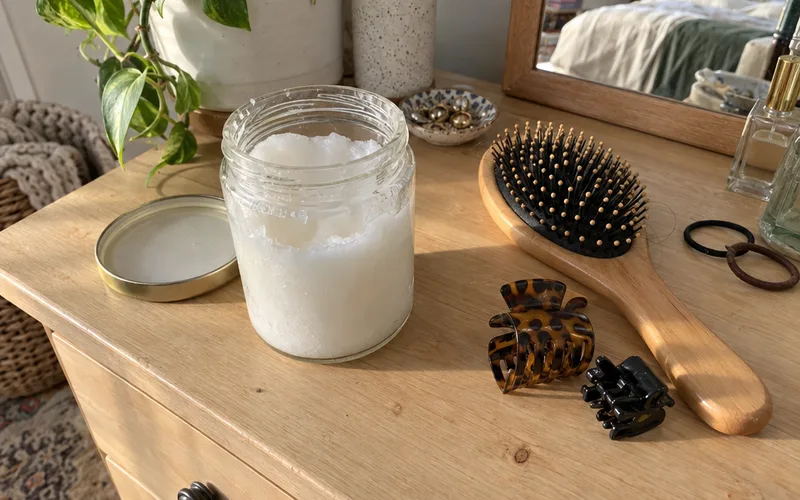
The second reason is lauric acid, the major fatty acid in coconut oil.
The same paper says its antifungal activity is suspected to stop germs from multiplying. That’s a big part of why people reach for coconut oil when their scalp flakes.
Note: “suspected” is the researchers’ own word. Lauric acid’s effect on your scalp isn’t proven, so treat it as a bonus, not the reason to use the oil.
One more thing you should know before you start.
The 2021 study looked at healthy and dandruff scalps, not scalps that are only dry. And no source here tested coconut oil on a dry scalp against another oil.
The case for it rests on what it does to the skin barrier, which is exactly the problem a dry scalp has.
So the takeaway is simple: use coconut oil for the moisture, and enjoy any extra calm as a side benefit.
Dry Scalp or Dandruff? Check Before You Use Coconut Oil
Coconut oil helps a dry scalp, but it isn’t a reliable fix for dandruff, so check your flakes before you start. Small white flakes on a tight scalp point to dryness, while larger greasy or yellowish flakes on an oily scalp point to dandruff or seborrheic dermatitis.
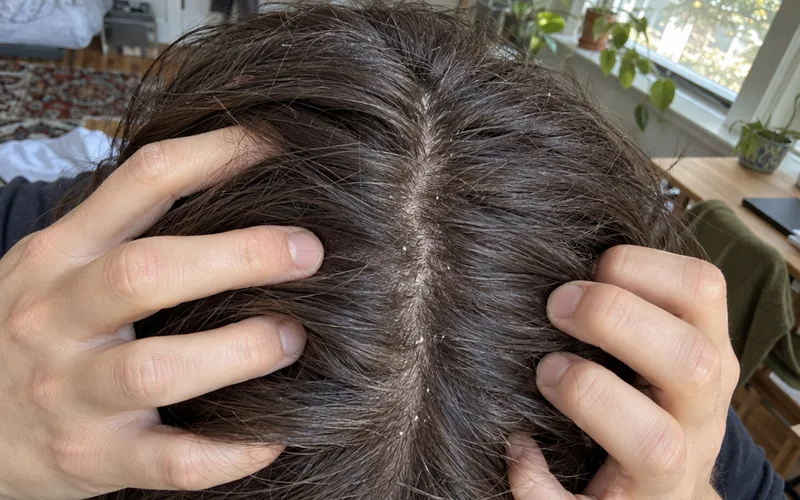
Here’s the deal:
Both problems look like flakes on your shoulders, but they start in opposite places. A dry scalp doesn’t have enough oil, while dandruff is linked to a yeast called Malassezia that feeds on the oil your scalp already makes.
That’s why adding oil can help one and backfire on the other.
The 2021 study describes dandruff as a recurrent, chronic scalp disorder with scaly patches and sometimes itching. That “recurrent” part is the clue: dandruff keeps coming back, while dryness often follows the weather and your wash routine.
Use this quick check before your first treatment:
| What you notice | Likely cause | Try coconut oil? |
|---|---|---|
| Small, white, dry flakes | Dry scalp | Yes |
| Tight or itchy after washing | Dry scalp | Yes |
| Large, greasy, yellowish flakes | Dandruff | Not as the main fix |
| Red, scaly patches near the hairline | Seborrheic dermatitis | No, see a doctor |
If you land in the top 2 rows, coconut oil is a good first step.
If you land anywhere else, start with a medicated shampoo or a dermatologist visit, and read how to tell dry scalp from dandruff in more detail before you buy anything.
Key Takeaway: Match the fix to the flake. Oil is for dry, white flakes only.
How to Use Coconut Oil for a Dry Scalp
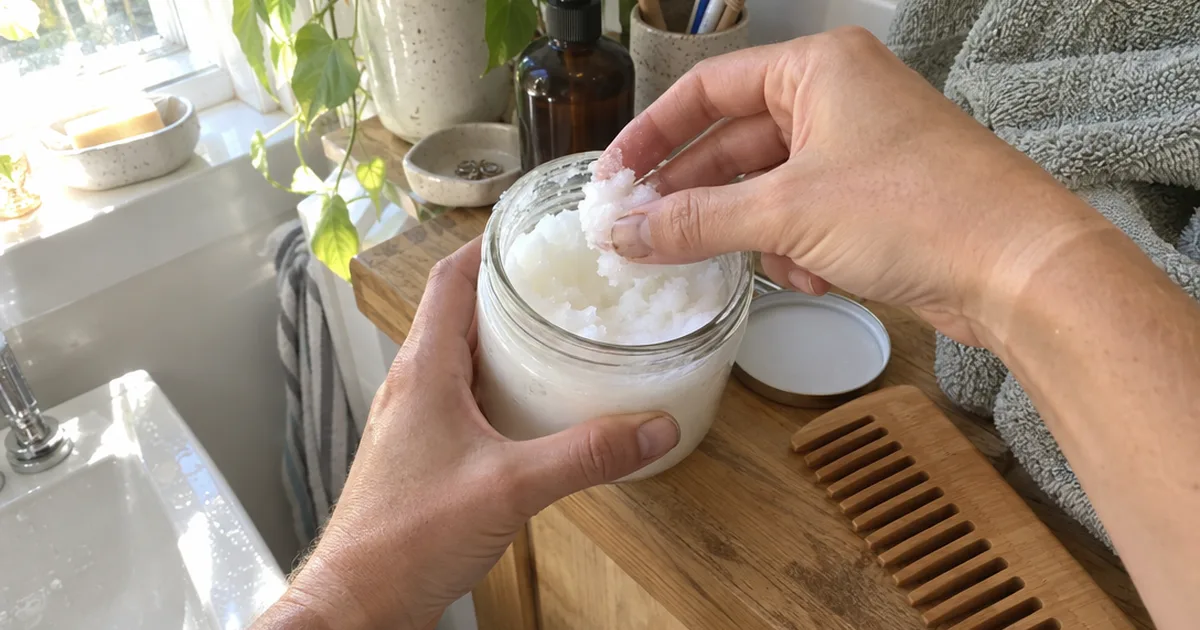
Coconut oil works best on a dry scalp as a pre-wash treatment: warm 1 to 2 tablespoons, massage it into your scalp, leave it 30 to 60 minutes, then shampoo it out. Verywell Health gives that method in its medically reviewed guide.
Best for: a tight, itchy scalp with small, dry flakes. Skip it if your flakes are greasy or your scalp is red.
Time: 30 to 60 minutes, plus your normal wash.
First step: Check that your jar says “virgin” or “unrefined” on the label.
Here’s how it works:
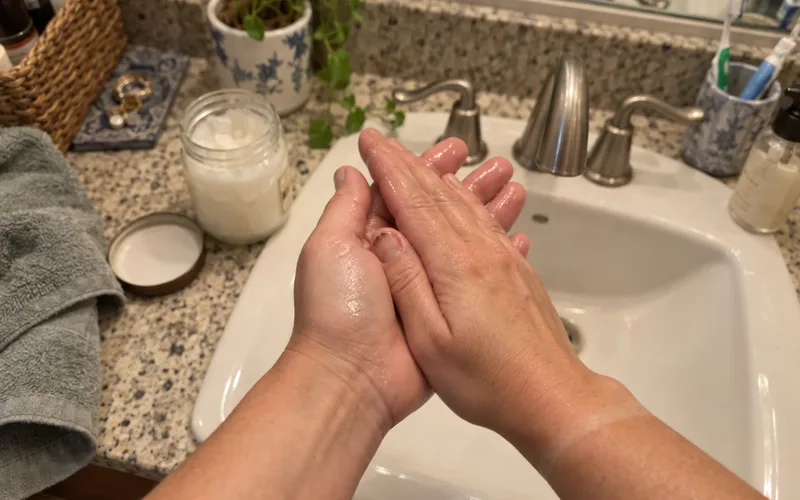
- Melt a small amount. Scoop out 1 to 2 tablespoons and warm it between your palms until it melts. Warm oil spreads more evenly than a solid scoop.
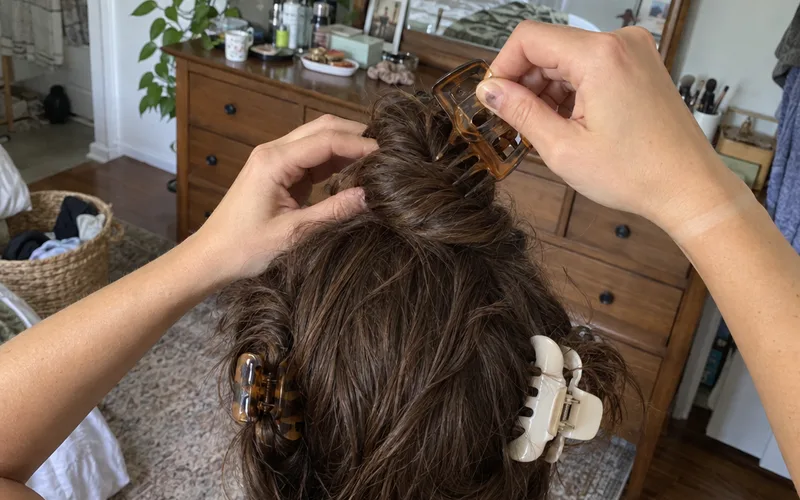
- Part your hair into sections. Work on dry or towel-dried hair, and split it into a few sections with clips so you can reach your scalp instead of coating your lengths.
- Massage with your fingertips. Rub the oil into each part with the pads of your fingers, not your nails. Scratching a dry scalp only makes it sore.
- Wait. Leave it on for 30 to 60 minutes, which is the range the same guide gives.
- Shampoo it out. Wash with a gentle shampoo, and wash twice if your roots still feel slick. The guide warns that leftover oil leaves hair greasy.
- Condition your lengths only. Your scalp just got its moisture, so keep conditioner on the mid-lengths and ends.
The catch?
Most people use too much. If oil drips when you section your hair, you’ve used more than your scalp can take in.
That said:
You’ll quickly learn the amount your scalp needs. Short or fine hair needs less than the full 2 tablespoons, while thick, long hair can take all of it.
How Long Should You Leave Coconut Oil on Your Scalp?
Coconut oil can stay on your scalp anywhere from 30 minutes to 2 hours before shampooing, depending on how dry your scalp is. Verywell Health gives 30 to 60 minutes, and a study it reports used 2 hours twice a week.
Here’s an example:
The same guide describes a study where people massaged coconut oil into the scalp for 20 minutes, left it on for 2 hours and then shampooed, twice a week. That routine helped keep the scalp healthy.
So longer isn’t automatically better, but a 2-hour soak is well within what researchers used.
This table sums up the options you’ll see:
| Method | Time on scalp | Best for |
|---|---|---|
| Quick pre-wash | 30 to 60 minutes | Mild dryness, first tries |
| Study routine | 20-minute massage, then 2 hours | Steady dryness, twice a week |
| Overnight | All night | Very dry, coarse hair only |
Start with the quick pre-wash for your first 2 weeks.
If your scalp still feels tight a day after washing, move up to the 2-hour routine before you try anything longer.
Can You Leave Coconut Oil on Your Scalp Overnight?
Coconut oil can be left on your scalp overnight, but it’s the riskiest way to use it and the hardest to wash out. Save overnight treatments for a very dry scalp with thick or coarse hair, and skip them if you have fine hair or any dandruff.
Why the caution?
None of the medical sources here tested overnight use. The guide’s own method stops at 60 minutes, and the study it describes stopped at 2 hours.
A long soak also gives the oil more time to build up, which is exactly the problem people with greasy flakes run into.
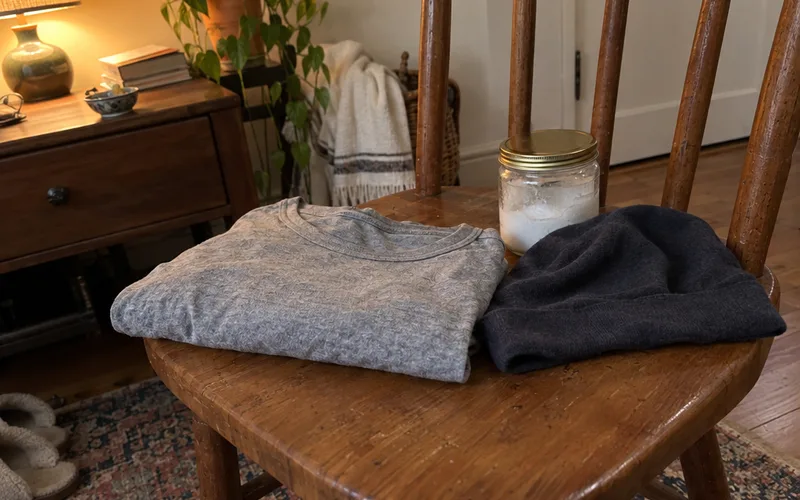
If you do try it, cover your hair with a cotton cap or old T-shirt to protect your pillowcase. Shampoo first thing in the morning, and stop if your scalp looks flakier after 2 or 3 nights.
Pro Tip: Try one 2-hour treatment before your first overnight one. If 2 hours doesn’t help, a whole night is unlikely to fix the problem either.
How Often to Use Coconut Oil on a Dry Scalp
Coconut oil works on a dry scalp when you use it 1 to 2 times a week, which is the schedule Verywell Health recommends for best results. The study it reports used the oil twice weekly, so 2 treatments a week is a sensible ceiling.
Why not every day?
Your scalp makes its own oil, and coconut oil should top it up, not replace it. Daily oiling means daily washing, and frequent washing is one of the things that dries a scalp out in the first place.
So if you wash your hair 2 or 3 times a week, add coconut oil before 1 of those washes.
After a month, check how your scalp feels on the days in between. If the tightness and white flakes are gone, drop to once a week or once every other week.
If your scalp still feels dry between treatments, your shampoo and wash routine may be the bigger problem. The broader scalp care routine covers those basics step by step.
How Long Does Coconut Oil Take to Help a Dry Scalp?
Coconut oil can make a dry scalp feel softer right after a treatment, but judge it after about 4 weeks of steady use, not one wash. No study in our sources timed results for dry scalp, and the 2021 study ran its treatment for 12 weeks before measuring the main changes.
That gives you 2 different clocks to watch.
The first is comfort. Your scalp should feel less tight on the day you use the oil, because you’ve just put moisture back on the skin.
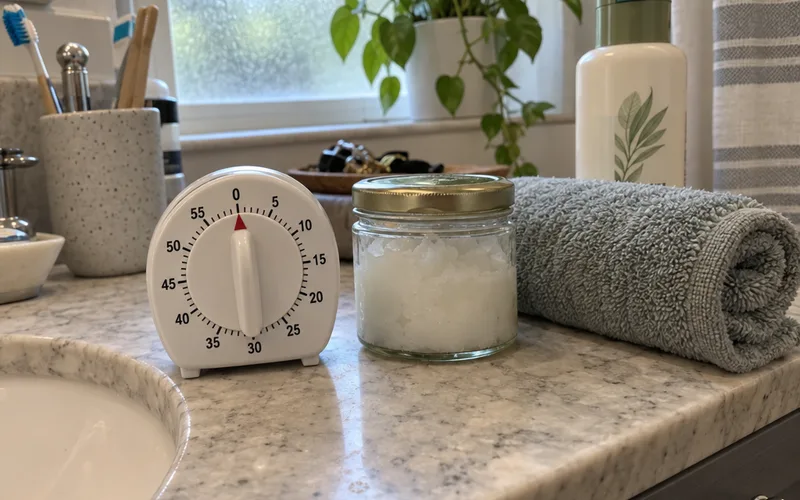
The second is the flaking itself. That takes longer, because your scalp has to shed the dry layer it already has and grow a calmer one underneath.
Track it with a quick weekly check:
- Week 1: Note how tight your scalp feels the day after washing, on a scale of 1 to 5.
- Week 2: Check your shoulders and part line for white flakes.
- Week 4: Compare with week 1. Fewer flakes and less tightness mean it’s working.
If week 4 looks the same as week 1, coconut oil isn’t the right fix for your scalp, and switching brands won’t change that.
Which Coconut Oil Is Best for a Dry Scalp?
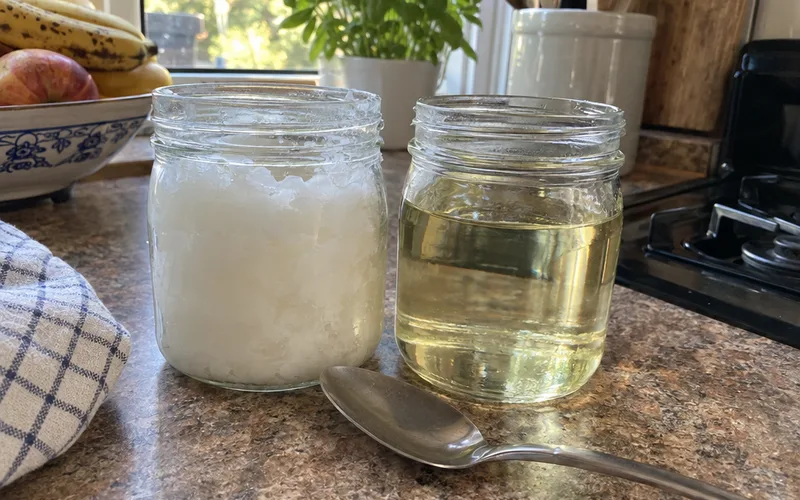
Virgin or unrefined coconut oil is the best type for a dry scalp, because it’s pressed from fresh coconut meat without bleaching or deodorizing. Refined coconut oil still moisturizes, but it goes through extra processing that a sensitive scalp doesn’t need.
The labels mean different things:
- Virgin or unrefined: pressed from fresh coconut, with a light coconut smell.
- Refined: made from dried coconut that’s bleached and deodorized, so it smells like almost nothing.
- Cold-pressed: a virgin oil pressed without added heat.
- Organic: about how the coconuts were grown, not how pure the oil is.
So which jar should you grab?
A plain jar of virgin coconut oil from the cooking oil aisle is all you need. The only ingredient on the label should be coconut oil.
That’s also how you avoid hidden fragrance.
Branded scalp oils often add scent or other plant oils, and every extra ingredient gives a sensitive scalp one more thing to react to.
In other words, the simpler the label, the better for a dry scalp.
Does Coconut Oil Help Dandruff?
Coconut oil can ease dandruff for a while, but it doesn’t keep it away once you stop. In a 2021 study of 140 women, coconut oil changed the yeast on dandruff scalps, and that change faded within 4 weeks of stopping.
The study’s design explains why:
Researchers followed 70 women with healthy scalps and 70 with dandruff for 16 weeks: 12 weeks of treatment, then 4 weeks off. They measured the bacteria and fungi on each scalp throughout.
After the 12 weeks, coconut oil had changed the mix of fungi on the dandruff scalps.
Keep one limit in mind: all 140 women were from India, so the results may not carry over to every hair type. That’s one more reason to watch your own scalp rather than rely on the study alone.
The bad news?
That shift didn’t last for the dandruff group once the treatment stopped, unlike the healthy group. Verywell Health puts it in plain terms: coconut oil can reduce Malassezia restricta, a yeast-like fungus linked to dandruff, but the result depends on what’s causing your flakes.
So if you have true dandruff, think of coconut oil as a comfort step, not a treatment.
What should you do instead?
Use an over-the-counter dandruff shampoo with an active ingredient, and keep using it as directed. These dandruff shampoos dermatologists recommend are the place to start.
Can You Use Coconut Oil With a Dandruff Shampoo?
Coconut oil can be used alongside a dandruff shampoo if your scalp is both dry and mildly flaky, as long as the shampoo does the treating and the oil only adds comfort. Keep the oil to once a week and wash it out fully, so it doesn’t sit on the yeast the shampoo is trying to clear.
Here’s the order that makes sense:
- Massage in a small amount of coconut oil and leave it 30 minutes.
- Wash it out with your regular gentle shampoo.
- Use your dandruff shampoo as the label directs on your other wash days.
That way, the medicated shampoo never has to cut through a layer of oil to reach your scalp.
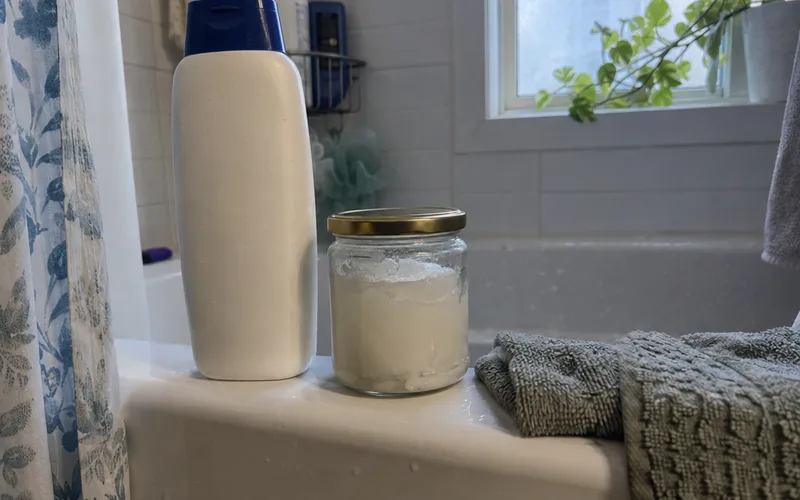
If your flakes get greasier with the oil in the mix, drop the oil and keep the shampoo.
When Coconut Oil Makes a Dry Scalp Worse
Coconut oil makes a scalp worse when the real problem is too much oil or inflammation, such as seborrheic dermatitis, an oily scalp or buildup that never fully rinses out. In those cases, the extra oil feeds the problem instead of soothing it.
Here are the 3 warning signs:
- Your flakes get greasier. Yellow, sticky flakes that grow after a few treatments point to yeast, not dryness.
- Your scalp turns redder or itchier. That’s irritation, and more oil won’t calm it.
- Your roots never feel clean. That’s buildup, and it can trap flakes against the skin.
The first sign often points to seborrheic dermatitis, a common inflammatory condition that causes greasy, scaly patches on oily areas like the scalp.
Verywell Health reports that coconut oil may make inflammatory skin conditions like this worse. It also says coconut oil may make dandruff worse if you already have oil buildup or oily hair.
Buildup is a real risk for some hair types too.
The same guide reports research where coconut oil caused scalp buildup rather than removing it, in certain hair patterns common among African Americans and West Indians.
So if you have tightly coiled hair and wash it less often, keep treatments short and shampoo thoroughly every time.
Fine hair has its own catch: a heavy oil like coconut can weigh it down and leave it limp or greasy, even after a wash.
So start with a small amount and keep the oil on your scalp, away from your lengths.
If any of these signs show up, stop for 2 weeks and see whether your scalp settles on its own.
Coconut Oil for Scalp Psoriasis and Eczema
Coconut oil isn’t a treatment for scalp psoriasis or eczema, though it may ease itch for some people. Verywell’s guide says it might help reduce itchiness from inflammatory scalp conditions, while also warning it can make some of them worse.
That mixed picture is why you shouldn’t experiment alone.
Both conditions need a proper diagnosis, and a dermatologist can tell them apart from plain dryness.
If you already have a dermatologist’s plan, ask whether a pre-wash oil fits into it before you add one.
Patch Test Coconut Oil Before Using It on Your Scalp
Coconut oil is generally safe on skin, but you should patch test it first, because a reaction on your scalp is harder to spot and treat. The American Academy of Dermatology advises testing a new product on a small spot twice a day for 7 to 10 days.
The AAD’s guidance says to apply the product to a test spot twice daily for 7 to 10 days. Pick a quarter-sized spot where it won’t rub off, such as the inside of your arm or the bend of your elbow.
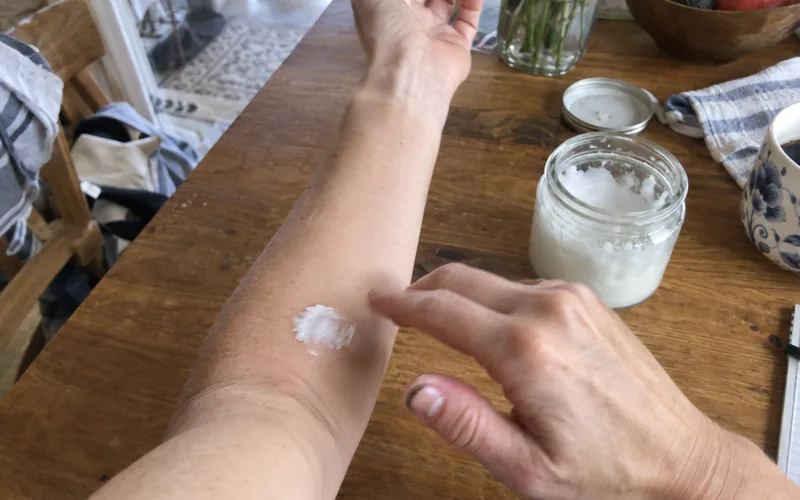
Use the same amount you’d use on your scalp, and leave it on as long as you would on your scalp.
If you see redness, itching or swelling, wash it off as soon as you can and don’t use it again.
That’s especially important if you have a tree nut allergy.
Verywell Health says to avoid coconut oil if you have tree nut allergies, as it can cause an allergic reaction. If that’s you, skip the patch test and ask your doctor or allergist first.
Key Takeaway: A 7-day patch test costs nothing and can save you a week of an itchy, swollen scalp.
Other Oils and Fixes for a Dry Scalp
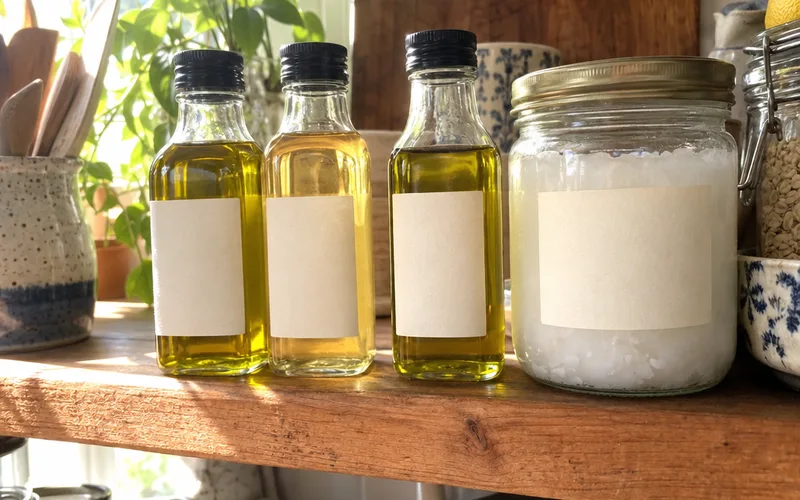
Coconut oil isn’t the only option for a dry scalp. Verywell Health lists olive oil, sweet almond oil and avocado oil among the natural alternatives, and a gentler wash routine often helps more than any oil.
The right choice depends on whether your scalp is just dry or also flaky and itchy.
The same guide names these oils:
- Olive oil: a kitchen staple that works as a pre-wash oil.
- Sweet almond oil: a lighter feel than coconut oil.
- Avocado oil: a rich option for very dry hair.
- Tea tree oil: an essential oil, so dilute it in a carrier oil and patch test it.
- Rosemary oil: another essential oil that needs diluting first.
Pick a lighter oil if coconut oil leaves your hair flat.
And switch oils, rather than adding more coconut oil, if your scalp felt itchier after your patch test or your first few treatments. A different oil gives you a fresh start, but patch test it the same way before it goes on your scalp.
Oil is only half the fix, though.
If your scalp dries out every winter, the bigger wins usually come from washing less often, turning the water down from hot and switching to a moisturizing shampoo. These dry scalp treatment options cover those changes, and these home remedies for an itchy scalp add a few more kitchen-cupboard ideas.
And if your real goal is thicker hair rather than a calmer scalp, that’s a different question. Check the evidence behind any hair growth oil before you buy one.
When to See a Dermatologist About a Dry Scalp
You should see a dermatologist about a dry scalp when home care like coconut oil hasn’t helped, when over-the-counter dandruff shampoos haven’t worked after several weeks, or when your scalp is red, swollen or has open sores. Verywell Health lists those signs as reasons for a visit.
These are the signs to book a visit:
- Coconut oil or other home remedies haven’t helped.
- You’ve used OTC anti-dandruff shampoos for several weeks with no change.
- Your flakes are severe or your scalp is extremely itchy.
- Your scalp is red, swollen or has open sores.
- You have a weakened immune system.
A dermatologist examines your scalp to find what’s causing the flakes. That’s the step home remedies can’t do for you.
They may also prescribe a medicated shampoo for stubborn dandruff.
Not sure what to say at the appointment? Here’s a short script you can use:
“My scalp has been flaky and itchy for about [how long]. I’ve tried coconut oil once or twice a week and [name your shampoo] for [how many] weeks. The flakes look [small and white / greasy and yellow]. Can you tell me if this is dry scalp, dandruff or something else?”
That gives your doctor the 3 facts they need: how long, what you’ve tried and what the flakes look like.
So if you’ve hit any item on that list, book the visit before you buy another bottle.
How Coconut Oil Fits Into a Dry Scalp Routine
Coconut oil fits into a dry scalp routine as one weekly or twice-weekly pre-wash step, alongside gentle washing and conditioner on your lengths. It’s a support act, not the whole routine.
A simple week looks like this:
- Wash day 1: coconut oil for 30 to 60 minutes, then shampoo and condition.
- Wash day 2: plain shampoo and conditioner, no oil.
- Wash day 3 (optional): a second oil treatment if your scalp still feels tight.
That’s it.
Keep the same routine for 4 weeks so you can tell what’s working.
Frizz and dryness often travel together, so if your lengths feel rough too, these steps to calm frizzy hair pair well with a scalp oil. And for curls that need extra moisture all the way down, the curly and wavy hair basics cover what to use on your lengths.
For the rest of your hair, the full hair care routine puts every step in order.
The Bottom Line on Coconut Oil for Dry Scalp
Coconut oil is a cheap, simple moisturizer for a dry, flaky scalp, and it works best as a short pre-wash treatment 1 to 2 times a week.
Patch test it this week, then try one 30-minute treatment before your next wash.
Frequently Asked Questions
Why do hairdressers hate coconut oil?
Coconut oil’s bad name with hairdressers most likely comes from how heavy it is: it’s thick, takes a real shampoo to rinse out and can leave fine hair flat or greasy. Use a small amount on your scalp only, and wash it out the same day.
Can coconut oil be used on curly hair?
Coconut oil can be used on curly hair as a pre-wash scalp treatment, as long as you shampoo it out fully. Verywell Health reports buildup in some hair patterns common among African Americans and West Indians, so stop if your scalp gets itchier or flakier.
What is the best thing for a very dry scalp?
The best thing for a very dry scalp is usually a gentler routine: fewer washes, a moisturizing shampoo and a weekly pre-wash oil such as coconut oil. If the dryness comes with redness, swelling or sores, see a dermatologist instead of adding more oil.
Does coconut oil make a dry scalp worse?
Coconut oil rarely makes a truly dry scalp worse, but it can worsen flakes caused by seborrheic dermatitis or an oily scalp. Greasy, yellow or stuck-on flakes that grow after a few treatments are your cue to stop.
What coconut oil should I use for a dry scalp?
Virgin or unrefined coconut oil is the best pick for a dry scalp, because it’s pressed from fresh coconut without bleaching or deodorizing. A plain jar from the grocery store works, and you don’t need a branded hair version.
Is coconut oil safe for everyone's scalp?
Coconut oil is safe for most scalps, but skip it if you have a tree nut allergy, seborrheic dermatitis or greasy, yellow flakes. Patch test it on your inner arm twice a day for 7 to 10 days first, as the American Academy of Dermatology advises for new products.
Is coconut oil good for dry scalp and dandruff?
Coconut oil is good for dry scalp but only a short-term helper for dandruff. A 2021 Scientific Reports study found its effect on dandruff yeast faded within 4 weeks of stopping, so pair it with a medicated shampoo if you have true dandruff.